Complete Guide to T-Shirt Fabric Types and Their Benefits
When selecting the perfect t-shirt, the fabric choice makes all the difference. Understanding t-shirt fabric types helps you make informed decisions whether you’re purchasing casual wear, athletic apparel, or building a wardrobe that balances comfort with durability. This comprehensive guide explores various t-shirt fabrics, their unique properties, and how to choose the best material for your specific needs.
Understanding T-Shirt Fabric Fundamentals
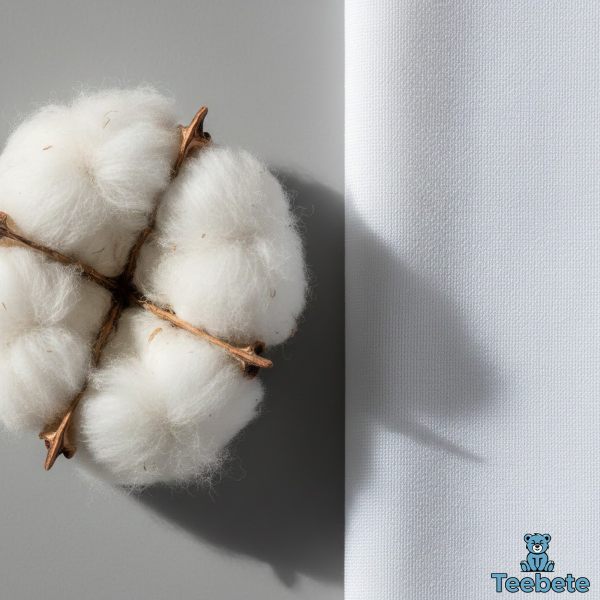
T-shirt fabrics fall into two primary categories: natural fibers and synthetic materials. Each category offers distinct advantages, and modern textile technology has enabled manufacturers to create innovative blends that combine the best characteristics of both worlds.
Natural Fibers vs. Synthetic Materials
Natural fibers derive from plant or animal sources, with cotton being the most prevalent choice for t-shirts. Cotton is renowned for its softness, breathability, and versatility, making it comfortable to wear with natural cellulose fibers that are smooth and soft against the skin.
Synthetic fibers, primarily polyester, are manufactured through chemical processes. Modern polyester production involves refining petroleum to create durable, performance-oriented fabrics that excel in moisture management and shape retention.
Cotton: The Classic T-Shirt Fabric
Cotton remains the most beloved natural fiber in the textile industry, prized for its exceptional comfort and versatility. According to textile research, cotton is highly absorbent and can retain up to 27 times its weight in water, making it excellent for products requiring moisture absorption while helping keep wearers dry and comfortable.
Properties of Cotton T-Shirt Fabric
Breathability and Comfort
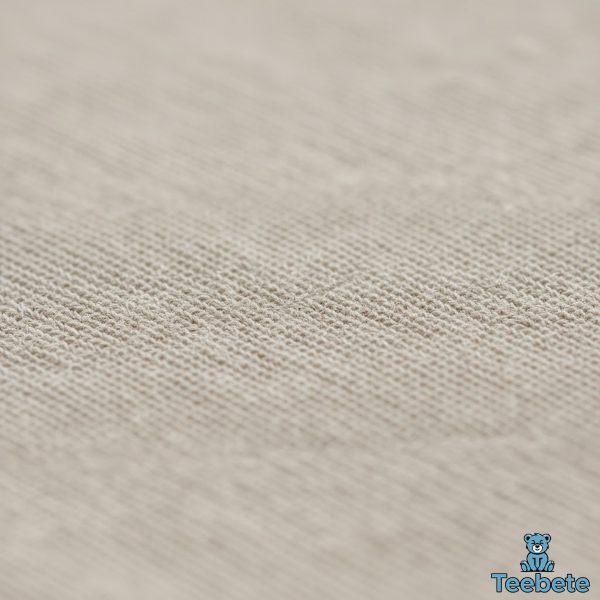
Cotton’s structure allows air to circulate freely through the fabric, making it ideal for warm weather and everyday wear. The natural fibers help regulate body temperature by permitting heat and moisture to escape, preventing the uncomfortable feeling of trapped sweat.
Absorbency
This remarkable absorbency property makes cotton t-shirts particularly comfortable in hot and humid conditions. The fabric effectively draws moisture away from the body, keeping wearers comfortable throughout the day.
Softness and Hypoallergenic Nature
The inherent softness of cotton makes it gentle on sensitive skin. Cotton fibers are naturally soft, making cotton fabric gentle against the skin, which is why it’s often chosen for baby clothes, underwear, and bedding where comfort matters most. This quality makes cotton the preferred fabric for children’s clothing and garments worn directly against the skin.
Durability
Cotton fabric is known for its strength and durability, with fibers strong enough to withstand repeated washing and wearing, making cotton garments long-lasting. Quality cotton t-shirts can last for years with proper care, though they may be prone to fading and shrinkage without proper treatment.
Types of Cotton Used in T-Shirts
Regular Upland Cotton
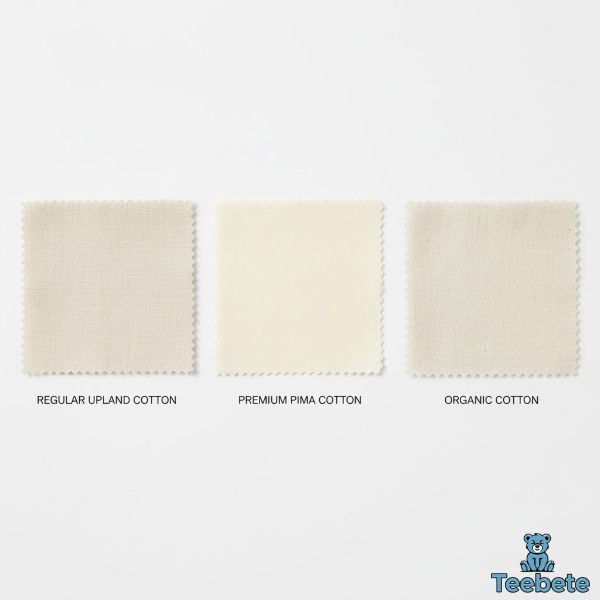
The most common cotton variety, upland cotton accounts for approximately 90% of global production. It offers good quality at an affordable price point, making it the standard choice for everyday t-shirts.
Long-Staple Cotton
Premium cotton varieties like Pima, Supima, and Egyptian cotton feature longer fibers that produce smoother, more durable fabrics. These materials create t-shirts with a luxurious feel and enhanced longevity, though they come at a higher price point.
Organic Cotton
Grown without synthetic pesticides or genetically modified seeds, organic cotton appeals to environmentally conscious consumers. It maintains the same comfort and breathability as conventional cotton while supporting sustainable farming practices.
Advantages of Cotton T-Shirts
- Exceptional breathability for all-day comfort
- Soft, natural feel against the skin
- Excellent moisture absorption
- Hypoallergenic properties suitable for sensitive skin
- Versatile for various printing techniques
- Biodegradable and environmentally friendly
Disadvantages of Cotton T-Shirts
- Prone to shrinkage if not pre-treated
- Can wrinkle easily requiring ironing
- May fade over time with repeated washing
- Takes longer to dry compared to synthetic fabrics
- Less durable than synthetic alternatives for high-intensity activities
Polyester: The Performance Fabric
Polyester has revolutionized the t-shirt industry, particularly in athletic and performance wear markets. This synthetic fiber offers characteristics that natural fabrics cannot match, making it indispensable for active lifestyles.
Properties of Polyester Fabric
Durability and Strength
Polyester is durable and resistant to shrinking, as it’s capable of handling repeated movements to a great degree, even strong, precise movements. This resilience makes polyester t-shirts ideal for frequent wear and intensive activities.
Moisture-Wicking Capabilities
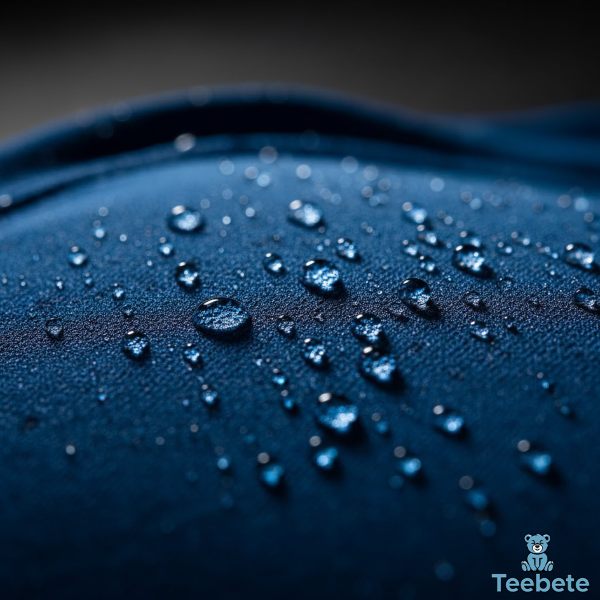
One of polyester’s most valuable properties for t-shirts is its ability to move moisture away from the body. Polyester fibers repel water from the skin and move it to the outside of the fabric where it quickly evaporates. This moisture-wicking ability keeps athletes dry and eliminates the frustration of sweat-soaked clothing during physical activity.
Wrinkle Resistance
Polyester retains its shape without frequent washing or ironing, with wrinkle-resistant qualities allowing it to maintain shape and enabling longer wear between washes. This characteristic makes polyester t-shirts low-maintenance and travel-friendly.
Quick-Drying Properties
Polyester is highly resistant to stretching, shrinking, and wrinkling, which means garments retain their shape and structure even after repeated use and washing. Polyester dries significantly faster than cotton, typically within hours rather than overnight. This rapid drying time proves especially beneficial for athletic wear, travel clothing, and situations requiring multiple outfit changes.
Performance Benefits in Athletic Wear
Modern athletic apparel relies heavily on polyester due to its technical advantages. The natural insulating properties of polyester offer good protection in cooler temperatures while remaining lightweight and breathable, making athletic garments easier to care for.
Advantages of Polyester T-Shirts
- Superior moisture-wicking for active wear
- Exceptional durability and shape retention
- Quick-drying properties
- Resistant to shrinking and stretching
- Cost-effective compared to premium natural fibers
- Excellent color retention over time
- Low maintenance requirements
Disadvantages of Polyester T-Shirts
- Less breathable than natural cotton
- Can retain odors more readily without antimicrobial treatments
- May feel less comfortable against skin in hot weather
- Not biodegradable
- Can generate static electricity
- Less suitable for certain printing methods
Cotton-Polyester Blends: The Best of Both Worlds
Blended fabrics represent the textile industry’s solution to combining cotton’s comfort with polyester’s performance characteristics. These fabric blends have become increasingly popular for everyday t-shirts and corporate apparel.
Understanding Blend Ratios
The 80/20 cotton/polyester ratio strikes an ideal balance for clothing, with 20% polyester adding wrinkle resistance, shape retention, stretch, and quickness to dry while maintaining comfort. Different ratios serve different purposes, with higher cotton percentages prioritizing comfort and higher polyester content emphasizing durability.
Common Blend Ratios and Their Applications
65/35 Cotton-Polyester Blend
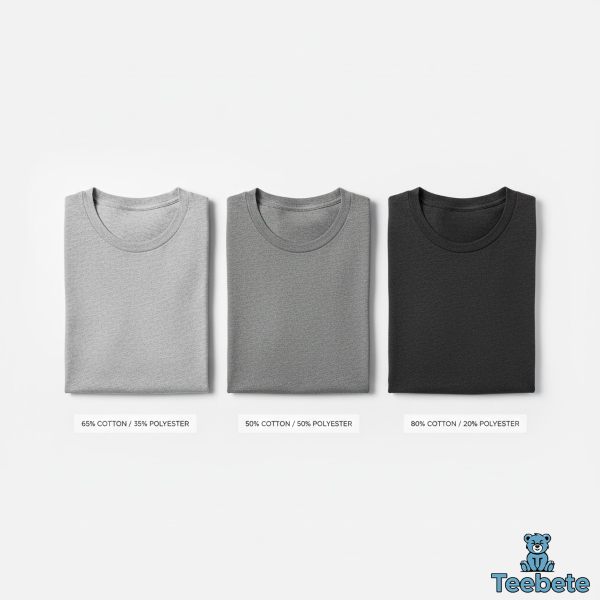
This ratio represents the most popular blend for t-shirts. It maintains cotton’s soft feel and breathability while incorporating enough polyester to reduce shrinkage and improve durability. This balance makes it ideal for corporate uniforms, promotional t-shirts, and everyday casual wear.
50/50 Cotton-Polyester Blend
A 50/50 cotton polyester blend is far less likely to wrinkle than 100% cotton and maintains size better with synthetic polyester fibers keeping blended fabric from shrinking. This even split creates an extremely versatile fabric suitable for various applications from team jerseys to activewear.
80/20 Cotton-Polyester Blend
This ratio maximizes cotton’s comfort while adding just enough polyester to enhance durability and reduce shrinkage. It feels very similar to pure cotton but offers improved wash-and-wear characteristics.
Benefits of Blended T-Shirt Fabrics
Polyester cotton blends combine benefits of both fabrics, sharing soft comfort of cotton and polyester’s fast-drying properties, resistance to shrinking, and durability. This combination delivers practical advantages:
Enhanced Durability
Poly cotton blends combine strength of polyester with cotton, creating fabrics fashioned into abrasion-resistant materials that can be washed more often without losing durability as fast. This extended lifespan makes blended t-shirts more cost-effective over time.
Reduced Maintenance
Blended fabrics require less ironing and special care than pure cotton, making them practical choices for busy lifestyles. They emerge from the dryer relatively wrinkle-free and maintain their appearance longer between washes.
Color Retention
The polyester component helps fabrics retain vibrant colors through multiple wash cycles, keeping t-shirts looking fresh and new longer than pure cotton alternatives.
Improved Affordability
By incorporating less expensive polyester fibers, manufacturers can reduce production costs while maintaining quality, making these t-shirts accessible to more consumers.
Advantages of Blended T-Shirts
- Balance of comfort and performance
- Reduced shrinkage and wrinkling
- Enhanced durability for extended wear
- Lower maintenance requirements
- Better shape retention after washing
- More affordable than premium natural fibers
- Suitable for various printing techniques
Disadvantages of Blended T-Shirts
- Slightly less breathable than 100% cotton
- Not biodegradable due to synthetic content
- May not feel as luxurious as premium cotton
- Less effective for certain specialized applications
Jersey Knit Fabric: The T-Shirt Standard
Beyond fiber content, the construction method significantly impacts t-shirt performance. Jersey knit fabric has become synonymous with t-shirt production due to its unique characteristics.
What Makes Jersey Knit Special
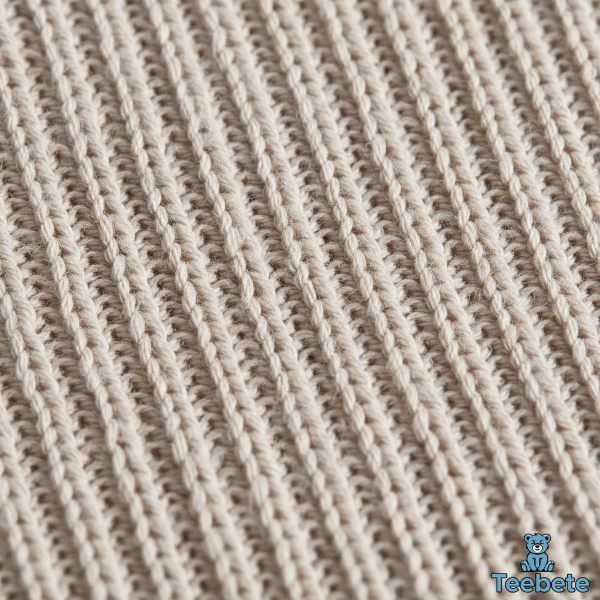
Jersey is characterized by its considerable stretchiness and close knit, making it popular for T-shirts and garments worn close to the skin, being lightweight, soft, and breathable. This knitting method creates fabric with distinct properties that differ from woven textiles.
Types of Jersey Knit
Single Jersey
Single jersey, created using one set of needles, features a smooth face and textured back. It offers excellent stretch and forms the basis for most t-shirts. This lightweight construction provides comfort and flexibility for everyday wear.
Double Jersey (Interlock)
Double jersey knit uses two sets of needles to create a thicker, more stable fabric that’s smooth on both sides. While offering less stretch than single jersey, it provides enhanced structure and durability, making it popular for polo shirts and premium t-shirts.
Jersey Knit Properties
Jersey is soft, stretchy knit fabric with smooth single rib knit on right side and piled loops on backside, being light-to-medium weight and opaque, absorbent, breathable, and well-structured. These characteristics make jersey the preferred construction for comfortable, form-fitting t-shirts.
Specialized T-Shirt Fabrics
Tri-Blend Fabrics
Tri-blend t-shirts typically combine cotton, polyester, and rayon in varying proportions. This combination creates exceptionally soft fabrics with vintage-inspired aesthetics and superior draping qualities. The rayon component adds luxurious softness and enhanced color vibrancy.
Slub Fabric
Slub fabric features intentional yarn irregularities that create textured, dimensional surfaces. This technique produces t-shirts with casual, vintage appeal and unique visual interest.
Performance Technical Fabrics
Performance fabrics are designed with antimicrobial properties, durability, lightweight construction, moisture-wicking capabilities, mold resistance, stain resistance, thermoregulation, breathability, and stretchability. These advanced materials serve specialized athletic and outdoor applications.
Fabric Weight and Its Impact
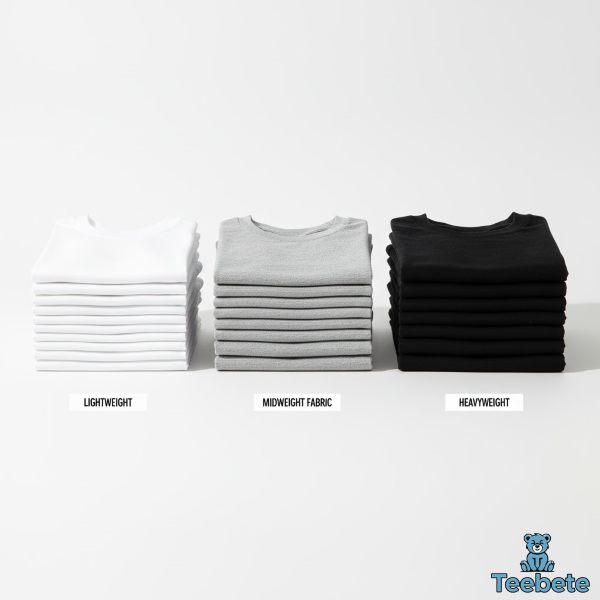
T-shirt fabric weight, measured in grams per square meter (GSM) or ounces per yard, significantly affects garment characteristics:
Lightweight (3.0-4.5 oz)
- Ideal for summer wear and layering
- Maximum breathability
- May be slightly transparent
- Less durable than heavier weights
Midweight (4.5-6.0 oz)
- Standard weight for most t-shirts
- Good balance of comfort and durability
- Suitable for year-round wear
- Adequate opacity
Heavyweight (6.0+ oz)
- Enhanced durability and quality feel
- Better for printing and embroidery
- Warmer for cooler weather
- Premium appearance
Choosing the Right T-Shirt Fabric for Your Needs
For Everyday Casual Wear
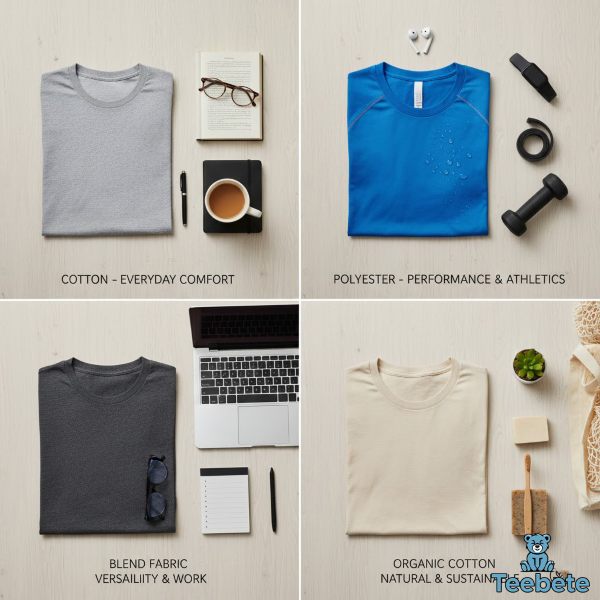
Cotton or cotton-blend t-shirts in midweight fabric provide the ideal combination of comfort, breathability, and durability for daily activities. The 65/35 cotton-polyester blend offers excellent value and low maintenance.
For Athletic Activities and Workouts
Polyester or polyester-dominant blends excel in athletic contexts due to their moisture-wicking properties and quick-drying capabilities. Performance fabrics with antimicrobial treatments help manage odor during intense activities.
For Sensitive Skin
100% cotton, particularly organic cotton, remains the best choice for individuals with skin sensitivities or allergies. The natural, chemical-free fibers minimize irritation risk.
For Printing and Customization
Cotton is very water absorbent and drapes well, making it highly moisture-wicking and suitable for washing in high heat, which makes it ideal for direct-to-garment printing. Polyester works best for sublimation printing, while blends offer versatility for various techniques.
For Travel and Low Maintenance
Polyester-dominant blends or synthetic performance fabrics prove most practical for travel due to quick-drying properties, wrinkle resistance, and minimal care requirements.
For Sustainability
Organic cotton, recycled polyester, or natural fiber blends offer environmentally conscious options. Look for certifications like GOTS (Global Organic Textile Standard) or recycled content verification.
Fabric Care and Maintenance
Cotton T-Shirt Care
- Wash in cold or warm water to prevent shrinkage
- Tumble dry on low or medium heat
- Remove promptly to minimize wrinkling
- Iron while slightly damp if needed
- Separate colors to prevent bleeding
Polyester T-Shirt Care
- Machine wash in warm or cold water
- Tumble dry on low heat
- Remove immediately to prevent heat-set wrinkles
- Avoid high ironing temperatures
- No fabric softener needed
Blend T-Shirt Care
- Follow care instructions for the dominant fiber
- Wash in cold to warm water
- Tumble dry on low to medium heat
- Minimal ironing typically required
- Sort by color for first few washes
Fabric Sustainability Considerations
The textile industry increasingly focuses on environmental impact. Cotton continues being essential in textile industries with natural comfort, breathability, and versatility, while the industry actively moves toward sustainable, traceable, and technologically advanced solutions including organic farming, regenerative practices, recycled cotton, and circular systems.
Cotton Sustainability
While cotton is biodegradable and natural, conventional cotton production requires significant water and pesticide use. Organic cotton and improved farming practices help mitigate environmental concerns.
Polyester Sustainability
Traditional polyester derives from petroleum, raising environmental questions. However, recycled polyester (rPET) made from post-consumer plastic bottles offers a more sustainable alternative while maintaining performance characteristics.
Future Fabric Innovations
The textile industry continues developing innovative materials like bio-based polyester, improved natural-synthetic blends, and fabrics with enhanced recycling capabilities to address sustainability concerns.
Understanding Fabric Quality Indicators
Thread Count and Yarn Quality
Higher quality t-shirts use finer, longer-staple yarns that create smoother, more durable fabrics. Combed cotton undergoes additional processing to remove short fibers, resulting in softer, stronger fabrics.
Fabric Construction Quality
Well-constructed jersey knit features consistent tension and even stitching throughout. Quality indicators include uniform color, minimal pilling tendency, and consistent weight distribution.
Finishing Treatments
Pre-shrinking, mercerization (for cotton), and specialized finishes enhance fabric performance and appearance. These treatments improve durability, luster, and dimensional stability.
Common T-Shirt Fabric Myths Debunked
Myth: Higher thread count always means better quality Reality: For t-shirts, knit construction and yarn quality matter more than thread count, which primarily applies to woven fabrics.
Myth: Polyester is always uncomfortable Reality: Modern polyester fabrics, especially blends, offer excellent comfort with technical advantages for specific applications.
Myth: Cotton always shrinks Reality: Pre-shrunk cotton and proper care minimize shrinkage. Quality cotton t-shirts maintain size with appropriate washing.
Myth: Expensive fabrics are always superior Reality: The best fabric depends on intended use. Budget-friendly blends often outperform premium materials for specific applications.
Brand Spotlight: Teebete
When searching for quality t-shirts that balance comfort, durability, and value, Teebete offers carefully selected fabric options designed to meet diverse customer needs. Their range includes premium cotton, performance blends, and specialized fabrics suited for various applications, ensuring customers find the perfect t-shirt for any occasion.
Conclusion
Understanding t-shirt fabric types empowers you to make informed purchasing decisions based on your specific needs, lifestyle, and values. Whether prioritizing natural cotton’s breathability, polyester’s performance characteristics, or the balanced benefits of blended fabrics, each material offers distinct advantages.
The ideal t-shirt fabric depends on multiple factors: intended use, climate, personal comfort preferences, maintenance willingness, and budget considerations. By understanding the properties, benefits, and limitations of different t-shirt materials, you can build a wardrobe of garments that serve their purposes effectively while providing lasting comfort and value.
As textile technology continues advancing, expect ongoing innovations that further blur the lines between natural and synthetic materials, creating fabrics that deliver superior performance, comfort, and sustainability. The future of t-shirt fabrics promises exciting developments that will enhance our everyday wearing experience while addressing environmental concerns.
Quick Reference Summary Table
| Fabric Type | Key Benefits | Best Used For | Care Level | Durability | Breathability | Price Range |
|---|---|---|---|---|---|---|
| 100% Cotton | Soft, breathable, hypoallergenic, natural feel | Everyday casual wear, sensitive skin, eco-conscious consumers | Moderate (may shrink/wrinkle) | Good | Excellent | $10-$25 |
| 100% Polyester | Moisture-wicking, quick-dry, wrinkle-resistant, durable | Athletic wear, performance apparel, travel clothing | Easy | Excellent | Moderate | $8-$20 |
| 65/35 Cotton-Polyester | Balanced comfort and durability, minimal shrinkage | Uniforms, promotional tees, everyday wear | Easy | Very Good | Good | $8-$18 |
| 50/50 Cotton-Polyester | Maximum versatility, wrinkle-resistant, cost-effective | Team jerseys, activewear, work apparel | Very Easy | Very Good | Good | $8-$18 |
| 80/20 Cotton-Polyester | Natural cotton feel with enhanced durability | Premium casual wear, comfortable everyday tees | Easy | Good | Very Good | $12-$25 |
| Premium Cotton (Pima/Supima) | Luxurious softness, enhanced durability, smooth texture | High-end fashion, premium casual wear | Moderate | Excellent | Excellent | $25-$60 |
| Organic Cotton | Chemical-free, sustainable, hypoallergenic | Eco-conscious consumers, baby clothes, sensitive skin | Moderate | Good | Excellent | $20-$50 |
| Tri-Blend | Ultra-soft, vintage feel, excellent drape | Fashion-forward casual wear, vintage-style tees | Easy | Good | Very Good | $18-$35 |
| Performance Blends | Advanced moisture management, antimicrobial properties | Intense athletics, outdoor activities, hot climates | Very Easy | Excellent | Very Good | $20-$50 |
| Jersey Knit Cotton | Stretchy, comfortable, maintains shape | Standard t-shirts, everyday wear | Moderate | Good | Excellent | $10-$22 |
| Interlock Jersey | Thicker, more structured, smooth both sides | Polo shirts, premium t-shirts | Moderate | Very Good | Good | $18-$40 |
Fabric Selection Guide by Priority
Prioritizing Comfort: 100% Cotton > 80/20 Blend > Tri-Blend > 65/35 Blend
Prioritizing Durability: 100% Polyester > Performance Blends > 50/50 Blend > Premium Cotton
Prioritizing Easy Care: Performance Blends > 100% Polyester > 50/50 Blend > 65/35 Blend
Prioritizing Sustainability: Organic Cotton > Recycled Polyester > Standard Cotton > Conventional Polyester
Prioritizing Athletic Performance: Performance Blends > 100% Polyester > Polyester-dominant Blends
Prioritizing Sensitive Skin: Organic Cotton > 100% Cotton > High-Cotton Blends
Additional Fabric Considerations
Texture & Hand Feel:
- Softest: Tri-blend, Premium Cotton, Organic Cotton
- Smoothest: Polyester, Interlock Jersey, Pima Cotton
- Most Structured: Double Jersey, Heavyweight Cotton
Printing Compatibility:
- Best for DTG Printing: 100% Cotton, High-cotton blends
- Best for Sublimation: 100% Polyester, Polyester-dominant blends
- Most Versatile: 65/35 Cotton-Polyester blends
Climate Suitability:
- Hot & Humid: 100% Cotton, Moisture-wicking polyester
- Cold Weather: Polyester blends, Heavyweight cotton
- Variable Conditions: 65/35 or 50/50 blends
Activity Level:
- Sedentary/Office: Cotton, Comfortable blends
- Moderate Activity: Cotton-polyester blends
- High-Intensity Exercise: Performance polyester, Polyester-dominant blends
This comprehensive table and guide provides at-a-glance information to help consumers, designers, and retailers quickly identify the most appropriate t-shirt fabric for any specific requirement, ensuring optimal satisfaction and garment performance.

Hi, I’m Mia Wilson. I’m a journalist and content creator based in New York with over six years of experience covering sports, holidays, fan culture, and community events across the United States. I focus on exploring team histories, traditions, celebrations, and the broader impact of sports and cultural events on local communities. I’m passionate about providing accurate, engaging, and educational content for readers of all ages, helping them understand the stories, experiences, and events that make sports and celebrations so meaningful.