
Here We Go Steelers Meaning: The Story Behind the Famous Fan Chant
Few phrases in professional football carry the same electric charge as “Here We Go Steelers.” Whether you hear it echoing through Acrisure Stadium, blasting from a living room during a watch party, or trending across social media on game day, the chant instantly signals one thing: Steelers fans are fired up and ready. For newer viewers or younger fans just discovering the Pittsburgh Steelers community, the phrase might raise a question: what does it actually mean, and where did it come from? This article dives into the meaning, origin, cultural weight, and game-day role of one of the NFL’s most recognizable fan chants.
What Does “Here We Go Steelers” Mean?
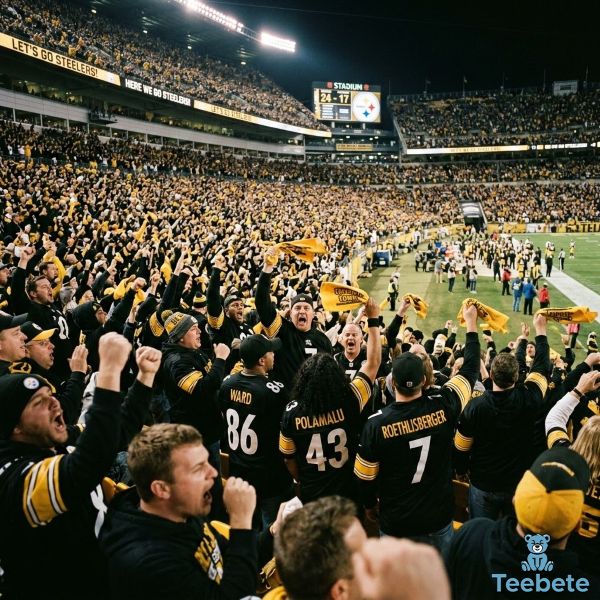
On the surface, “Here We Go Steelers” is a simple rallying cry. The words encourage the team forward, signaling the start of something big. But the emotional meaning runs far deeper than three words.
In sports culture, a chant like this acts as a shared language. When thousands of fans shout the same phrase at the same moment, it creates a unified voice that goes beyond individual support. The chant communicates belief, momentum, and collective energy all at once. It tells the players on the field that the crowd is fully invested. It tells every person in the stadium that they are part of something larger than themselves.
Context matters too. Shouting “Here We Go Steelers” during a third-and-long situation feels different from shouting it as the team takes the field for the opening drive. In each case, the phrase carries urgency, hope, and a kind of demand: perform, push forward, and make this moment count. At playoff games, the intensity multiplies dramatically as fans fill every corner of the stadium with the same chant, turning it into a wall of sound that opponents can feel.
Watch parties replicate that same energy. Even hundreds of miles away from Pittsburgh, fans gathered around televisions lean into the chant, using it to stay emotionally connected to every snap.
The Origin of the “Here We Go Steelers” Chant
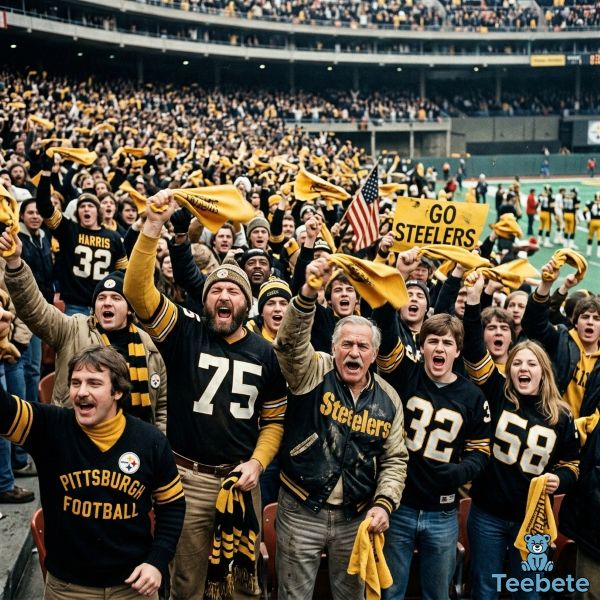
The roots of “Here We Go Steelers” are deeply tied to Pittsburgh’s sports culture and the history of the franchise. The chant grew organically over decades, passed down through generations of fans who attended games at Three Rivers Stadium and later at Heinz Field.
At its core, the phrase is closely linked to the team’s traditional fight song. The official Steelers fight song uses a call-and-response structure that encourages fans to respond with enthusiasm, and “Here We Go Steelers” became a natural extension of that musical tradition. The song primed fans to vocalize, and the chant became the spontaneous overflow of that energy during key moments.
The Steelers fight song, commonly known as “Here We Go,” follows a structure where the crowd echoes the lead with the team name and a burst of energy. The opening lines set up a call that the crowd answers with “Here we go, Steelers, here we go!” This back-and-forth pattern mirrors how chants function in a stadium setting: one voice starts, and thousands respond. The lyrics reinforce themes of unity, hometown pride, and the unstoppable momentum of a team on the rise. Because the song is played at games regularly, fans internalize its rhythm and vocabulary, making the chant feel as natural as breathing by the time a big moment arrives.
Stadium traditions in Pittsburgh have always emphasized communal participation. Unlike some fanbases where cheering is more passive, Steelers supporters historically engaged loudly and physically with the game. The chant fit perfectly into that culture because it required nothing more than a voice and a desire to be heard.
Music, stadium energy, and fan identity became intertwined over the decades. The chant was not invented by any single person or marketing campaign. It grew the way all great traditions grow: through repetition, shared experience, and the emotional intensity of watching a team you love battle week after week.
Why Fans Chant “Here We Go Steelers” During Games
Sports psychology research has long recognized the power of crowd participation on team performance. Players respond to crowd noise and energy. Fans who understand this feel a real sense of responsibility during big moments, and chanting is one of the clearest ways to discharge that energy into the game.
“Here We Go Steelers” serves several functions at once. First, it boosts team morale by signaling to players that the crowd believes in them. Second, it creates a unified voice that drowns out visiting fans and makes opposing offenses work harder to communicate at the line of scrimmage. Third, it transforms a collection of individual spectators into a true community with one shared purpose.
The chant tends to rise in volume and frequency during the most critical moments of a game: a fourth-quarter comeback drive, a crucial third-down stop by the defense, or a forced turnover that swings momentum. These are the situations when fans feel the game slipping or surging, and the chant becomes the verbal expression of that emotional current.
Many fans also express their enthusiasm through themed clothing and fan gear such as popular Pittsburgh football fan shirts that feature iconic chants and game day slogans, turning the words from a vocal tradition into a visible one.
The Role of the Chant in Steelers Fan Culture
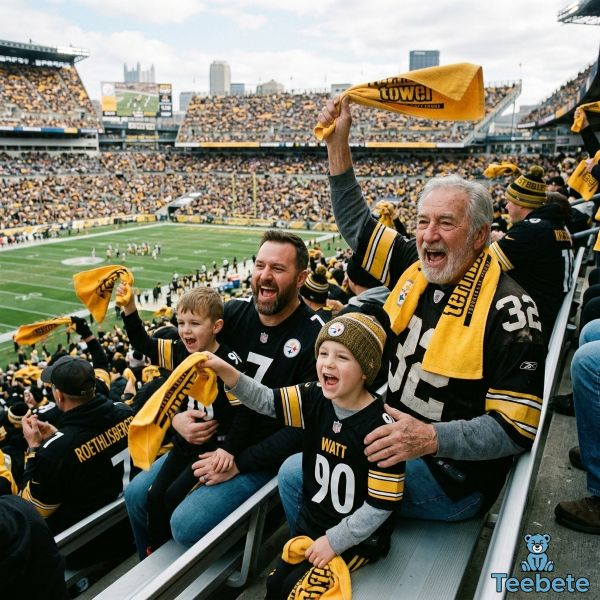
Over time, “Here We Go Steelers” has grown into something more than a game-day habit. It is a cultural identity marker. Saying those words immediately signals which side you are on, not just in a single game but in decades of football history.
The chant has been passed down across generations of Steelers families. Parents who shouted it in the 1970s during the Steel Curtain dynasty taught it to their children, who brought it into the 1980s and beyond. Today, grandparents and grandchildren can share the same phrase in the same stadium, connected by a tradition older than either of them.
Steelers fans are known for showing up everywhere. The black and gold follows the team to opposing stadiums across the country, and “Here We Go Steelers” travels with them. The phrase has appeared at games in every NFL city, at overseas watch parties, and across every social media platform imaginable.
No discussion of Steelers fan culture is complete without mentioning the Terrible Towel. The iconic gold towel, waved during big moments, is the visual partner to the vocal tradition of the chant. Together, they represent the full expression of what it means to be a Steelers supporter.
Fans attending games or watch parties often combine chants with team apparel like classic black and gold football fan gear to fully embrace the game day atmosphere, making the experience both audible and visible.
When Fans Typically Shout “Here We Go Steelers”
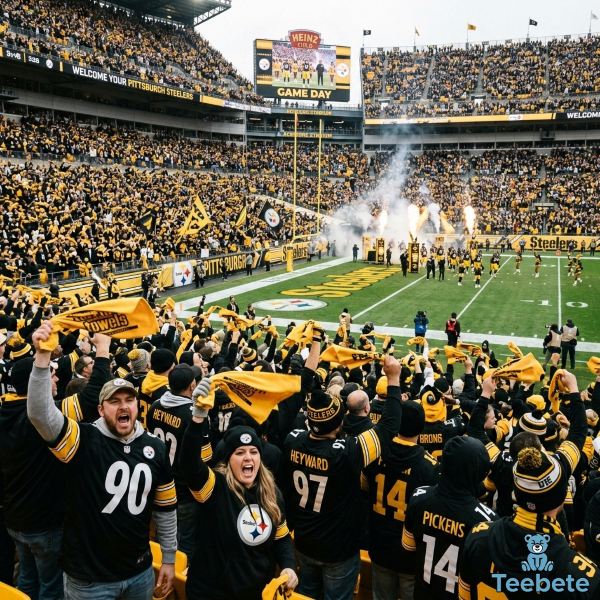
Timing matters in stadium culture. Chants have natural moments where they feel right, and experienced fans develop an intuition for when to start and sustain them.
The most common trigger points include:
Player introductions before kickoff set the tone. As starters are announced, the crowd builds energy, and “Here We Go Steelers” often breaks out as a collective acknowledgment that the game is truly beginning.
Key offensive drives in the third and fourth quarters bring the chant out naturally. When the Steelers need a score to tie or take the lead, the crowd creates an atmosphere of urgency and belief.
Defensive stands on third down or in goal-line situations produce some of the loudest versions of the chant. There is something primal about thousands of fans urging their defense to hold when the game is on the line.
Playoff games amplify everything. The stakes are higher, the emotions are stronger, and the chant takes on a different quality entirely. Veterans of multiple playoff runs describe the sound as something that physically moves through the stadium.
Rivalry matchups against the Baltimore Ravens or Cleveland Browns bring out competitive edge alongside the chant. Facing rivals intensifies the need to be heard, to claim the stadium and make the opposition uncomfortable.
The rhythm of a great chant builds across a game. Each repetition adds to the emotional accumulation until the sound feels inevitable and unstoppable.
Steelers Chants and Game Day Apparel

There is a direct line between what fans shout and what they wear. Fan apparel has long been a way to make vocal identity visible, to carry team loyalty into every space whether or not there is a stadium around you.
Slogan shirts that reference famous chants or team identity have become a significant part of football fan culture. For many supporters, wearing a shirt that echoes a chant deepens the connection to the game-day experience. It is the same impulse that drives the chant itself: the desire to show belonging and belief.
For example, shirts inspired by team loyalty like loyal Steelers fan skull rider shirt often reflect the same spirit behind the famous chant. The words on the fabric and the words shouted in the stadium both say the same thing: this team matters to me, and I am proud to say so.
Apparel bridges the gap between game day and everyday life. Wearing Steelers gear on a Tuesday communicates something about identity that has nothing to do with what is happening on a football field at that moment. It is fandom as a permanent state rather than a temporary event.
The Influence of Steelers Fan Traditions
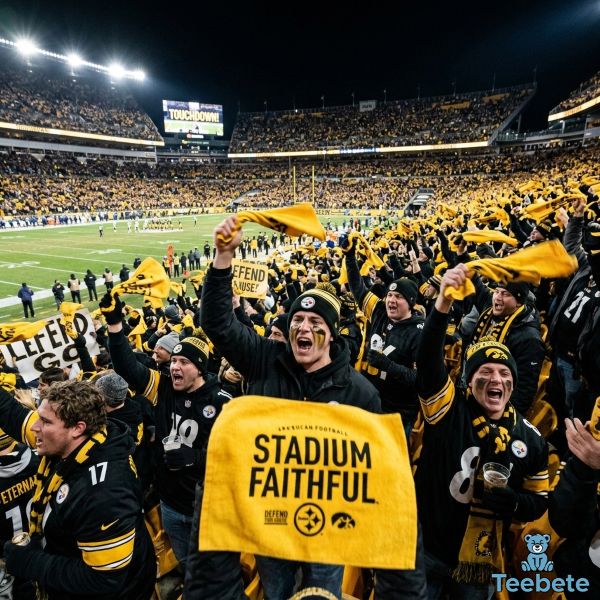
The Pittsburgh Steelers have one of the richest fan traditions in professional sports. The franchise’s success during the 1970s, with four Super Bowl titles across the decade, created a template for what serious, passionate fandom looked like. Generations of fans grew up with the expectation that supporting the Steelers was a full commitment, not a casual one.
The Terrible Towel, introduced in 1975 by radio personality Myron Cope, became the most recognized prop in NFL stadium culture. Waved during touchdowns, big defensive plays, and crucial moments, the towel is inseparable from the chant. They feed each other: the physical motion of the towel and the vocal explosion of the chant combine into a single expression of collective will.
Community identity plays a central role in this tradition. Pittsburgh is a city that has always tied its sports teams to its broader sense of self. The steel industry shaped the city’s character, and the Steelers became an extension of that identity: tough, hardworking, and fiercely proud.
Many supporters choose statement pieces such as stand with Steelers fan slogan shirt when gathering with friends for game day celebrations, turning the living room or sports bar into an extension of the stadium experience.
Multi-generational fandom strengthens traditions over time. The chant did not survive because it was clever or catchy in isolation. It survived because families and communities kept it alive, repeating it until it became second nature to anyone raised around Pittsburgh football.
How Modern Fans Keep the Chant Alive
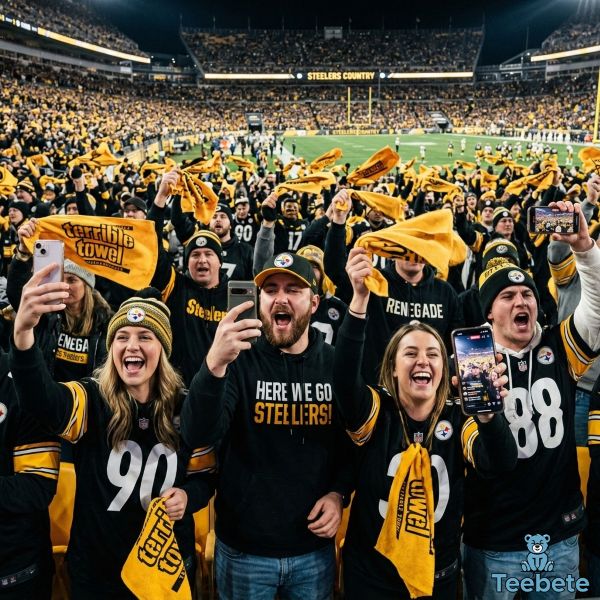
Social media transformed how fan traditions spread and persist. A chant that once lived only inside a stadium can now reach millions of people through highlight clips, game-day posts, and viral moments.
Platforms like TikTok, Instagram, and YouTube carry Steelers game moments to fans around the world within minutes of happening. When a particularly emotional game produces a stadium-wide chant, that moment gets clipped, shared, and watched thousands of times. New fans encounter the tradition through these clips and adopt it, expanding the community beyond geographic limits.
Online fan communities dedicated to Steelers football keep the culture active between seasons. Forums, subreddits, and fan pages discuss traditions, share memories, and introduce newer members to the history behind chants and rituals. The chant becomes part of the education of a new fan.
Viral game-day moments featuring the chant have introduced it to people who had no prior connection to Pittsburgh. Some of them become curious enough to follow the team, and eventually the phrase becomes part of their vocabulary too.
Fans who enjoy playful rivalry-themed gear sometimes wear items like anti rival Steelers fan performance shirt that capture the competitive energy surrounding big matchups, channeling the same spirit that fuels the chant during heated rivalry games.
Teebete and the Celebration of Fan Culture
The spirit behind “Here We Go Steelers” is about more than football. It is about belonging, identity, and the way fans use every available means to express what a team means to them.
Teebete is a fan apparel brand that recognizes the passion behind fan chants and traditions. The brand focuses on expressive fan apparel that reflects the energy of game day, understanding that Steelers supporters use clothing and slogans to carry their voice beyond the stadium walls. Teebete highlights the connection between sports culture and personal expression by offering fan-inspired designs that celebrate iconic moments and traditions shared by dedicated supporters.
Why the Chant Still Matters Today
In an era where sports media is more fragmented than ever, where fans can watch games on phones, stream from overseas, and follow teams entirely through digital highlights, communal traditions like chants hold special value. They are proof that fandom is still a collective experience at its core.
“Here We Go Steelers” endures because it captures something simple and true: the belief that a team can do something great, and that the crowd’s voice is part of what makes that possible. It is not complicated. It does not require explanation to feel. Anyone who has been inside a stadium when the chant reaches full volume understands immediately what it means.
Sports identities are built from moments and symbols. The Terrible Towel is one. The black and gold color scheme is another. And the chant is the voice that ties all of it together, the sound that defines what it feels like to be a Steelers fan in the most intense moments of a season.
Simple chants often become the strongest symbols of a fanbase precisely because they are accessible to everyone. A five-year-old and a seventy-year-old can both participate. A fan watching from Pittsburgh and a fan watching from Vietnam can both shout the same words at the same moment and feel connected.
Traditions like this keep the spirit of the team alive for future generations, ensuring that every new fan who walks into the stadium for the first time will eventually learn the words and add their voice to the chorus.
Conclusion
“Here We Go Steelers” is more than a chant. It is a distillation of decades of fan culture, community identity, and the unique bond between a city and its team. The phrase emerged organically from stadium traditions and the team’s fight song culture, grew through generations of passionate supporters, and now travels with Steelers fans wherever they gather.
Its meaning is literal and emotional at once: push forward, we believe in you, and we are all in this together. From the bleachers of Acrisure Stadium to living rooms across the world, the chant represents everything that makes sports fandom meaningful.
Every time those three words ring out, they carry the voices of everyone who ever shouted them before, and they make space for everyone who will shout them in the future.
Steelers Chant Questions Fans Often Ask
What does “Here We Go Steelers” mean?
It is a chant used by fans to encourage the Pittsburgh Steelers during games. The phrase expresses excitement, support, and belief in the team’s success.
Where did the “Here We Go Steelers” chant come from?
The chant is closely connected to the team’s traditional fight song and stadium culture. Over time it became a recognizable phrase used by fans during key moments in games.
When do fans usually chant “Here We Go Steelers”?
Fans typically chant it during important drives, defensive moments, and throughout high-energy sections of games, especially during home matchups and playoff games.
Is the chant part of Steelers tradition?
Yes. The chant is considered an important part of the team’s fan culture and has been used by supporters for many years, passed down across generations of Pittsburgh football families. It is widely recognized as one of the most iconic chants in NFL fan culture.
Why do sports fans use chants like this?
Chants help create unity in the stadium, boost team morale, and allow fans to actively participate in the game experience. They transform individual supporters into a single collective voice.

Hi, I’m Mia Wilson. I’m a journalist and content creator based in New York with over six years of experience covering sports, holidays, fan culture, and community events across the United States. I focus on exploring team histories, traditions, celebrations, and the broader impact of sports and cultural events on local communities. I’m passionate about providing accurate, engaging, and educational content for readers of all ages, helping them understand the stories, experiences, and events that make sports and celebrations so meaningful.