It’s A Philly Thing The Battle Cry That Defines a City
The Three Words That Define Philadelphia Pride
“It’s A Philly Thing” isn’t just a slogan—it’s a declaration of identity that captures everything about what it means to be from Philadelphia. When these three words appeared on Jalen Hurts’ hoodie during the Eagles’ 2023 playoff run, they instantly resonated with millions of fans who had been living this truth their entire lives. Finally, someone had put into words the inexplicable passion, loyalty, and swagger that separates Philadelphia from every other sports city in America.
January 2023. The Lincoln Financial Field locker room erupts after a dominant playoff victory. Quarterback Jalen Hurts stands at the podium, and the hoodie he’s wearing bears those three powerful words. A reporter asks him to explain what makes Philadelphia different, what drives this unmatched intensity. Hurts doesn’t hesitate: “It’s a swagger,” he says. “It’s kind of in an area of its own—when you talk about the passion in this city, the support in this city, the love for the Philadelphia Eagles in this city. It’s truly a Philly thing.”
At Teebete, we’ve worked with countless Eagles fans who tell us the same story: the moment they heard “It’s A Philly Thing,” something clicked. This wasn’t manufactured marketing speak. This was Philadelphia speaking back to the world in its own voice—unapologetic, authentic, and impossible to replicate anywhere else. Explore our authentic Eagles merchandise to see gear that truly represents the city and its fans.
The Birth of an Anthem: How Jalen Hurts Gave Philadelphia Its Voice
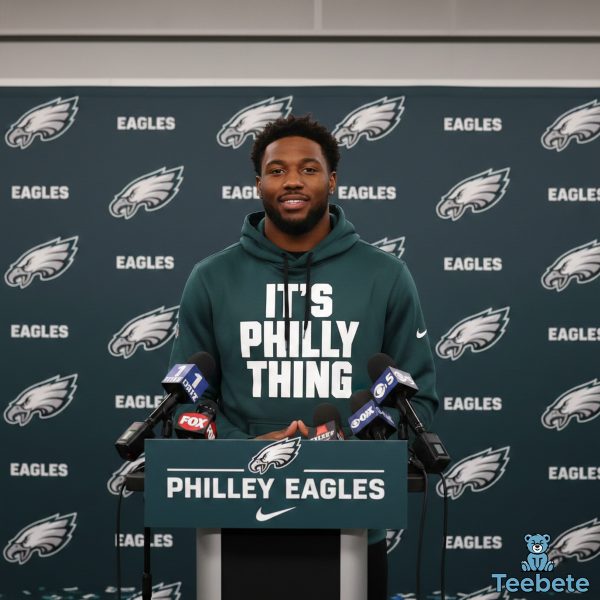
The phrase “It’s a Philly thing” emerged when Jalen Hurts uttered these words during the 2023 playoff run, but its significance transcended a simple press conference moment. During the Eagles’ divisional round media availability in January 2023, Hurts wore the phrase on his chest, and Head coach Nick Sirianni joined him in displaying the message to the football world.
The timing couldn’t have been more perfect. Philadelphia was riding a wave of momentum, with the Eagles dominating their way through the regular season. The city needed a phrase that captured not just the team’s success, but the unique character that separated Philadelphia from every other sports town in America. Hurts, who had established himself as the team’s unquestioned leader and MVP candidate, delivered exactly that.
Within days, “It’s a Philly Thing” exploded across the city. Fans flocked to the Eagles Pro Shop at Lincoln Financial Field to purchase merchandise, with hats, hoodies, and shirts selling out almost immediately. The phrase appeared on everything from local news broadcasts to social media hashtags to homemade signs at watch parties across the Delaware Valley.
What made this moment particularly powerful was that it didn’t come from a marketing boardroom. According to CBS Philadelphia, there’s no official definition of the phrase—and that’s precisely what makes it so authentically Philadelphia. The words mean something different to everyone who says them, yet somehow capture a universal truth that every Philadelphian instinctively understands.
Interestingly, the phrase had appeared in Philadelphia culture before. Actor Kevin Bacon and The Bacon Brothers had recorded a song titled “Philly Thing” in November 2022, months before the Eagles’ playoff run. But when Hurts delivered those words with the weight of a championship chase behind them, they transformed from a musical concept into a citywide identity.
The Cultural DNA: What Makes “It’s A Philly Thing” More Than Words
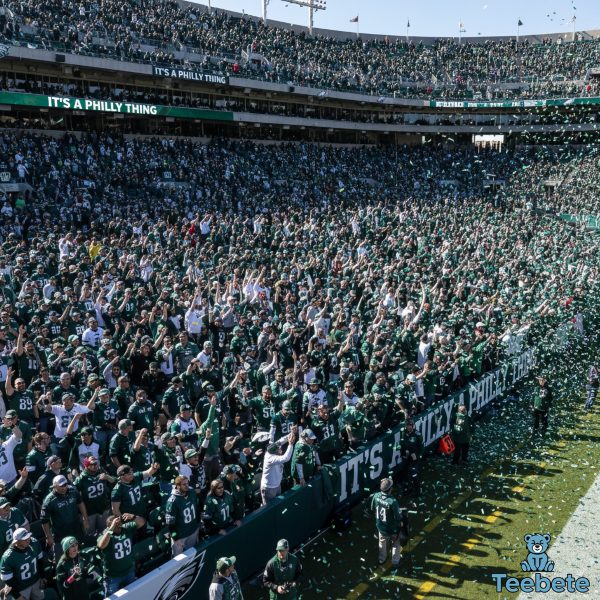
To understand why “It’s a Philly Thing” resonated so deeply, you have to understand Philadelphia itself—a city built on contradictions that somehow make perfect sense to anyone who’s lived here.
Philadelphia is the city that cheers hardest and criticizes harshest. It’s where fans famously pelted Santa Claus with snowballs in 1968, yet also where over 50,000 people showed up to support a team with a dismal 2-11 record on that freezing December day. Starting from its blue-collar workers to the streets’ stubbornness and perseverance, Philadelphia symbolizes work ethic and resilience, qualities that define how Philadelphians treat their sports teams.
We’ve seen this firsthand at Teebete. Through our customers, we’ve heard countless stories of what “It’s a Philly Thing” means to them. For some, it’s about growing up in a city that taught them loyalty means sticking around through the tough times. For others, it’s about the infectious energy of Lincoln Financial Field on game day, where the crowd becomes the twelfth man. And for many, it’s simply about belonging to something bigger than themselves. That shared sense of identity is often what inspires fans to seek out meaningful football fan gifts that reflect not just a team, but a way of life.
The phrase works because it’s both inclusive and exclusive. It invites you into the club while simultaneously acknowledging that if you have to ask what it means, you’ll never truly understand. The Philadelphia Inquirer described it as “shorthand for ‘Yes, this is a thing we do here; yes, it’s amazing; and no, I don’t have the time or patience to explain it to you.'”
This duality reflects Philadelphia’s historical position as the underdog city. The Conversation notes that Philadelphia has embraced a working-class ideology that thrives on being the underdog and emphasizes toughness, hard work, and combative defiance. When Philadelphia lost its status as the nation’s capital to Washington D.C. in 1800, the city developed an identity rooted in proving itself worthy through grit rather than pedigree.
“It’s a Philly Thing” also captures the city’s relationship with sports as a form of collective identity. In Philadelphia, your team allegiance isn’t just about entertainment—it’s about heritage, neighborhood pride, and generational bonds. Parents pass down Eagles fandom the way other families pass down heirlooms. The phrase acknowledges this depth without needing to explain it.
At Teebete, we believe slogans become meaningful when they reflect genuine community values rather than manufactured marketing messages. “It’s a Philly Thing” succeeds because it emerged organically from the voice of a leader who truly understood the city he represented. Hurts didn’t create Philadelphia’s identity—he simply gave it a name.
Breaking Down Each Word: The Linguistic Power of Simplicity
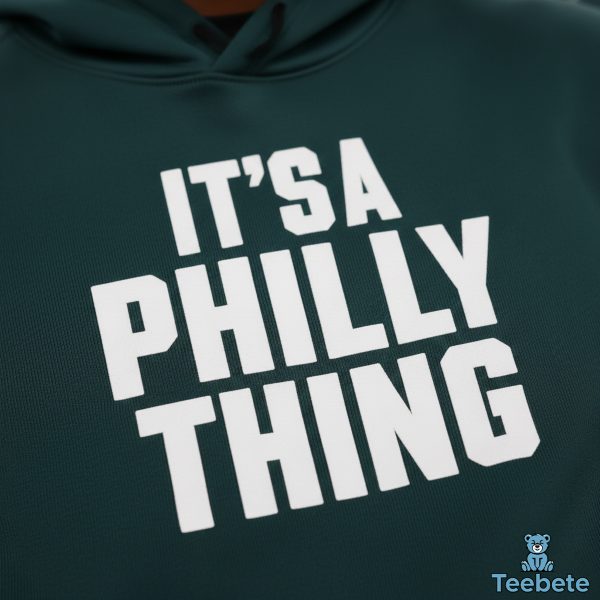
Let’s examine why these three seemingly simple words pack such emotional punch.
“It’s” – Present tense, declarative, confident. Not “it was” or “it could be.” This is happening now, and it’s non-negotiable. The contraction also makes it conversational, the way you’d explain something to a friend rather than announce it to strangers. There’s intimacy in that apostrophe.
“A” – The indefinite article matters here. Not “the” Philly thing, which would suggest singularity or definition. “A” Philly thing acknowledges that there are countless “Philly things”—the cheesesteaks, the Rocky steps, the Mummers, the way locals say “wooder” instead of “water.” This phrase is just one of many threads in Philadelphia’s cultural tapestry, which makes it feel authentic rather than manufactured.
“Philly” – The nickname instead of the formal “Philadelphia” is crucial. “Philly” is what locals call their city. It’s the word you use when you’re talking to your people, not when you’re addressing tourists. Using “Philly” instead of “Philadelphia” immediately signals insider status. It’s the linguistic equivalent of a secret handshake.
“Thing” – Perhaps the most ingenious word choice of all. “Thing” is deliberately vague, refusing to be pinned down or over-explained. It’s a placeholder that allows each person to fill in their own meaning. The beauty of “thing” is that it doesn’t try too hard. It’s casual, almost dismissive in its refusal to elaborate. Try replacing “thing” with a more specific word—”It’s a Philly tradition,” “It’s a Philly attitude,” “It’s a Philly spirit”—and you lose the magic.
Together, these three words create what linguists might call a “semantic container”—a phrase that holds different meanings for different people while maintaining a cohesive identity. Compare this to other famous sports slogans: “Who Dat” (New Orleans Saints) uses dialect to signal regional identity. “12th Man” (Seattle Seahawks) emphasizes fan participation. “Nation” (various teams) suggests scale and unity.
“It’s a Philly Thing” does something different. It’s not trying to recruit you or impress you. It’s simply stating a fact that locals already know, and if you don’t get it, that’s okay—maybe even preferred. This psychological dynamic creates powerful in-group bonding while paradoxically making outsiders want to understand and be part of the club.
Fan Stories: How “It’s A Philly Thing” United a City
The phrase transcended sports to become a lens through which Philadelphians understood themselves. Eagles owner Jeffrey Lurie captured this perfectly when explaining the slogan’s meaning: “Being so obsessed with the Eagles that nothing else comes into play” and describing how Eagles fans dominate other stadiums to the point where the team doesn’t really have away games.
At Teebete, we’ve heard stories of fans wearing “It’s a Philly Thing” shirts to job interviews, first dates, and even weddings during the 2023 playoff run. Through our customers, we’ve learned how this phrase became shorthand for explaining the inexplicable—why someone would stand in the freezing cold for four hours before kickoff, why a grown adult would cry over a football game, why an entire city would shut down to celebrate a championship.
One of our customers told us about wearing their “It’s a Philly Thing” hoodie to a business conference in Dallas, where a Cowboys fan asked what it meant. “I told him if I had to explain it, he’d never understand,” they said. “And honestly, that’s the whole point.”
The phrase also united different generations of Philadelphia fans. Older fans who remembered the struggles of the pre-Super Bowl era connected with younger fans experiencing their first championship runs. Veterans Stadium may have been demolished, but the ethos it represented—tough, unforgiving, demanding excellence—lived on in those three words.
Social media amplified the slogan’s reach exponentially. The hashtag #ItsAPhillyThing trended nationally during the playoff run, with fans sharing photos, videos, and stories that illustrated the phrase’s meaning without explicitly defining it. Memes proliferated. Creative variations emerged. The phrase became a template for Philadelphia pride that extended beyond just the Eagles to encompass the entire city’s identity.
Philadelphia celebrities embraced it too. Kevin Bacon, the quintessential Philadelphia icon, had already explored the concept in his song. Local artists incorporated it into murals. Radio hosts used it as a sign-off. It became the city’s unofficial motto during that magical winter.
The Modern Legacy: Living “It’s A Philly Thing” Today
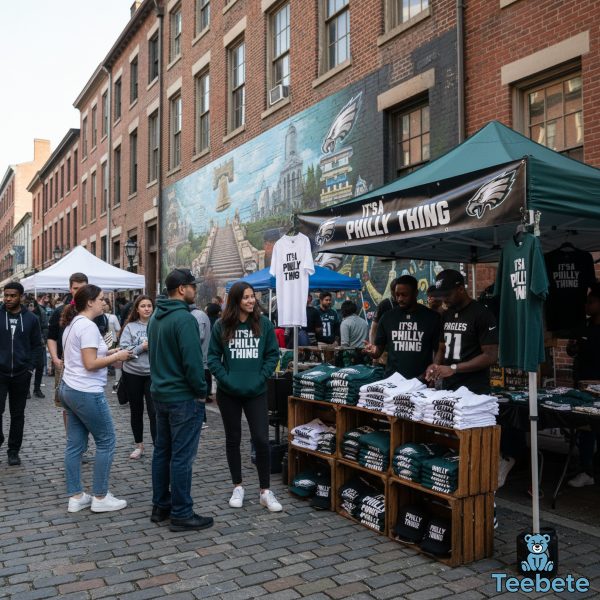
Two years removed from that playoff run, “It’s a Philly Thing” remains deeply embedded in Philadelphia’s cultural vocabulary. Walk through any Philadelphia neighborhood on game day, and you’ll still see the phrase on shirts, hats, and homemade signs. It has achieved something rare: permanent relevance beyond its initial moment.
The slogan has evolved to encompass more than just Eagles football. Fans now use it to describe the Phillies’ playoff intensity, the 76ers’ championship aspirations, and even Philadelphia’s broader cultural phenomena. “It’s a Philly Thing” has become shorthand for any aspect of the city’s character that feels distinctly, inexplicably Philadelphia.
On social media, the phrase continues to generate engagement and community connection. Game day threads overflow with fans declaring various traditions, superstitions, and behaviors as “Philly things.” The flexibility of the phrase—its refusal to be rigidly defined—has given it staying power that more specific slogans lack.
Merchandise continues to sell strongly, with new designs and variations appearing regularly. At Teebete, we’ve noticed that fans who purchase “It’s a Philly Thing” apparel often tell us they’re buying it not just for themselves but as a way to pass down Philadelphia identity to the next generation. Parents want their children to understand what it means to be from this city, and somehow these three words capture that lesson better than any lengthy explanation could.
The phrase has also been adopted by Philadelphia businesses, institutions, and community organizations as a way to signal authentic connection to the city. When something is a “Philly thing,” it carries an implicit guarantee of quality, toughness, and no-nonsense authenticity.
Conclusion: More Than a Slogan, A Statement of Identity
“It’s a Philly Thing” endures because it captured something essential about Philadelphia that existed long before Jalen Hurts said those words—and will continue long after. It’s the culmination of centuries of working-class pride, underdog mentality, fierce loyalty, and refusal to be anything other than exactly what Philadelphia is.
The phrase works because it doesn’t try to sell you anything. It doesn’t promise greatness or demand respect. It simply states a fact that every Philadelphian knows in their bones: there’s something about this city, something about being from here, that can’t be replicated or fully explained. You either get it or you don’t.
If you want to celebrate this spirit and wear your Philadelphia pride authentically, Teebete has designed apparel that honors this iconic phrase with the quality and attention to detail that the city deserves. Our It’s A Philly Thing shirt captures the essence of what makes Philadelphia special—because some things don’t need explanation, they just need to be worn with pride.
After all, it’s a Philly thing.

Hi, I’m Mia Wilson. I’m a journalist and content creator based in New York with over six years of experience covering sports, holidays, fan culture, and community events across the United States. I focus on exploring team histories, traditions, celebrations, and the broader impact of sports and cultural events on local communities. I’m passionate about providing accurate, engaging, and educational content for readers of all ages, helping them understand the stories, experiences, and events that make sports and celebrations so meaningful.