Philadelphia Eagles No One Likes Us, We Don’t Care Origin, Meaning & Philly Identity
When the Underdog Anthem Became Philadelphia’s Battle Cry
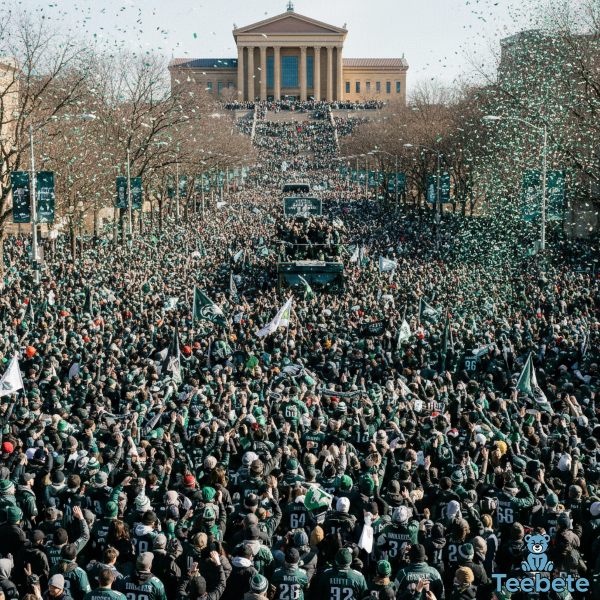
February 8, 2018. Philadelphia’s Broad Street became a sea of midnight green as millions crowded together, waiting for their heroes to emerge. Then, at the top of the Art Museum steps, Eagles center Jason Kelce appeared in a sequined Mummers costume, his voice already hoarse from celebrating along the parade route. What followed was four and a half minutes of raw Philadelphia emotion that would be replayed millions of times, but it was the ending that truly captured the city’s soul. Leading tens of thousands in a profane chant borrowed from soccer fans, Kelce shouted the words that had become the city’s defiant anthem: “No one likes us, we don’t care!”
At Teebete, we’ve worked with countless Eagles fans who wear this slogan not as an insult, but as a badge of honor. We’ve seen how these six simple words carry the weight of generations who’ve learned that being underestimated is Philadelphia’s greatest strength.
The Transatlantic Journey of a Rebel Chant
The phrase originated with supporters of Millwall FC, an English soccer club, in the late 1970s, sung to the tune of Rod Stewart’s “Sailing.” Millwall, a working-class London club that spent most of its history in soccer’s lower divisions, created the chant as a defiant response to sustained media criticism about their fans’ behavior. Like Philadelphia decades later, Millwall supporters embraced their outsider status and turned contempt into fuel.
The chant’s journey to Philadelphia began in an unexpected place. In January 2007, a group of Philadelphia soccer fans who met on BigSoccer.com formed the Sons of Ben, named after Benjamin Franklin, as a supporters group for a Major League Soccer team that didn’t yet exist. When the Philadelphia Union finally launched in 2010, the Sons of Ben adapted Millwall’s chant, changing the tune to “Oh My Darling, Clementine” and replacing team references with “We’re from Philly, f***ing Philly.”
For years, the chant lived in the River End of Talen Energy Stadium, roared by Union supporters who understood the sentiment perfectly. Then came Super Bowl LII. During the Eagles’ February 8, 2018 victory parade, Jason Kelce sang a profane version of the chant to the crowd’s delight. According to The Philadelphia Inquirer, Kelce had learned it just hours earlier while drinking with fans along the parade route. In that moment, a soccer chant became Philadelphia’s universal declaration of identity.
The Cultural DNA of Defiance
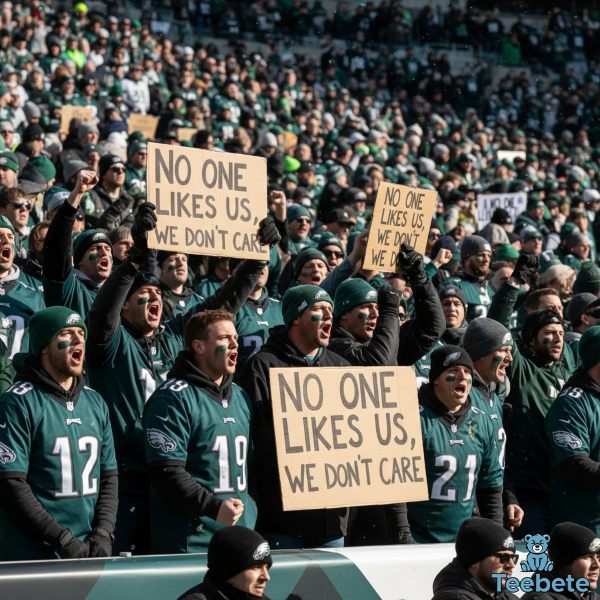
Why does “No One Likes Us, We Don’t Care” resonate so deeply in Philadelphia? Because it articulates something fundamental about the city’s soul that residents have always known but rarely expressed so perfectly.
Philadelphia has spent centuries in the shadow of bigger, flashier cities. Growing up overshadowed by New York, Philadelphia’s Super Bowl LII victory was just the city’s second major professional sports championship since Ronald Reagan’s second term. The city that birthed American independence somehow became the underdog in its own region, constantly compared to New York’s glamour and Washington’s power.
At Teebete, we believe this slogan captures what makes Philadelphia sports culture unique. Through our customers, we’ve heard countless stories of what it means to be a Philly fan. It’s about embracing a working-class identity that values toughness over polish, authenticity over image. The city’s sports history is built on grit: Veterans Stadium with its basement jail for unruly fans, the Broad Street Bullies who brawled their way to Stanley Cups, and yes, fans who once threw snowballs at Santa Claus.
According to Philadelphia Magazine’s exploration of Eagles fan psychology, the city has roots in the working class and takes pride in that grittiness. The Eagles’ stadium sits within walking distance of rowhouse neighborhoods, making the team genuinely feel like it belongs to the community. When you grow up in a city that’s been called the poorest big city in America, watching your football team win becomes more than entertainment—it feels like validation.
The slogan also speaks to a specific kind of Philadelphia defiance. Sports psychologist Joel Fish notes that Philadelphians have developed an oral tradition that passes down stories of disappointment from generation to generation, creating a mentality that expects the worst while hoping for the best. “No One Likes Us, We Don’t Care” transforms that pessimism into power. It says: we know what you think of us, we know you’re counting us out, and we’re going to prove you wrong anyway.
Breaking Down the Words That Define a City
Every word in this slogan carries weight, chosen (perhaps accidentally at first) to create maximum impact.
“No One” establishes the complete isolation. Not “some people don’t like us” or “most people don’t like us,” but everyone. It’s an absolute that paradoxically creates unity among those it describes. If everyone’s against us, then we’re all in this together.
“Likes Us” keeps it simple and human. Not “respects us” or “believes in us,” but the basic emotional connection. It acknowledges the visceral nature of how others view Philadelphia fans and the city itself. There’s no pretense of earning admiration through performance—the dislike is assumed to be fundamental.
“We Don’t Care” is the heart of the entire message. Three words that embody decades of Philadelphia attitude. It’s not defeatist; it’s liberating. When you stop caring about external validation, you’re free to be exactly who you are. This phrase transforms potential shame into strength, insult into identity.
The linguistic simplicity is part of its genius. Unlike complex fight songs or elaborate chants, this can be shouted, sung, or printed on a shirt and understood instantly. It’s conversational yet confrontational, casual yet deeply meaningful. The profane version that became popular after Kelce’s speech adds emphasis, but even without it, the message is clear: Philadelphia defines itself on its own terms.
From the Linc to Living Rooms: How Fans Made It Theirs
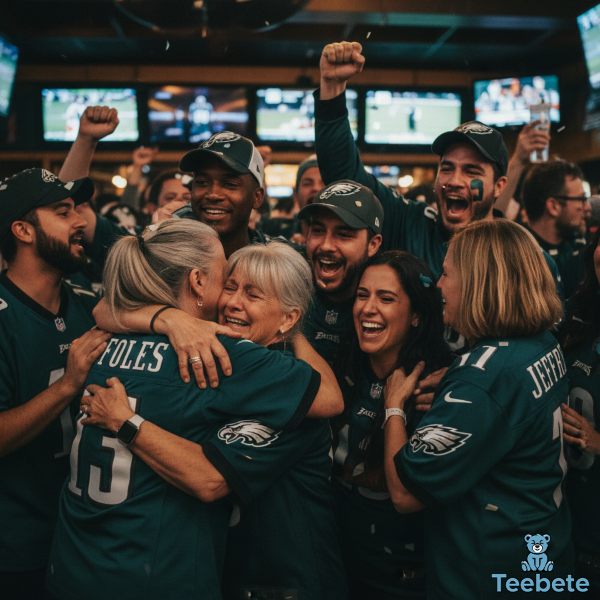
What happened after Jason Kelce’s parade speech demonstrates how powerful a slogan becomes when a community truly adopts it. Within hours, social media exploded with videos of fans singing the chant. Within days, local businesses were printing it on everything from t-shirts to bar coasters. The phrase transcended sports and became a statement about Philadelphia identity itself.
In our experience at Teebete, fans tell us they wear this slogan to work, to family gatherings, to bars in rival cities. It’s become a way to identify fellow Philadelphians anywhere in the world. One customer told us about wearing their “No One Likes Us” shirt to a business conference in Dallas and having three other attendees approach him within an hour—all from Philly, all grinning with recognition. Stories like these show how fan identity travels far beyond the stadium, which is why many supporters look for unique football-themed gift ideas, including Official Eagles gear, that carry the same sense of belonging wherever they go.
The slogan has power because it speaks to something deeper than football. It’s about a city that’s been dismissed, underestimated, and written off, yet refuses to change who it is to win approval. When Eagles linebacker Brandon Graham recorded the strip-sack that sealed Super Bowl LII, it wasn’t just a football play—it was validation of the “No One Likes Us” mentality. When Nick Foles, a backup quarterback, became Super Bowl MVP, it proved that underdogs can shock the world.
As one researcher explained, Philadelphia’s identity centers on being the struggling underdog, and when you don’t have much going well in your surroundings, an Eagles win can feel like hitting the lottery. The slogan gives fans permission to channel economic anxiety, geographic inferiority complex, and decades of sports disappointment into pure, unfiltered pride.
The tradition has also spread beyond individual fans to become part of game day culture. At Lincoln Financial Field, sections of fans spontaneously break into the chant. The Flyers’ mascot Gritty led the crowd in singing it before Super Bowl LVII in 2023. Even the Phillies fanbase has adopted it during their recent playoff runs, showing how the phrase now belongs to the entire city, not just one team.
The Modern Power of Being Unlikeable
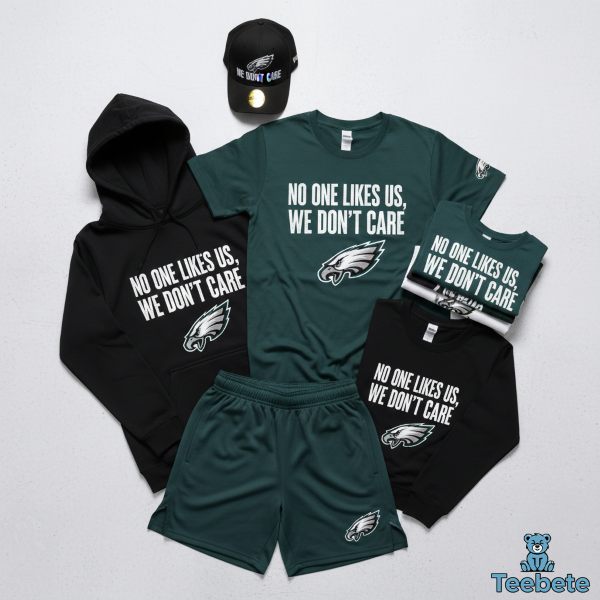
In today’s social media age, “No One Likes Us, We Don’t Care” has found new life and meaning. The phrase has become one of the most popular hashtags among Philadelphia sports fans, used to celebrate victories and mock critics with equal enthusiasm. The chant’s popularity on platforms like TikTok demonstrates how it continues to evolve, with fans creating videos that range from sincere declarations of Philly pride to humorous acknowledgments of the city’s notorious reputation.
The slogan has also become a marketing phenomenon. Merchandise featuring the phrase sells consistently year-round, not just during football season. We’ve noticed at Teebete that customers want authentic designs that capture the raw emotion of the phrase—they’re not looking for sanitized versions or corporate-friendly interpretations. They want the real thing, complete with its edge and attitude.
Interestingly, the Eagles’ recent success has created a fascinating tension with the slogan. According to The Conversation’s analysis of Eagles fandom, the team has become one of the most-viewed franchises across all sports, leading some to joke that they’re actually “America’s Team” now. Yet fans cling to the underdog narrative and the “No One Likes Us” identity even when their team dominates the league. Perhaps that’s because the slogan was never really about being unsuccessful—it was always about refusing to conform to others’ expectations, regardless of the scoreboard.
Some observers suggest it’s time for Philadelphia to evolve past the underdog mentality and embrace being elite. But for most fans, that misses the point entirely. “No One Likes Us, We Don’t Care” isn’t about being bad; it’s about being authentically, unapologetically Philadelphia. It’s about maintaining your identity when everyone tells you to change, about valuing loyalty over respectability, about believing in your team even when—especially when—nobody else does.
Wearing Your Identity: The Teebete Collection
The slogan “No One Likes Us, We Don’t Care” represents more than Philadelphia Eagles fandom—it’s a declaration of identity, a middle finger to conformity, and a celebration of underdog spirit that resonates far beyond football. From South London’s working-class soccer grounds to Jason Kelce’s unforgettable parade speech, this phrase has traveled across oceans and through decades to become the perfect expression of what it means to be from Philadelphia.
At Teebete, we understand that when fans wear this slogan, they’re not just supporting a team. They’re claiming their place in a tradition of defiance, grit, and unwavering loyalty. They’re saying that external validation doesn’t matter when you have something more valuable: a community that stands together, a city that refuses to back down, and a team that embodies everything it means to be an underdog with a champion’s heart.
If you want to celebrate this iconic spirit and show the world exactly where you stand, explore our No One Likes Us, We Don’t Care tee. Because in the end, whether they like us or not, we know who we are—and we wouldn’t have it any other way.

Hi, I’m Mia Wilson. I’m a journalist and content creator based in New York with over six years of experience covering sports, holidays, fan culture, and community events across the United States. I focus on exploring team histories, traditions, celebrations, and the broader impact of sports and cultural events on local communities. I’m passionate about providing accurate, engaging, and educational content for readers of all ages, helping them understand the stories, experiences, and events that make sports and celebrations so meaningful.