Why Cardinals Fans Are Called the Bird Gang
The Arizona Cardinals boast one of the most passionate and resilient fan bases in the NFL, yet many casual observers remain unfamiliar with the unique culture surrounding this historic franchise. When tens of thousands of fans clad in cardinal red fill State Farm Stadium, they proudly identify themselves by two distinctive monikers that have become synonymous with unwavering loyalty in the desert. The Bird Gang and the Red Sea represent more than catchy nicknames; they embody the spirit of a community that has supported its team through decades of heartbreak, celebrated rare triumphs, and built traditions that make Arizona Cardinals gamedays unlike any other experience in professional football.
This comprehensive guide explores the fascinating origin of these fan nicknames, traces the rich history of the oldest continuously operating professional football franchise in America, and provides everything you need to know about joining this dedicated community of desert football enthusiasts.
The Origin of Bird Gang How Arizona Cardinals Fans Got Their Name
What Does Bird Gang Mean for Cardinals Fans?
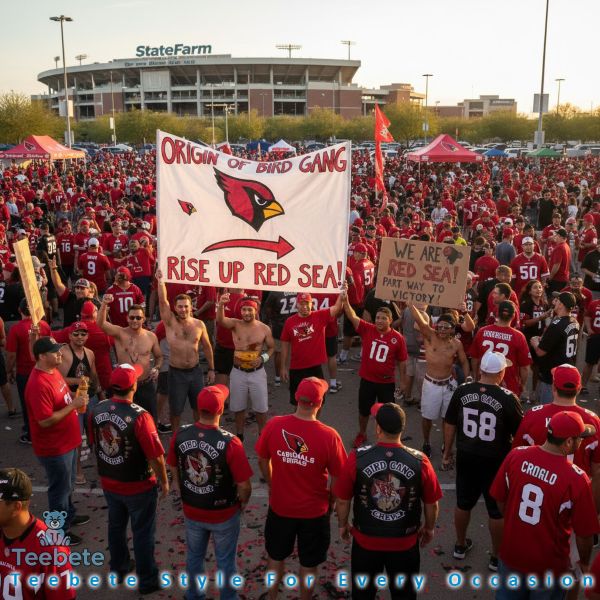
The term Bird Gang represents a grassroots movement among Arizona Cardinals supporters who embraced their team’s avian identity with fierce pride. Unlike nicknames bestowed by marketing departments, Bird Gang emerged organically from the fan community itself following the franchise’s 1988 relocation from St. Louis to the Phoenix metropolitan area [1].
The nickname draws its power from the northern cardinal that serves as the team’s namesake and logo. These territorial birds are known for their aggressive defense of their domain and their striking red plumage, characteristics that fans adopted as their own identity markers. When you call yourself part of the Bird Gang, you’re declaring membership in a flock that sticks together regardless of the team’s record on the field.
The grassroots nature of this nickname makes it particularly meaningful. Organized fan clubs and social media communities adopted Bird Gang as their rallying cry, creating a network of dedicated supporters who travel to road games, organize tailgate parties, and represent Arizona football wherever they go [8].
Rise Up Red Sea: The Other Cardinals Fan Nickname
The Red Sea nickname operates alongside Bird Gang, often used interchangeably but carrying its own distinct imagery. This term evokes the visual spectacle of a stadium filled with fans wearing red jerseys, creating an unbroken ocean of team colors that can intimidate visiting opponents [1].
The phrase carries biblical undertones that resonate with the underdog narrative many Cardinals fans embrace. Just as the Red Sea parted for the Israelites fleeing Egypt, Cardinals supporters hope their passionate presence will help clear a path to victory for their team. The rally cry associated with this nickname has become equally iconic among the faithful.
Both nicknames coexist harmoniously within Cardinals culture. Some fans prefer the aggressive, crew-like connotations of Bird Gang, while others gravitate toward the communal, visual imagery of the Red Sea. Most supporters happily claim both identities depending on the context and moment.
A Brief History of the Cardinal Football Team
From Chicago to the Desert: The Franchise Journey
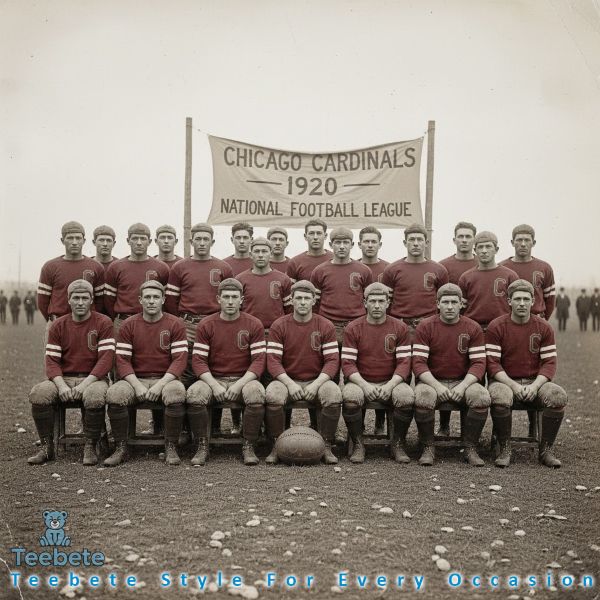
Understanding Cardinals fan culture requires appreciating the remarkable journey this franchise has taken. The team traces its origins to 1898 when the Morgan Athletic Club was founded in Chicago, making the Cardinals the oldest continuously operating professional football club in the United States [2].
The team became a charter member of the NFL on September 17, 1920, alongside the Chicago Bears as one of only two original franchises still in operation today [2]. The Cardinals name itself has an interesting origin: when legendary team founder Chris O’Brien acquired used jerseys with a maroon color, he reportedly declared that the shade was not maroon but cardinal red, thus establishing the team’s enduring identity [72].
The franchise relocated to St. Louis in 1960, where they played for nearly three decades and earned nicknames like the Football Cardinals, Gridbirds, and Big Red to distinguish them from the baseball Cardinals sharing the city [2]. Financial challenges and stadium issues eventually prompted another move, and the team arrived in Arizona before the 1988 season.
Initially called the Phoenix Cardinals, the franchise officially became the Arizona Cardinals in 1994 to represent the entire state rather than just its largest city [3]. This move represented more than geography; it signaled the team’s intention to build a statewide fan base in their new desert home.
Key Milestones in Arizona Cardinals History
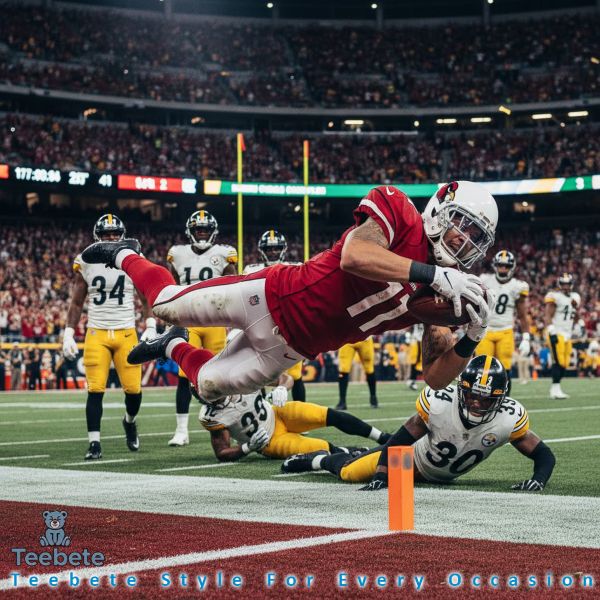
The Cardinals’ Arizona era has produced memorable moments that galvanized fan loyalty:
1998 Playoff Breakthrough: For the first time since 1947, the Cardinals won a playoff game, defeating the Dallas Cowboys 20-7 in the Wild Card round and giving Arizona fans their first taste of postseason success [3].
2008 Super Bowl Run: The magical 2008 season remains the pinnacle of Cardinals football in Arizona. Led by quarterback Kurt Warner and wide receiver Larry Fitzgerald, the team won the NFC Championship and advanced to Super Bowl XLIII [51]. Though they lost to the Pittsburgh Steelers 27-23 in a heartbreaking finish, this run cemented the team’s place in the hearts of Arizona sports fans.
2015 NFC Championship Appearance: The Cardinals returned to the conference championship game, defeating the Green Bay Packers 26-20 in overtime before falling to the Carolina Panthers [3].
2021 Historic Start: The team began the season 7-0, their best start in franchise history, finishing 11-6 and returning to the playoffs under coach Kliff Kingsbury and quarterback Kyler Murray [72].
State Farm Stadium: Home of the Red Sea
The Desert’s Premier Football Venue
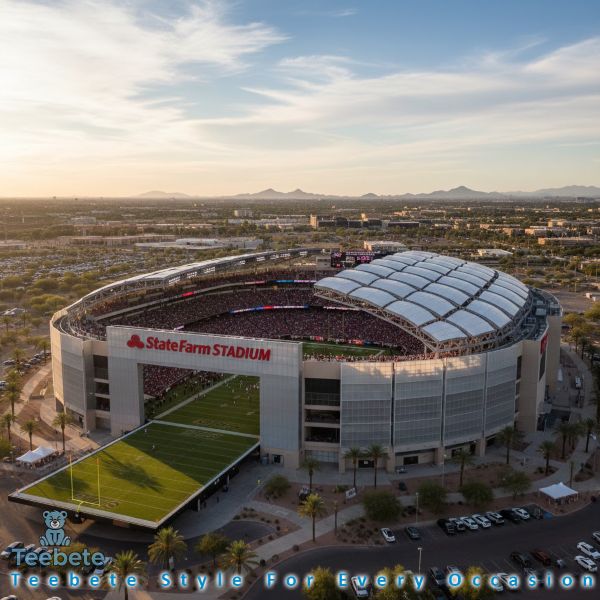
State Farm Stadium in Glendale, Arizona, stands as an architectural marvel and the proud home of the Arizona Cardinals since 2006 [25]. This multipurpose venue replaced the team’s temporary home at Sun Devil Stadium and finally gave the franchise a world-class facility befitting NFL football.
The stadium features remarkable engineering achievements including a retractable roof and a roll-out natural grass playing field that moves outside for optimal sunlight exposure [21]. With a fixed seating capacity of 63,400 for regular games, expandable to over 73,000 for major events, State Farm Stadium creates an intimate yet electric atmosphere for Cardinals football [21].
The venue has hosted three Super Bowls (XLII, XLIX, and LVII), multiple College Football Playoff games, the Fiesta Bowl, NCAA Final Four tournaments, and numerous other major sporting and entertainment events [25]. This prestigious resume speaks to the stadium’s versatility and importance in American sports culture.
Gameday Atmosphere and Fan Experience
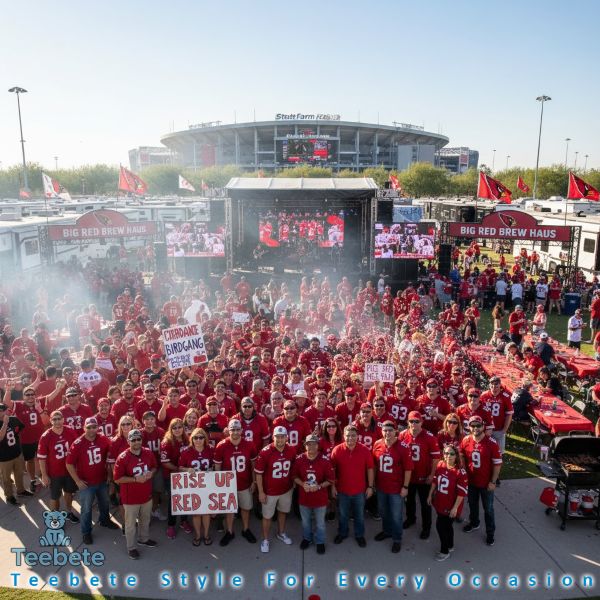
Cardinals gamedays at State Farm Stadium offer a distinctive blend of desert hospitality and football passion. The retractable roof ensures comfortable conditions regardless of Arizona’s intense heat, with air conditioning maintaining pleasant temperatures even during early-season games [25].
The stadium experience begins hours before kickoff in Sportsman’s Park, where tailgating has become an integral Cardinals tradition [61]. The Great Lawn provides 10 acres of space for fans to gather, grill, and celebrate together before heading inside for the game [61]. This area features the Great Lawn Stage with live entertainment, the Cardinal Flight Deck with giant screens showing other NFL games, and the Big Red Brew Haus for refreshments [65].
Inside the stadium, the atmosphere intensifies as the Red Sea fills their seats. The team’s video boards and sound system build anticipation before kickoff, while Big Red and the Cardinals Cheerleaders keep energy high throughout the game. Divisional matchups against NFC West rivals the Seattle Seahawks, San Francisco 49ers, and Los Angeles Rams generate particularly passionate crowds [61].
Legendary Players Who Defined Cardinals Football
Larry Fitzgerald: The Greatest Cardinal
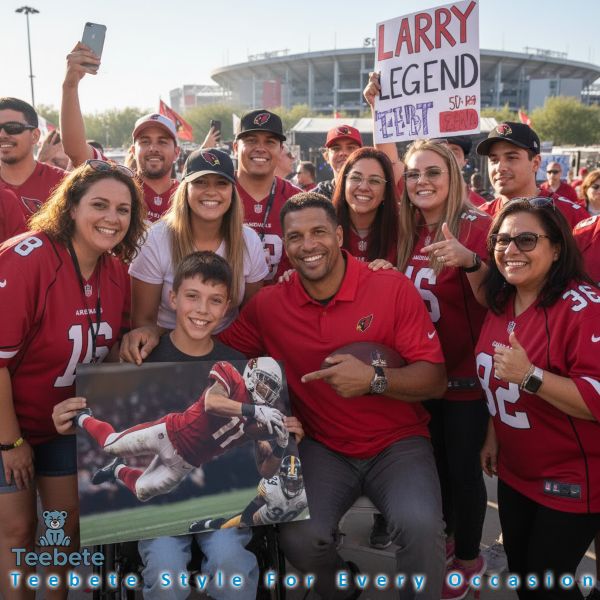
No discussion of Arizona Cardinals history is complete without Larry Fitzgerald, widely considered the greatest player in franchise history and one of the finest wide receivers in NFL history. Drafted third overall in 2004, Fitzgerald spent his entire 17-year career with the Cardinals, a rarity in modern professional sports [41].
Fitzgerald’s statistics tell a remarkable story: 1,432 receptions and 17,492 receiving yards, both second-most in NFL history behind only Jerry Rice, along with 121 touchdowns [42]. He earned 11 Pro Bowl selections, a first-team All-Pro honor in 2008, and the respect of every defender who tried to cover him [48].
What made Fitzgerald special extended beyond statistics. His legendary hands produced more tackles than drops throughout his career, an almost unbelievable feat for any receiver [48]. During the 2008 playoff run, he posted one of the greatest postseason performances ever, catching 30 passes for 546 yards and seven touchdowns in four games [50].
Fitzgerald remained with Arizona through losing seasons and coaching changes because he valued building something lasting over chasing championships elsewhere. His loyalty resonated deeply with Cardinals fans and helped establish the team’s identity during difficult years. He is a strong candidate for first-ballot induction into the Pro Football Hall of Fame in 2026 [44].
Kurt Warner: The Super Bowl Quarterback
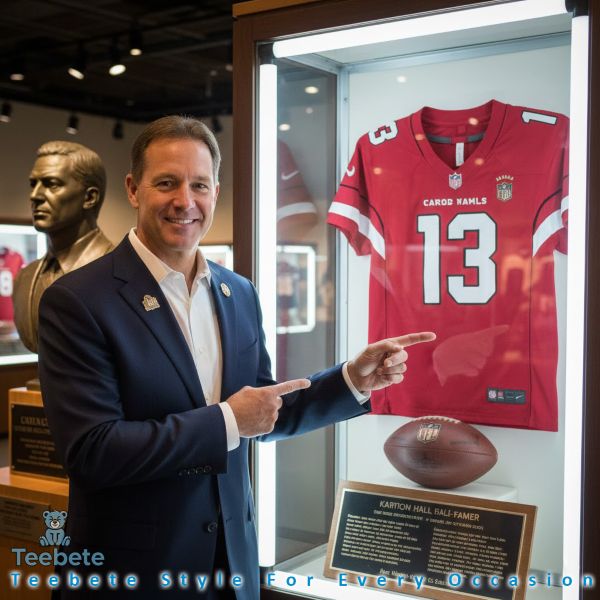
Kurt Warner’s time with the Cardinals represents one of football’s greatest comeback stories. After winning a Super Bowl with the St. Louis Rams in 2000 and earning two MVP awards, Warner’s career seemed finished when he signed with Arizona in 2005 [52].
Warner initially served as a backup and struggled with injuries, but by 2007 he had reclaimed the starting job. In 2008, he delivered one of the finest quarterback seasons in Cardinals history, throwing for 4,583 yards and 30 touchdowns with a 96.9 passer rating [54]. His postseason performance was equally spectacular, including 377 yards and three touchdowns in Super Bowl XLIII [51].
Warner retired after the 2009 season and was inducted into the Pro Football Hall of Fame in 2017. His partnership with Fitzgerald during those magical years gave Cardinals fans memories they cherish to this day.
Kyler Murray: The Current Franchise Quarterback
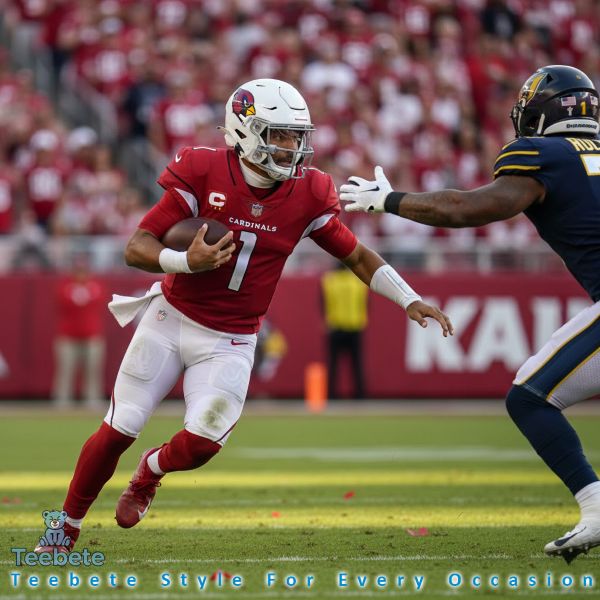
The Cardinals selected Kyler Murray with the first overall pick in the 2019 NFL Draft, making him the shortest quarterback ever drafted in the first round and the first player selected in the first round of both the NFL and MLB drafts [33].
Murray earned NFL Offensive Rookie of the Year honors in 2019 and consecutive Pro Bowl selections in 2020 and 2021 [33]. His dual-threat ability as both passer and runner gives defenses nightmares, with Murray ranking among the best rushing quarterbacks in league history.
In 2024, Murray completed 68.8% of his passes for 3,851 yards and 21 touchdowns while adding 572 rushing yards, marking his first full season since 2020 [31]. Under contract through 2028, Murray represents the Cardinals’ hope for future success and the player around whom young fans build their fandom.
Cardinals Fan Traditions and Rituals
Tailgating at Sportsman’s Park
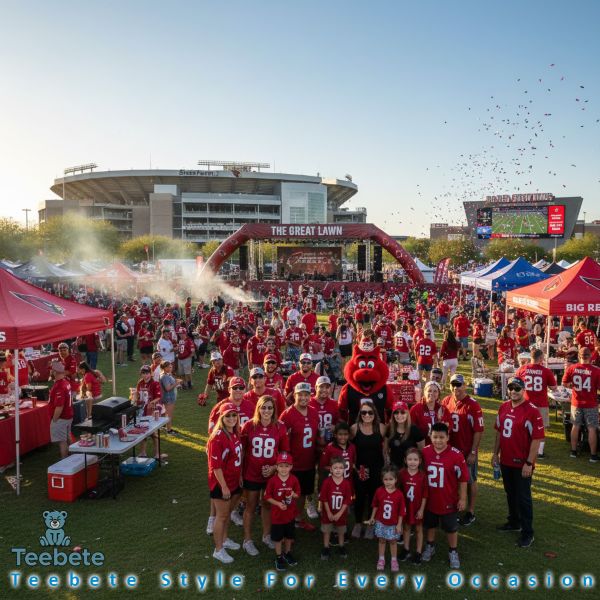
Tailgating Cardinals games has evolved into one of the NFL’s most underrated pregame experiences [61]. Parking lots open four hours before kickoff, and dedicated fans arrive early to claim prime spots in designated tailgating areas [63].
The atmosphere combines Arizona’s famous hospitality with passionate football culture. Expect to find elaborate setups with tents, portable grills, coolers stocked with cold beverages, and fans in full Cardinals gear. The weather cooperates beautifully during football season, with sunshine and moderate temperatures creating ideal conditions for outdoor gatherings [64].
Specific areas like the Great Lawn offer additional entertainment including live music, games, and family-friendly activities [65]. The Cardinals Preflight Party welcomes fans of all ages with photo opportunities alongside Big Red and Cardinals Cheerleaders [65].
Tailgating rules emphasize community spirit: propane and natural gas grills are permitted, generators under 6500 watts are allowed, and fans are expected to limit food preparation to their own parties rather than commercial operations [66]. The atmosphere is notably friendlier and more family-oriented than some NFL venues, making it accessible for newcomers and visiting fans alike.
Big Red: The Beloved Mascot
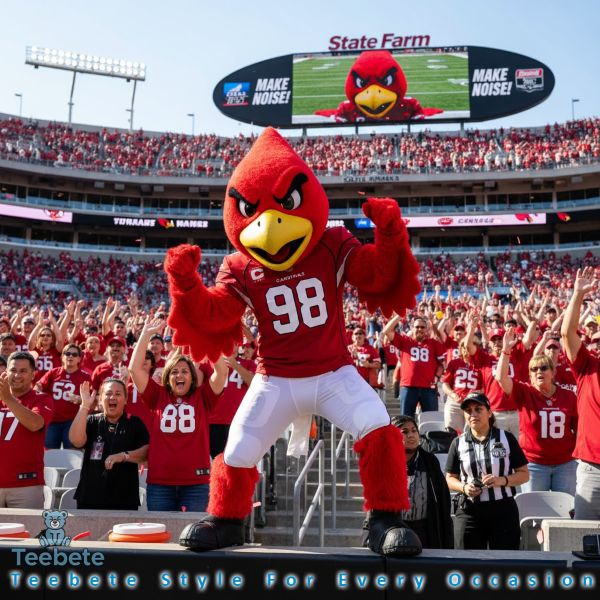
Big Red stands as one of the NFL’s most recognizable mascots, bringing energy and entertainment to every Cardinals home game since hatching on October 4, 1998 [71]. Standing 6 feet 4 inches tall with an impressive 7-foot wingspan, this oversized cardinal has become inseparable from the gameday experience [71].
The mascot’s bold personality includes epic dance moves, crowd-pumping antics, and relentless enthusiasm regardless of the score [72]. Big Red interacts with fans throughout the stadium, appearing on video boards, leading cheers, and creating memorable moments for children and adults alike.
Beyond gamedays, Big Red serves as a community ambassador, visiting schools, hospitals, and charity events throughout Arizona [79]. His presence at Cardinals community programs including Coach of the Week and Player of the Week celebrations connects the team with younger fans across the state.
Big Red has received recognition as one of the NFL’s best mascots, ranking fifth overall in a nationwide fan survey and fourth-most intimidating [80]. The mascot’s evolution over the years, including a 2005 redesign that made his appearance meaner and more aggressive, has kept him relevant and beloved across generations of fans.
Wearing Red on Gameday
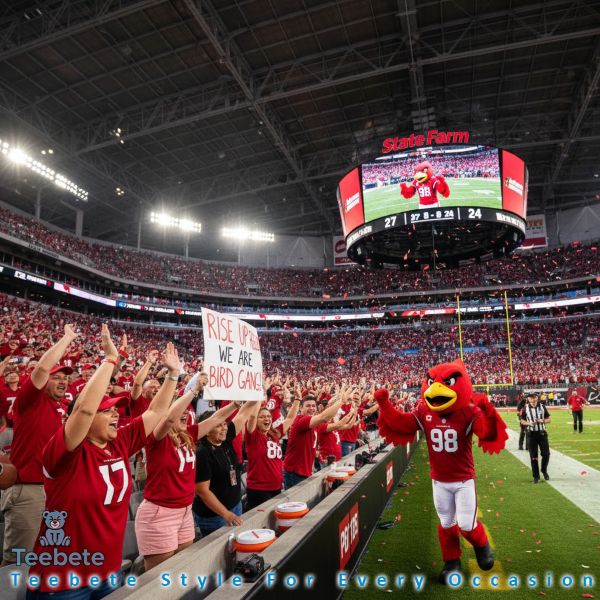
Cardinals fans take pride in creating the Red Sea effect by wearing team colors to games. The tradition of filling the stadium with red creates visual unity and establishes home-field advantage that visiting teams notice immediately [64].
The team encourages this tradition through promotions, giveaways, and messaging that emphasizes the importance of representing the Red Sea. When the Cardinals host primetime games or divisional matchups, the sea of red becomes even more pronounced as casual fans join the dedicated faithful.
For fans attending their first game, wearing a Cardinals jersey or red clothing immediately identifies you as part of the community. The shared visual identity creates instant connections with fellow supporters and contributes to the atmosphere that makes State Farm Stadium special.
Attending a Cardinals Game: Practical Tips
Getting Tickets
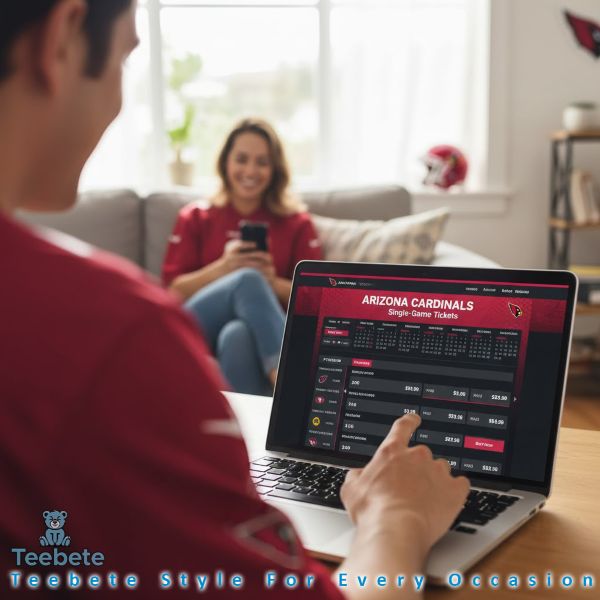
Cardinals tickets are available through multiple channels depending on your preferences and budget. The team’s official website offers direct purchases for face-value tickets, while the secondary market provides options for sold-out games or premium seating [30].
Season ticket memberships provide the most reliable access and best value for dedicated fans, with priority seating selection and exclusive benefits. Single-game tickets typically go on sale during the summer before each season, with prices varying based on opponent and day of the week.
Divisional games against the Seahawks, 49ers, and Rams command premium prices due to the intense rivalries and typically larger road fan contingents [61]. Early-season games often offer better value as some fans avoid the lingering Arizona heat despite the stadium’s climate control.
Stadium Parking and Transportation
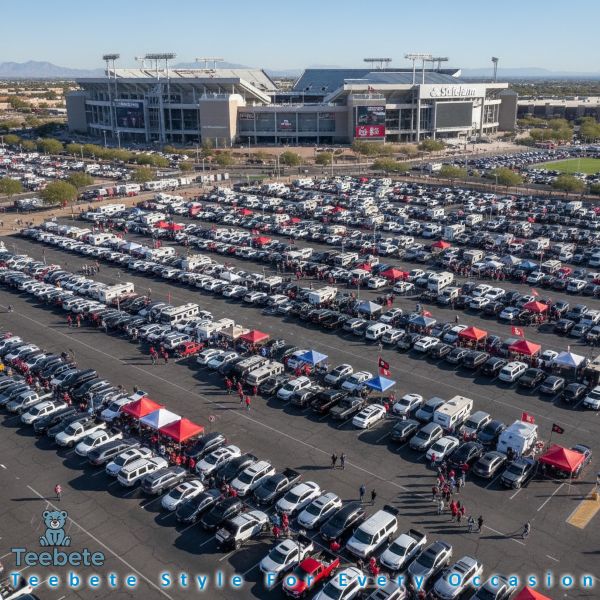
State Farm Stadium offers extensive parking throughout Sportsman’s Park, with various lot options at different price points [63]. Arriving early is essential for fans planning to tailgate, as prime spots fill quickly for big games.
The stadium’s location in Glendale provides relatively easy access from throughout the Phoenix metropolitan area via major highways. Rideshare services and designated pickup/dropoff zones offer alternatives for fans preferring not to drive or wanting to enjoy the tailgate festivities fully.
RV and oversized vehicle parking is available in designated areas for fans bringing larger setups [64]. Overnight camping is not permitted, so all vehicles must leave within the posted time after games conclude [67].
What to Bring (and What to Leave Home)
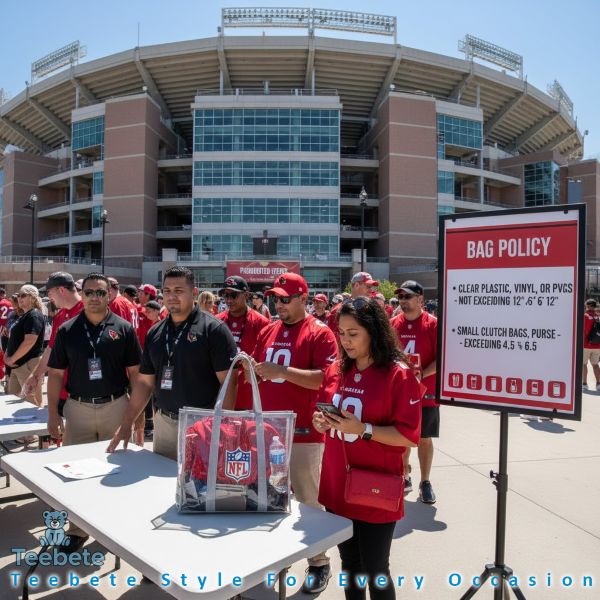
State Farm Stadium enforces a clear bag policy limiting bags to 12x6x12 inches if transparent or 4.5×6.5 inches for non-transparent clutch purses [23]. The official Cardinals plastic tote bags sold at merchandise locations meet these requirements.
Prohibited items include outside food and beverages, bottles, cans, thermoses, and any beverage containers [67]. Fans requiring medical items or caring for infants can bring necessary supplies with inspection at entry points.
For tailgating, fans may bring grills (propane/natural gas only; charcoal is prohibited), coolers, tents with above-ground weights, lawn chairs, and entertainment items like cornhole sets [66]. Electrical generators under 6500 watts are permitted for those wanting to power additional equipment.
The Cardinals in the NFC West
Divisional Rivalries
The Arizona Cardinals compete in the NFC West alongside the Los Angeles Rams, San Francisco 49ers, and Seattle Seahawks [82]. These divisional matchups produce some of the most intense and meaningful games on the schedule each season.
The Seattle Seahawks rivalry intensified after both teams joined the NFC West in 2002 [89]. Their battles have produced memorable moments including a bizarre 6-6 tie on Sunday Night Football in 2016 that left both fan bases bewildered. The series remains competitive with the teams splitting games regularly.
The San Francisco 49ers rivalry carries historical weight despite the teams spending much of their histories in different divisions. The Cardinals clinched their 2008 NFC West title by defeating the 49ers, a victory that remains significant in franchise history [89]. Recent seasons have seen the 49ers dominate, though the Cardinals remain dangerous divisional opponents.
The Los Angeles Rams rivalry has intensified since the Rams returned to Los Angeles from St. Louis, creating a southwestern battle for regional bragging rights. Both teams compete for fans throughout the desert southwest and southern California, adding extra stakes to their matchups.
Competing in the NFL’s Toughest Division
The NFC West has earned a reputation as one of the NFL’s most competitive divisions, with all four teams reaching conference championship games since the 2002 realignment [82]. Every team in the division has appeared in a Super Bowl during this era, demonstrating the consistent quality throughout the division.
For Cardinals fans, this competition means every divisional game carries significant playoff implications. The 2024 season exemplified this balance, with all four teams remaining in playoff contention deep into the schedule [86]. The Cardinals have shown they can compete with anyone when healthy, though building sustained success remains an ongoing project.
The division’s strength also means Cardinals victories carry extra weight. Defeating the Seahawks, 49ers, or Rams proves the team belongs among the NFL’s elite, and such wins energize the fan base regardless of overall record.
Frequently Asked Questions
Why are Arizona Cardinals fans called Bird Gang?
Bird Gang emerged as a grassroots nickname adopted by Arizona Cardinals fans after the team relocated from St. Louis to Phoenix in 1988 [1]. The name celebrates the team’s cardinal bird identity while conveying the tight-knit, loyal nature of the fan community. Organized fan clubs and social media groups embraced the term, making it synonymous with dedicated Cardinals supporters who travel to games and represent the team nationwide.
What does Red Sea mean for Cardinals fans?
Red Sea refers to the visual phenomenon of Cardinals fans filling State Farm Stadium wearing team colors, creating an unbroken ocean of red throughout the venue [1]. The term carries biblical imagery suggesting the passionate crowd can help clear a path to victory. Both Red Sea and Bird Gang are used interchangeably by fans, though Red Sea tends to emphasize the collective visual impact while Bird Gang focuses more on community identity.
When did the Arizona Cardinals move to Arizona?
The Cardinals franchise relocated from St. Louis to Arizona before the 1988 season, initially playing as the Phoenix Cardinals at Sun Devil Stadium on the Arizona State University campus [2]. The team officially became the Arizona Cardinals in 1994 when owner Bill Bidwill agreed to represent the entire state rather than just the city of Phoenix [3]. The franchise moved to their current home at State Farm Stadium in Glendale in 2006.
Have the Arizona Cardinals ever won a Super Bowl?
The Arizona Cardinals have not won a Super Bowl, though they appeared in Super Bowl XLIII following the 2008 season [51]. Led by quarterback Kurt Warner and wide receiver Larry Fitzgerald, the Cardinals lost to the Pittsburgh Steelers 27-23 in a dramatic game that came down to the final minute. The franchise did win NFL Championships in 1925 and 1947, both while based in Chicago, but has not claimed a title since [2].
What is the capacity of State Farm Stadium?
State Farm Stadium has a fixed seating capacity of 63,400 for Arizona Cardinals home games [21]. The venue can expand to accommodate over 73,000 fans for major events like the Super Bowl or College Football Playoff through temporary seating configurations [21]. The stadium features a retractable roof and roll-out natural grass field, making it one of the most technologically advanced venues in the NFL.
Who is the Arizona Cardinals mascot?
Big Red is the official mascot of the Arizona Cardinals, having debuted on October 4, 1998 [71]. Standing 6 feet 4 inches tall with a 7-foot wingspan, this oversized cardinal character entertains fans at every home game and community events throughout Arizona [71]. Big Red has been recognized as one of the NFL’s most popular and intimidating mascots, known for energetic dance moves and crowd interaction.
What time do tailgate lots open for Cardinals games?
Tailgating lots at State Farm Stadium open four hours before kickoff for Arizona Cardinals home games [63]. Fans arrive early to secure prime locations in designated tailgating areas including the Great Lawn in Sportsman’s Park. Tailgating is only permitted before games; post-game tailgating is not allowed, and all fans must leave lots within the posted time after games conclude [66].
Who are the Arizona Cardinals’ biggest rivals?
The Arizona Cardinals’ primary rivals are their NFC West division opponents: the Seattle Seahawks, San Francisco 49ers, and Los Angeles Rams [82]. The Seahawks rivalry has been particularly intense since both teams joined the division in 2002, while the 49ers rivalry carries historical significance from key victories including the 2008 division-clinching game [89]. These six annual divisional games consistently produce the most passionate crowds at State Farm Stadium.
Conclusion
The Bird Gang and Red Sea represent far more than clever nicknames for Arizona Cardinals fans. These terms embody a community built on loyalty, resilience, and genuine love for a franchise that has called the desert home since 1988. Despite enduring the longest championship drought in professional sports, Cardinals supporters continue showing up, creating the sea of red that transforms State Farm Stadium into one of the NFL’s most electric environments.
From the legendary performances of Larry Fitzgerald and Kurt Warner’s magical 2008 season to the current excitement surrounding Kyler Murray and Marvin Harrison Jr., Cardinals fans have experienced remarkable highs alongside inevitable lows. Through it all, the Bird Gang has remained faithful, passing traditions from one generation to the next and welcoming new members into a community that extends far beyond Arizona’s borders. That generational loyalty is exactly why many fans gravitate toward football gift ideas that celebrate legacy and fandom, choosing items that connect past heroes with today’s rising stars.
Whether you’re attending your first game at State Farm Stadium or searching for ways to show your support from afar, joining the Cardinals community means becoming part of something special. The tailgates at Sportsman’s Park, the roar when Big Red leads cheers, and the collective hope each season brings define what it means to root for this historic franchise.
Ready to show your Cardinals pride? Explore the complete collection of Arizona Cardinals gear to find the perfect way to represent the Bird Gang.
Sources & References
[1] Wikipedia – Red Sea (football): https://en.wikipedia.org/wiki/Red_Sea_(football)[2] Wikipedia – Arizona Cardinals: https://en.wikipedia.org/wiki/Arizona_Cardinals
[3] Sports Team History – Arizona Cardinals History: https://sportsteamhistory.com/arizona-cardinals/
[21] State Farm Stadium – About: https://www.statefarmstadium.com/about
[25] Wikipedia – State Farm Stadium: https://en.wikipedia.org/wiki/State_Farm_Stadium
[31] AZCardinals.com – Kyler Murray: https://www.azcardinals.com/team/players-roster/kyler-murray/
[33] Wikipedia – Kyler Murray: https://en.wikipedia.org/wiki/Kyler_Murray
[41] Wikipedia – Larry Fitzgerald: https://en.wikipedia.org/wiki/Larry_Fitzgerald
[42] Pro-Football-Reference – Larry Fitzgerald: https://www.pro-football-reference.com/players/F/FitzLa00.htm
[44] Revenge of the Birds – Larry Fitzgerald Hall of Fame: https://www.revengeofthebirds.com/arizona-cardinals-history/83153/larry-fitzgerald-nfl-hall-of-fame-nomination-arizona-cardinals-history
[48] SI.com – Larry Fitzgerald Hall of Fame: https://www.si.com/nfl/cardinals/onsi/news/larry-fitzgerald-takes-next-step-football-immortality
[50] Fox Sports – Larry Fitzgerald Hall of Fame: https://www.foxsports.com/stories/nfl/larry-fitzgerald-pro-football-2026-hall-of-fame-class-candidate-cardinals
[51] Wikipedia – Super Bowl XLIII: https://en.wikipedia.org/wiki/Super_Bowl_XLIII
[52] Wikipedia – Kurt Warner: https://en.wikipedia.org/wiki/Kurt_Warner
[54] Pro Football Hall of Fame – Kurt Warner: https://www.profootballhof.com/players/kurt-warner/
[61] Gameday Hospitality – Arizona Cardinals: https://www.gamedayhospitality.com/gameday-guide/nfl-gameday-guide/arizona-cardinals/
[63] AZCardinals.com – Tailgating: https://www.azcardinals.com/gameday/tailgating
[64] Outdoorsy – Arizona Cardinals Tailgating: https://www.outdoorsy.com/guide/arizona-cardinals-tailgating
[65] TickPick – Arizona Cardinals Tailgate Guide: https://www.tickpick.com/blog/arizona-cardinals-tailgate-guide/
[66] State Farm Stadium – Gameday Events: https://www.statefarmstadium.com/events/detail/49ers-vs-cardinals-2025
[67] State Farm Stadium – A-Z Guide: https://www.statefarmstadium.com/a-z-guide
[71] Wikipedia – Big Red (Cardinals mascot): https://en.wikipedia.org/wiki/Big_Red_(Cardinals_mascot)
[72] AZCardinals.com – Cardinals Essentials: https://www.azcardinals.com/cardinals-essentials
[79] The Stadiums Guide – Big Red: https://www.thestadiumsguide.com/usa/arizona/big-red/
[80] Phoenix New Times – Big Red Rankings: https://www.phoenixnewtimes.com/news/arizona-cardinals-big-red-ranks-among-favorite-nfl-mascots-14404884
[82] Wikipedia – NFC West: https://en.wikipedia.org/wiki/NFC_West
[86] SI.com – NFC West Race: https://www.si.com/nfl/nfc-west-race-chaos-49ers-cardinals-seahawks-rams
[89] Prescott eNews – Cardinals NFC West Rivalries: https://prescottenews.com/2025/01/16/the-arizona-cardinals-and-their-historic-nfc-west-rivalries/
Author Box
About the Author: Mia Wilson is an experienced sports journalist specializing in the NFL, with a focus on fan culture and team history in the NFC West division. She has contributed to multiple reputable sports publications and maintains strong connections within the Arizona sports community. Mia’s work emphasizes fan engagement, local sports traditions, and the broader impact of professional football on communities.
Suggested Publication Date: November 2025

Hi, I’m Mia Wilson. I’m a journalist and content creator based in New York with over six years of experience covering sports, holidays, fan culture, and community events across the United States. I focus on exploring team histories, traditions, celebrations, and the broader impact of sports and cultural events on local communities. I’m passionate about providing accurate, engaging, and educational content for readers of all ages, helping them understand the stories, experiences, and events that make sports and celebrations so meaningful.