Dallas Cowboys Hawaiian Shirt: The Complete Fan Guide to Style, Comfort, and Game Day Wear
Somewhere between the third jersey that never quite fit right and a tailgate lot where a cotton tee got soaked through before kickoff, a lot of Cowboys fans stumbled onto the Hawaiian shirt. On paper it sounds like an odd pairing — tropical prints next to America’s Team — but after one September home game in Arlington, in the kind of heat that turns the parking lots outside AT&T Stadium into their own microclimate, it clicks fast.
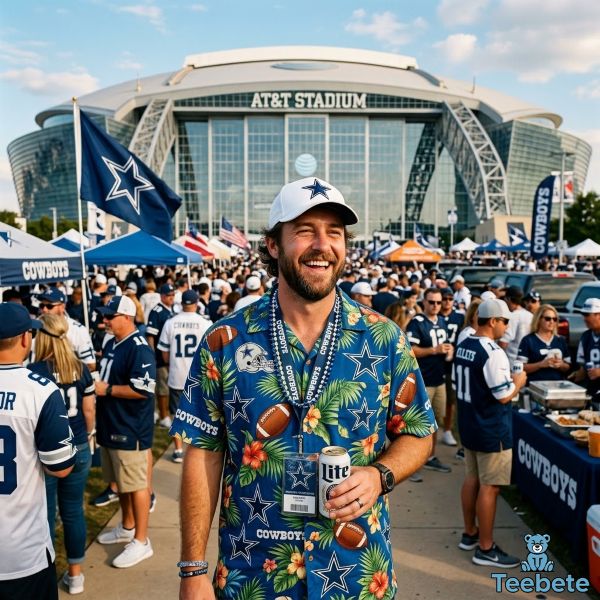
A Dallas Cowboys Hawaiian shirt combines NFL team spirit with the relaxed feel of a classic aloha shirt, giving Cowboys Nation an alternative to traditional game day apparel and other NFL fan gear — one built for tailgates, early-season games, vacations, backyard parties, and everyday casual wear. It’s no longer a novelty item picked up as a joke. It’s become its own lane of licensed fan apparel, sitting somewhere between a jersey and a resort shirt.
Key takeaway: if you only remember one thing from this guide, it’s that fabric weave and fit affect how much you’ll actually wear the shirt far more than the graphic on the front does.
This guide covers how to choose one, how it should fit, when it earns its place in the rotation, and the mistakes that leave a shirt sitting unworn in a drawer by October.
Why Are Dallas Cowboys Hawaiian Shirts So Popular?
Jerseys are built for identification and durability, not comfort in Texas heat, and that gap is exactly what the tropical football shirt trend has filled.
Why many fans stop wearing jerseys in September
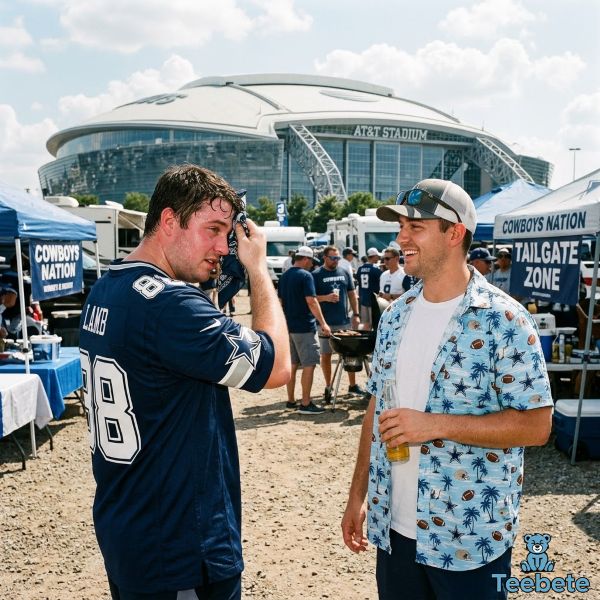
The math is simple once you look at it. Average highs in Dallas during September still sit near 90°F, and once humidity factors in, the heat index regularly climbs into the mid-90s — hot enough that heat exhaustion becomes a real concern for anyone standing around a grill for hours before kickoff. A polyester jersey with a moisture-trapping liner does nothing to help in that kind of air. A woven Hawaiian shirt, by contrast, is built to let air move through it. That’s not a style preference so much as a practical response to a Texas summer that refuses to end on schedule.
Many longtime tailgaters eventually make the switch for exactly this reason. Fans who’ve worked a Lot 4 or Lot 10 tailgate at AT&T Stadium in both a jersey and a lightweight aloha shirt tend to describe the same thing: the jersey gets heavy and damp by the second quarter, while the tropical shirt still feels wearable three hours in.
Perfect for warm-weather football events
Dallas summers push well past Labor Day, and the retractable roof at AT&T Stadium doesn’t do much for the tailgate lots outside it. Preseason games, early regular-season matchups, and outdoor watch parties tied to a Cowboys–Eagles or Cowboys–Giants NFC East showdown are exactly where a breathable tropical shirt earns its spot ahead of a jersey.
A style that works beyond football season
Here’s a detail a lot of buying guides skip: this shirt doesn’t have to live in a drawer from February through August. It shows up on beach trips, cruises, backyard cookouts, and casual Fridays if your office allows a little personality. Plenty of fans end up reaching for their Cowboys Hawaiian shirt more often than their jersey simply because it fits into far more of the calendar — and once you’ve built a full rotation around AT&T Stadium game days, layering in cooler-weather pieces for the stretch run toward the playoffs matters just as much as staying cool in September. That’s the kind of full-season planning the Dallas Cowboys apparel buying guide walks through, from lightweight tropical shirts all the way to the heavier layers December football calls for.
In short: a Hawaiian shirt earns fans over a jersey mainly on comfort during hot months, but its year-round versatility is what actually keeps it in regular rotation.
What Makes a Great Dallas Cowboys Hawaiian Shirt?
After comparing a season’s worth of fan shirts against each other, the same handful of features consistently separate the ones people keep wearing from the ones that end up folded at the bottom of a drawer: breathable fabric, quality printing, balanced graphics, a comfortable fit, durable stitching, and easy care.
In short: fans looking for long-term value should prioritize a breathable weave, dye sublimation printing, and reinforced stitching over the flashiest graphic on the rack.
Fabric comparison
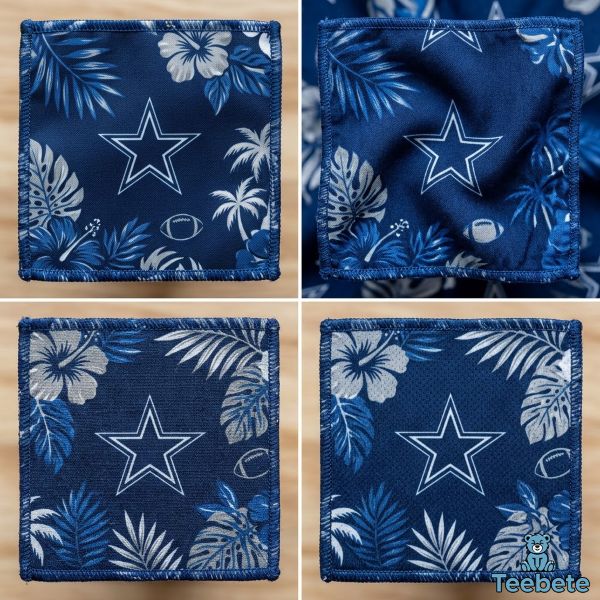
Here’s where the differences actually show up — not on a spec sheet, but standing in direct sun for an afternoon game.
| Fabric | Feel in heat | Wrinkle resistance | Best use case |
|---|---|---|---|
| Polyester | Runs warm in a tight weave, cool in a loose one | Excellent — barely wrinkles out of a bag | Tailgates, travel, packing for a trip |
| Rayon | Soft, breathable, the classic aloha shirt drape | Wrinkles easily, needs some care | Beach days, vacations, dressier casual wear |
| Cotton blends | Breathable but feels damp once sweat sets in | Moderate | Mild weather, indoor stadium sections |
| Performance blends (poly-spandex, moisture-wicking) | Best heat management of the group | Good | Hot-weather tailgates, all-day outdoor events |
Two shirts can both list “100% polyester” and behave completely differently depending on the weave — a detail regular tailgaters figure out the hard way. A tight, thin weave traps heat the way a windbreaker does. A looser, textured weave, the kind used in most tropical football apparel, breathes almost as well as rayon while still resisting wrinkles in a suitcase. Shopping online, look for wording like “lightweight weave” or “breathable poly” rather than just “polyester,” and check the fabric weight in grams per square meter if it’s listed.
Key takeaway: if you’ll spend hours outdoors, fabric breathability matters more to overall satisfaction than the print itself.
Printing quality matters more than most fans realize
Dye sublimation — where ink is heat-transferred directly into the fibers instead of sitting on top of the fabric — is the standard for prints that survive repeated washes without cracking or peeling. Screen-printed graphics can look identical on day one and start flaking by week three. Fade resistance and color consistency are worth checking directly in product photos: does the navy actually match Cowboys blue and silver, or has it drifted toward gray after a few listing photos?
Construction details worth checking
Buttons that sit flush rather than proud, a collar that holds its shape after a wash, reinforced stitching along the side seams, and pattern alignment across the button placket — cheaper shirts often have the print visibly mismatched where fabric panels meet. These are the small things separating a shirt that lasts three seasons from one that’s stretched and faded by October.
Which Design Matches Your Fan Personality?
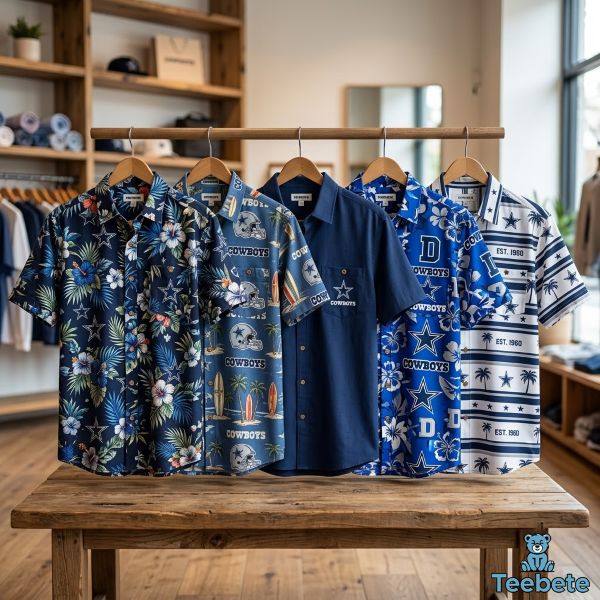
Choosing a design mostly comes down to how loudly you want to represent the Star. Fans who’d rather keep it subtle tend to gravitate toward a classic tropical floral pattern, one that weaves silver and blue into hibiscus or plumeria motifs without putting a giant logo across the chest. For the annual summer trip to Galveston or Cabo, a beach-inspired palm tree print makes a more literal statement, pairing the star logo directly with coastal imagery. Fans who still get nostalgic thinking about the Cotton Bowl or the old Texas Stadium era usually look for vintage-style graphics that lean on throwback typography instead of a sleek modern logo. If a design needs to work somewhere lower-key than a tailgate lot, a minimal pattern with a smaller, repeated logo does that without drawing much attention. And for anyone who wants maximum color and doesn’t mind standing out in a packed stadium section, a bold all-over print is built exactly for a Sunday kickoff.
| Design style | Best occasion |
|---|---|
| Tropical floral | Casual wear, backyard cookouts |
| Palm tree / beach graphic | Vacations, cruises |
| Vintage logo | Watch parties, nostalgia-driven fans |
| Minimal modern | Everyday wear, travel |
| Bold all-over print | Tailgates, stadium sections |
In short: matching the design to where you’ll actually wear it tends to deliver more long-term satisfaction than picking whichever print looks loudest in a thumbnail — a shirt bought purely for stadium impact often goes unworn everywhere else. For instance, swapping a loud stadium graphic for a well-designed tropical Cowboys pineapple shirt gives you something subtle enough for a casual Friday at the office, yet distinct enough to keep the team pride intact.
How Should You Style a Dallas Cowboys Hawaiian Shirt?
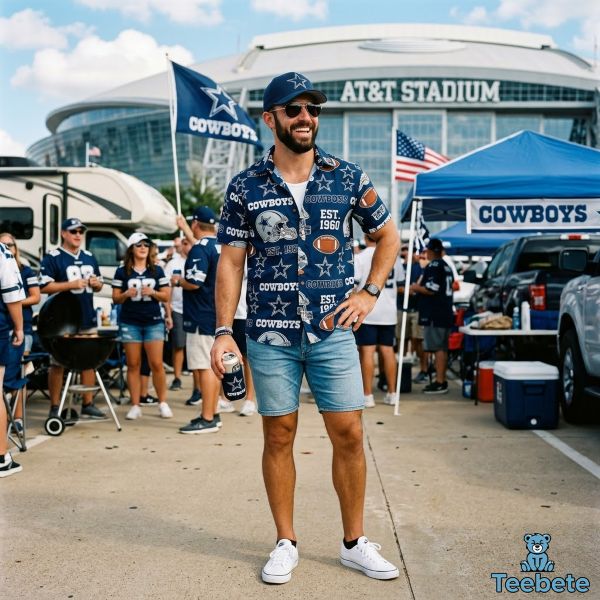
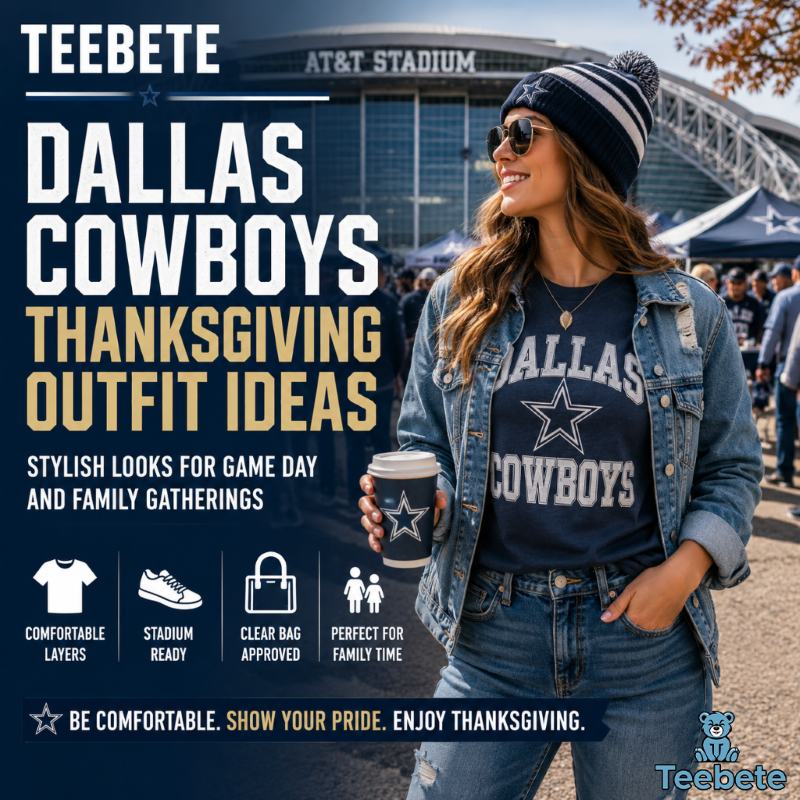
Best outfit combinations for a Cowboys Hawaiian shirt include denim shorts, chinos, white sneakers, boat shoes, a baseball cap, and sunglasses. The shirt handles most of the visual work, so the rest of the outfit stays simple.
Tailgate outfit ideas
Denim shorts and low-top sneakers work best for standing around a grill or cornhole set for hours in a Lot 4 or Lot 10 tailgate crowd. Leaving the shirt untucked and the sleeves at their natural length handles both the morning chill and the afternoon heat that shows up at most early-season games. For more complete outfit breakdowns by tailgate style, see the Cowboys tailgate outfit inspiration.
Stadium-ready outfits
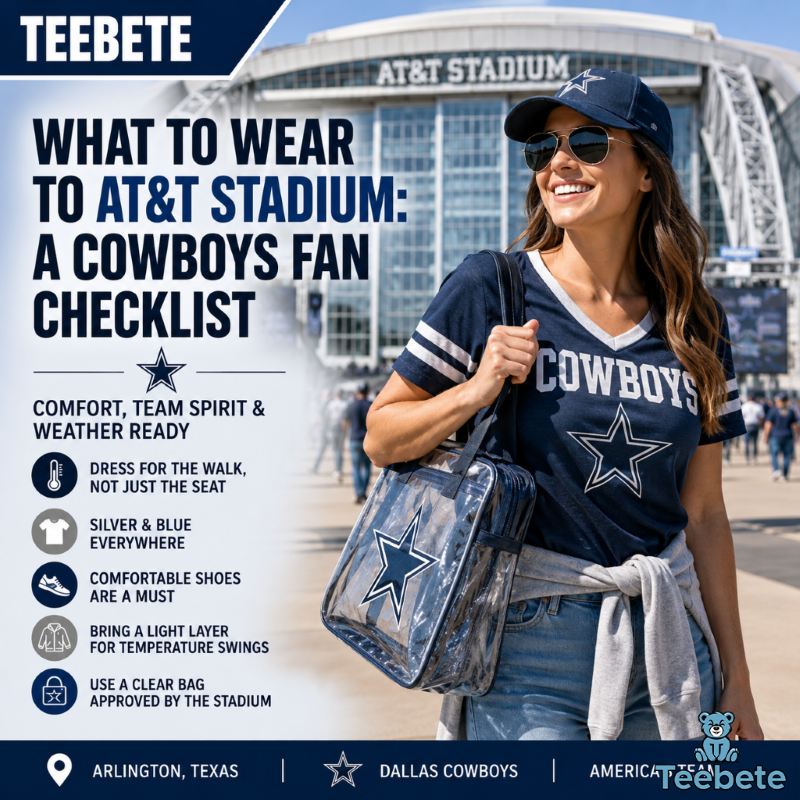
Inside AT&T Stadium, chinos or dark jeans with the shirt tucked or half-tucked reads a step more put-together — useful in club seating or heading to dinner afterward. A structured cap in blue and silver finishes the look without competing with the shirt’s pattern.
Beach vacation outfits
Swim trunks, sandals, and the shirt worn fully open over a plain tank hit the mark on a coastal trip. Print choice matters most here — a busy floral or plumeria design fits the setting far better than a stadium-heavy graphic. That’s the exact sweet spot a tailored blue plumeria beach shirt is built for, striking a balance between resort-ready relaxation and franchise loyalty. It’s the balance we focus on at Teebete — crafting Cowboys-inspired gear that cuts out the stiff, heavy feel of standard merch, so it stays comfortable whether you’re standing in a stadium concourse or lounging on a cruise deck.
Casual everyday outfits
Worn open over a solid tee with jeans, the shirt works as a light layer instead of a statement piece — good for errands or a casual dinner without looking like you just left a tailgate. For more everyday and non-gameday pairings, the Cowboys game day outfit ideas page runs through several combinations.
In short: dress the shirt down with denim and sneakers for tailgates, up with chinos for the stadium concourse, and open over a tank for the beach — the shirt itself rarely needs to change, just what’s worn around it.
The Golden Rules of Aloha Fit: Loose Draping vs. Sizing Up
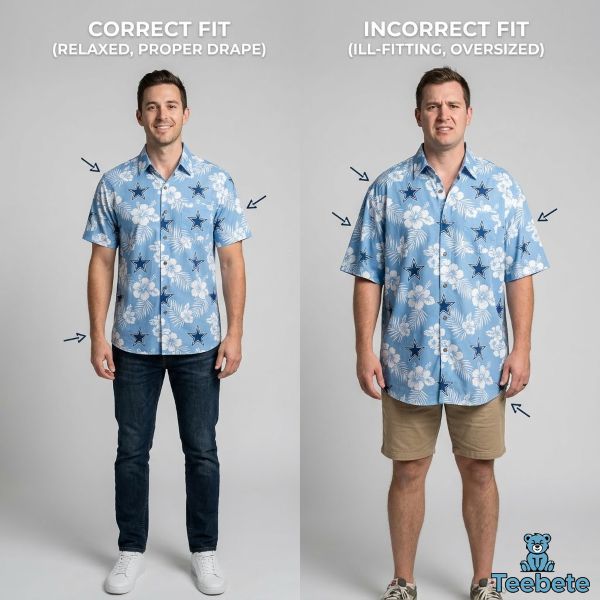
By definition, a Dallas Cowboys Hawaiian shirt is meant to fit loosely and drape away from the torso rather than sit close to the body. The traditional aloha cut is engineered entirely around airflow, so a slim-fitting version defeats the purpose and tends to read as a sizing mistake rather than a style choice. If you’re caught between two standard sizes, sizing up is almost always the safer call — particularly with rayon or cotton blends, which are prone to shrinking slightly during their first cycle in the wash. Polyester and performance blends hold their size better, so true-to-size generally works fine there.
The hem should land at or just below the hip bone when worn untucked; shorter hems tend to ride up when you sit down at a tailgate table, while longer hems start to look borrowed from someone bigger. Sleeves ending mid-bicep are standard for the style, which is intentional — it’s part of what keeps the airflow the fabric is designed to provide. Planning to layer over a T-shirt? Go up one size from your usual fit, since the extra fabric underneath changes how the shirt drapes across the shoulders and chest.
Body type notes:
- Athletic build: true-to-size or a half-size up avoids the shirt pulling across the shoulders when buttoned.
- Relaxed fit: one size up gives the drape the style is meant to have without looking baggy through the torso.
- Big and tall: look for shirts cut with a longer body and sleeve length rather than just a wider standard size, which usually adds width without the length needed for proportion.
How to Choose the Right Hawaiian Shirt in Under Five Minutes
For anyone who wants the short version, this checklist covers it:
- Decide where you’ll wear it most — tailgate lot, stadium seat, or beach trip.
- Pick the fabric based on that answer: performance blend for hot tailgates, rayon for vacations, polyester for travel.
- Choose the right fit — sized up for a relaxed drape, true-to-size for an athletic build.
- Match the print to your style — bold for stadium days, minimal or floral for everyday wear.
- Check stitching and printing quality in the product photos before buying — flush buttons, aligned patterns, and dye sublimation printing all signal a shirt built to last.
Who should buy this style?
Good fit if you’re: tailgating regularly, planning a summer vacation or cruise, hosting backyard cookouts, or looking for a casual-Friday alternative to a plain tee.
Not ideal if you’re: dressing for a late-season cold-weather game, building an outfit around heavy layering, or looking for something formal enough for a dressier occasion.
Quick Comparison: Jersey vs. Hawaiian Shirt
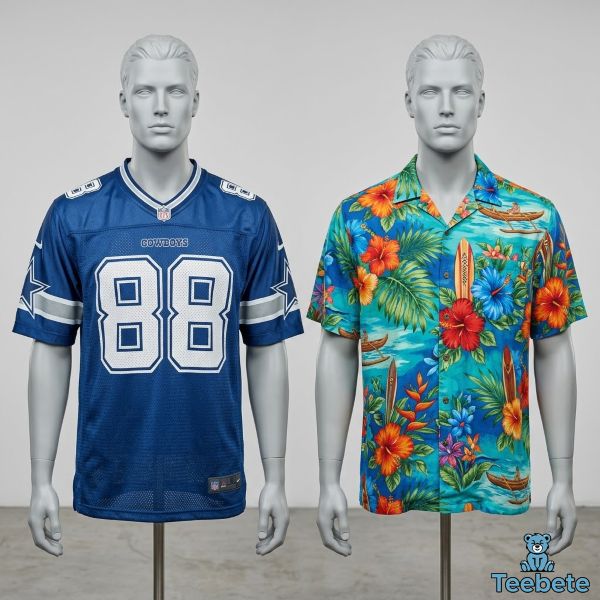
| Jersey | Hawaiian Shirt | |
|---|---|---|
| Best weather | Cool to cold | Hot, humid |
| Breathability | Low | High |
| Versatility beyond game day | Low | High |
| Formality for a group dinner | Low | Moderate |
| Typical wash-and-wear lifespan | Long, if cared for | Long, if fabric and print quality are solid |
When Is the Best Time to Wear One?
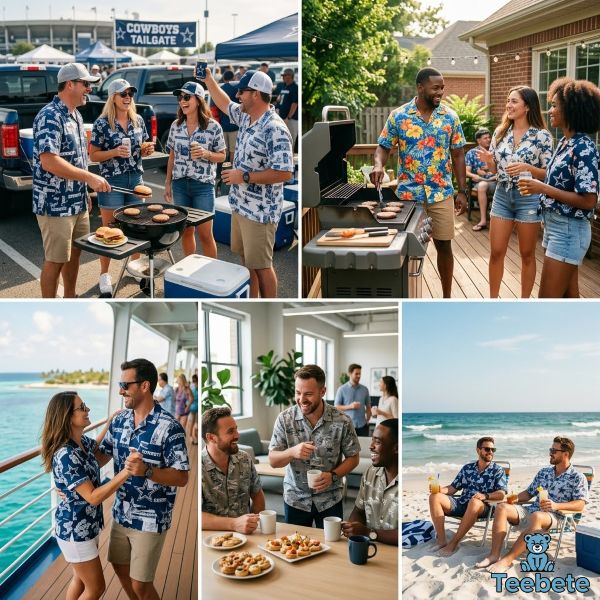
Plenty of guides stop at “game day” and leave it there. In practice, this shirt earns its place across a much longer stretch of the calendar than a single Sunday kickoff.
- NFL game day, particularly early-season and warm-weather matchups
- Tailgating, where breathability matters more than almost anywhere else
- Summer vacations, from lake trips to coastal getaways
- Backyard cookouts, especially the ones that double as informal watch parties
- Father’s Day, which falls on the third Sunday in June in the U.S. and lines up well with warm-weather gifting for a Cowboys fan
- Cruise vacations, where a resort-casual dress code and team pride overlap nicely
If a floral, beach-leaning design fits your plans better than a bold graphic, the hibiscus beach shirt design is worth a look.
How Do You Keep Your Hawaiian Shirt Looking New?
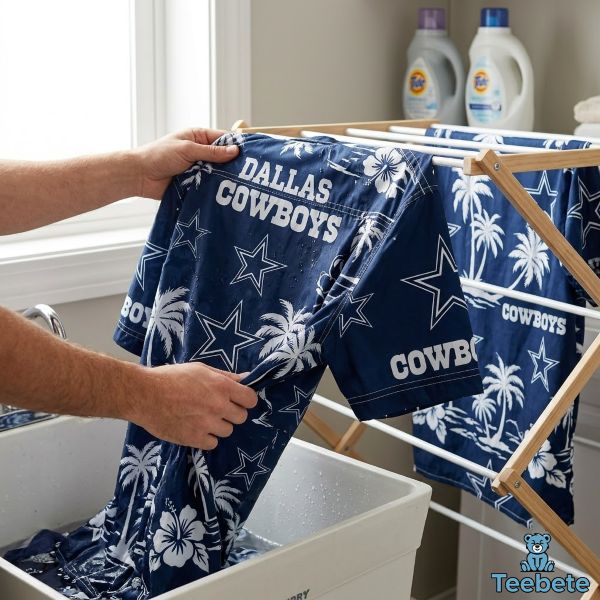
Washing tips
Turn the shirt inside out before washing to protect the printed surface from friction against zippers or buttons, and use cold water — heat is the fastest way to break down both dye sublimation prints and screen prints.
Drying recommendations
Air drying is the safer route for anything with a bold print. If a dryer is unavoidable, low heat and pulling the shirt out while it’s still slightly damp prevents the kind of heat exposure that cracks printed graphics.
Preventing fading
Washing with similar colors, skipping chlorine bleach entirely, and keeping the shirt out of direct sun while drying all slow down color loss. Sun exposure while wet is one of the more common causes of premature fading, since damp fibers are more porous to UV breakdown than dry ones.
Proper storage
Hanging rather than folding keeps rayon and cotton blends from creasing into permanent lines, and keeping shirts out of direct sunlight in storage prevents slow fading even when the shirt isn’t in rotation.
Common mistakes that shorten shirt lifespan: washing in hot water, tumble drying on high heat, letting stains set through a full wash cycle before treating them, and storing shirts folded in humid conditions where colors can bleed between fabric layers.
Common Mistakes Buyers Make
Buying based only on graphics. A print that looks great in a product photo can still be sitting on a fabric that runs hot or wrinkles the second it’s out of the bag.
Ignoring fabric type. Fans who grab the first shirt matching their favorite design often end up with something technically Cowboys-branded but genuinely uncomfortable for a full game.
Choosing the wrong fit. Going true-to-size on a style meant to be loose is one of the most common regrets buyers mention after the fact.
Overlooking print quality. Screen printing versus dye sublimation isn’t always listed clearly, and it’s often the single biggest factor in whether a shirt still looks sharp after ten washes.
Forgetting where the shirt will actually be worn. A shirt bought purely with tailgate day in mind often sits unused the rest of the year, while a slightly more versatile design earns its keep across a dozen different occasions.
Where Can Fans Explore More Dallas Cowboys Hawaiian Shirt Styles?
Once fabric, fit, styling, and design differences make sense, the next step is usually comparing a few tropical styles side by side to see which one actually matches your wardrobe and your plans for the season. The full range of tropical designs, including the styles mentioned throughout this guide, is available in the Dallas Cowboys tropical fan collection.
Questions Fans Often Ask Before Buying
Are Dallas Cowboys Hawaiian shirts acceptable inside the stadium? Yes. AT&T Stadium’s code of conduct restricts obscene, offensive, or disruptive clothing, but a standard Cowboys-branded Hawaiian shirt falls well within normal fan attire.
Can you wear Hawaiian shirts to NFL games? Yes — they’re common in warm-weather stadium sections and tailgate lots across the league, and Cowboys fans have made the style a regular fixture at AT&T Stadium specifically for early-season and preseason games.
Are Hawaiian shirts still in style? Within fan apparel, yes. What started as a niche alternative to jerseys has grown into its own category of licensed tropical football apparel, with brands producing team-specific designs each season rather than treating it as a passing trend.
Can you wear Hawaiian shirts casually? Absolutely — outside of football contexts, the style works as everyday casual wear, particularly in warm climates, paired with simple bottoms like chinos or denim.
Can they be worn outside football season? Yes — the style works for beach trips, cruises, cookouts, and casual wear year-round, not just during Sundays in the fall.
Are polyester Hawaiian shirts too hot? It depends on the weave. A tightly woven polyester can trap heat, while a lightweight, loosely woven polyester or a performance blend actually manages heat better than cotton in direct sun.
What colors pair best with Cowboys blue? Silver, white, and neutral tones like khaki or tan complement Cowboys navy without competing with the print, which is why most tropical designs lean on that palette.
Do Hawaiian shirts make good gifts for Cowboys fans? They’re a popular Father’s Day and birthday gift specifically because they work outside the narrow window of football season, unlike a jersey tied to a specific player or year.
How many Hawaiian shirts should a regular NFL fan own? Two or three in different fabric weights covers most situations — one lightweight option for hot tailgates, one slightly heavier option for cooler stadium days, and one dressier print for travel or casual wear.
Final Thoughts
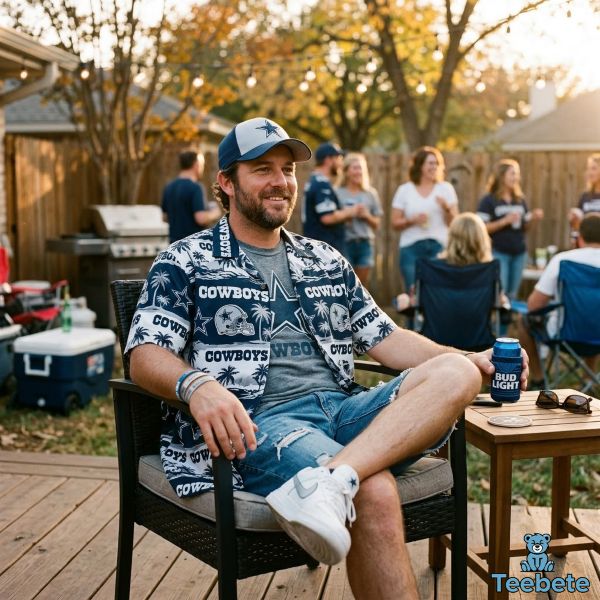
The shirts that end up in regular rotation are almost never the ones bought for the loudest graphic. They’re the ones chosen with fabric, fit, and actual use in mind — comfortable enough for a six-hour tailgate outside AT&T Stadium, presentable enough for a group dinner afterward, and durable enough to survive a season of washes without fading into a dull version of the print you bought. Whether you’re baking under the Southern California sun at training camp in Oxnard, bracing for the energy of a Thanksgiving home game, or just mixing drinks by the pool on a July cruise, picking a shirt based on fabric and real-world utility is what keeps it at the top of the drawer. Being part of Cowboys Nation is a 365-day commitment — you might as well stay comfortable while doing it.
For fans building out a broader wardrobe around game day, the Dallas Cowboys T-shirt style guide covers the rest of the casual lineup worth knowing about.

Hi, I’m Mia Wilson. I’m a journalist and content creator based in New York with over six years of experience covering sports, holidays, fan culture, and community events across the United States. I focus on exploring team histories, traditions, celebrations, and the broader impact of sports and cultural events on local communities. I’m passionate about providing accurate, engaging, and educational content for readers of all ages, helping them understand the stories, experiences, and events that make sports and celebrations so meaningful.