
The Kansas City Chiefs Super Bowl Parade Tradition
A Kansas City Chiefs parade is the city’s official victory celebration after a Super Bowl win: a procession of players and coaches through downtown Kansas City, followed by a rally on the steps of Union Station. Since 2020, the Chiefs have held three of them, and each one has drawn crowds that local officials and news outlets have estimated at well over half a million people, some counts topping a million.
That single sentence covers the mechanics. It doesn’t cover what it actually feels like to stand on Grand Boulevard in February, breath fogging, coffee going cold in your hands, waiting for a bus with a trophy on it to round the corner. This guide covers both: the history behind the tradition, what happens on parade day step by step, why the crowd calls itself Chiefs Kingdom, what people wear, and what to expect if Kansas City gets to throw another one.
Why the Kansas City Chiefs Parade Means More Than a Championship Celebration
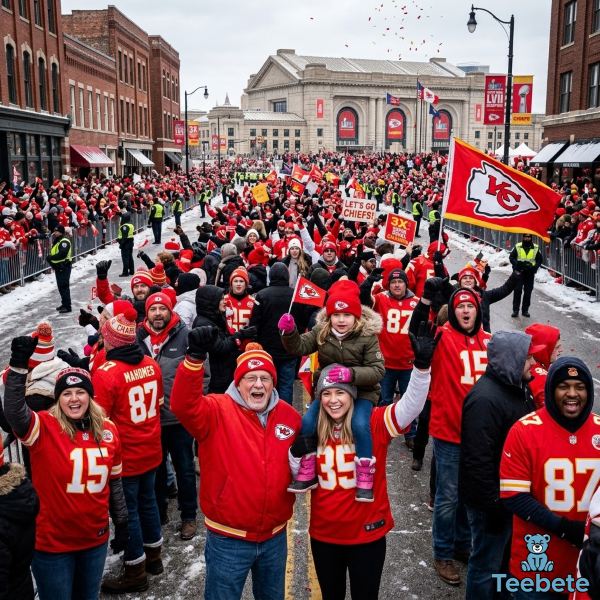
A parade is, on paper, a logistics event. Streets close. Buses get routed. A stage goes up outside a train station built in 1914. But ask anyone who has actually stood in that crowd what the day means, and the answer has almost nothing to do with logistics.
It’s the day multiple generations of one family show up in jerseys from three different decades. It’s teachers letting classrooms empty out because half the district already excused the absence. It’s people who drove in from Nebraska, Oklahoma, and Iowa, because Chiefs Kingdom was never confined to Missouri and Kansas in the first place; for decades this was the only NFL franchise for hundreds of miles in any direction, and that geography still shows up in the crowd.
A kansas city chiefs parade turns an abstract fact, “our team won,” into a shared physical memory that gets retold every August when training camp opens back up. Few NFL fan bases treat a parade with this much weight, and that’s largely a function of how long Kansas City had to wait for one.
How the Super Bowl Parade Tradition Began
The Chiefs’ relationship with championship parades starts, oddly, with almost no parade at all. Kansas City won Super Bowl IV in January 1970, beating the Minnesota Vikings 23-7 behind quarterback Len Dawson and head coach Hank Stram. But roughly fifteen players from that team missed the local celebration entirely. They had to report to the AFL All-Star Game just days later, and the modern infrastructure fans now associate with the tradition, the Union Station rally, the mapped route, the open-top buses, simply didn’t exist yet.
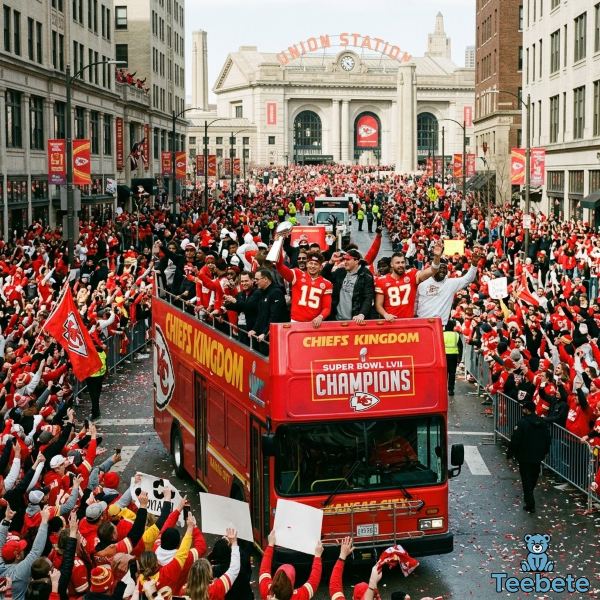
Then came the wait. Fifty years of it. The Chiefs made the playoffs plenty of times in between, but the franchise didn’t return to a Super Bowl until the 2019 season. When Kansas City finally beat the San Francisco 49ers 31-20 in Super Bowl LIV, Mayor Quinton Lucas didn’t wait long to make it official, posting “LET’S HAVE A PARADE WEDNESDAY!!!!!!” within hours of the final whistle. That parade, held February 5, 2020, effectively built the modern version of the tradition: the route down Grand Boulevard, the rally stage at Union Station, players riding through a sea of fans in red.
What’s followed since is something most NFL cities never experience. Kansas City reached five of six Super Bowls between the 2019 and 2024 seasons and won three of them, a stretch of AFC dominance detailed further in our breakdown of the Chiefs AFC Championship history, which covers the conference title games that made each of these Super Bowl runs possible in the first place. Every one of those wins added another chapter to the parade tradition: a second celebration in 2023, a third in 2024, each one reshaping the city’s civic calendar the way a World Series parade shapes towns like Boston or St. Louis.
What Happens During a Kansas City Chiefs Parade
Quick answer: The parade begins mid-morning near 6th Street and Grand Boulevard, moves players and coaches through downtown on double-decker buses, and ends with a rally and player speeches on a stage in front of Union Station. Start to finish, the full event typically runs about ninety minutes.
Route through downtown Kansas City
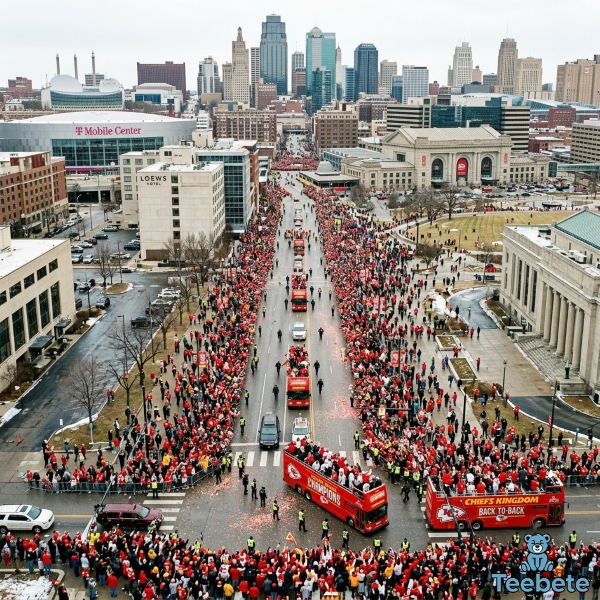
The 2020 parade ran roughly two miles, heading south along Grand Boulevard before turning onto Pershing Road toward Union Station. The 2023 route followed a nearly identical path. In 2024, the parade again started at 6th and Grand, moved south, cut west on Pershing, then turned north on Main before finishing at Union Station. Organizers adjust the fine details each year based on construction, crowd-flow data from the prior celebration, and input from the Greater Kansas City Sports Commission, which helps coordinate the event with the city.
Union Station rally
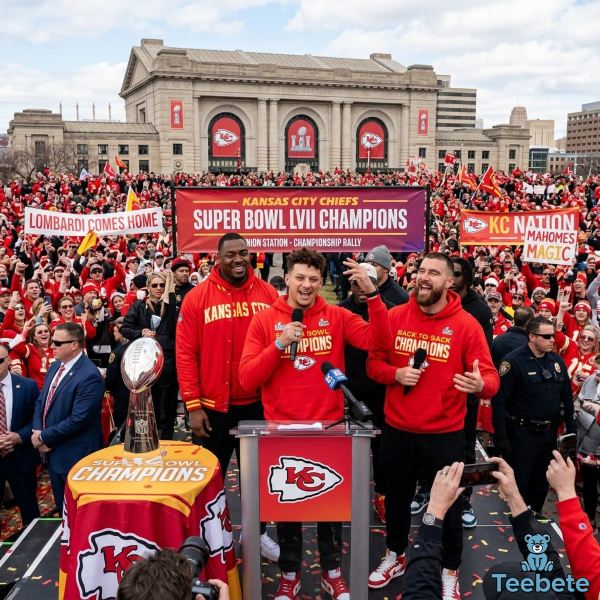
Once the buses reach Union Station, the parade portion ends and the rally begins. In 2020, the rally started around 1:30 p.m. In 2023, around 1:45 p.m. In 2024, closer to 12:45 p.m. The National WWI Museum and Memorial, which sits on the same grounds as Union Station, has hosted overflow viewing on its north lawn during multiple celebrations, and the adjacent Chiefs Fan Zone inside Union Station displays championship rings and other memorabilia in the days surrounding the event. For a full map of past routes and street-closure timing, see the official parade route details compiled by Kansas City public radio station KCUR ahead of the 2023 celebration.
Players, coaches, and the Lombardi Trophy
The Lombardi Trophy travels the entire route, usually held up from the lead bus, and it’s the most photographed object of the day. Head coach Andy Reid has become something of a folk hero at these rallies. After the 2020 win, he told the crowd: “So listen, one more thing is, next year, we’re coming right back here. One more time, baby. One more time.” Chiefs fans still quote that line unprompted. Mahomes, Kelce, and defensive stars like Chris Jones typically speak as well, and each brings a distinct energy: Mahomes leans toward gratitude, Kelce toward controlled chaos.
The crowd known as the Sea of Red
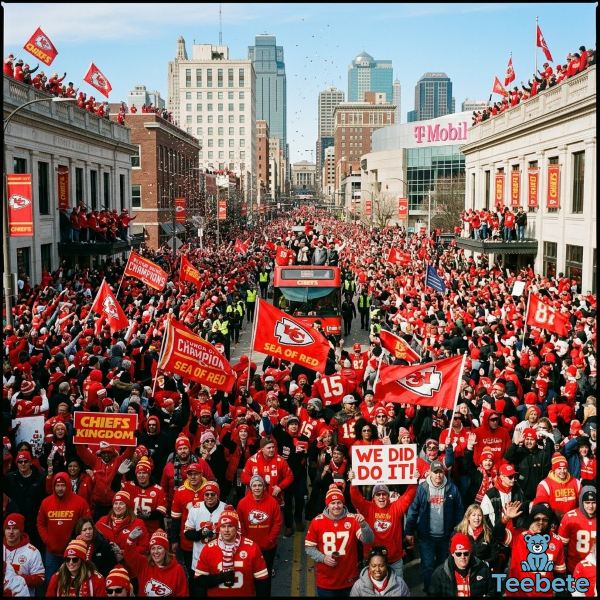
Whatever the logistics look like in a given year, the defining image of a chiefs super bowl parade is the crowd itself, a wall of red stretching for blocks. After the 2020 parade, Chiefs radio voice Mitch Holthus estimated attendance at more than one million people, a figure repeated across multiple outlets covering the event. Local coverage of the 2024 celebration put the crowd at a similar scale. These are reported estimates rather than official counts, since crowds of this size are notoriously hard to measure precisely, but they consistently rank among the largest gatherings in Kansas City’s history.
Here’s how the three parades compare on the numbers that are documented:
| Parade Year | Super Bowl Won | Final Score | Reported Crowd Estimate |
|---|---|---|---|
| 2020 | Super Bowl LIV | Chiefs 31, 49ers 20 | Over 800,000, with some estimates near 1 million |
| 2023 | Super Bowl LVII | Chiefs 38, Eagles 35 | Similarly large; boosted by unusually mild February weather |
| 2024 | Super Bowl LVIII | Chiefs 25, 49ers 22 (OT) | Estimated over 1 million |
The Most Memorable Moments From Recent Chiefs Super Bowl Parades
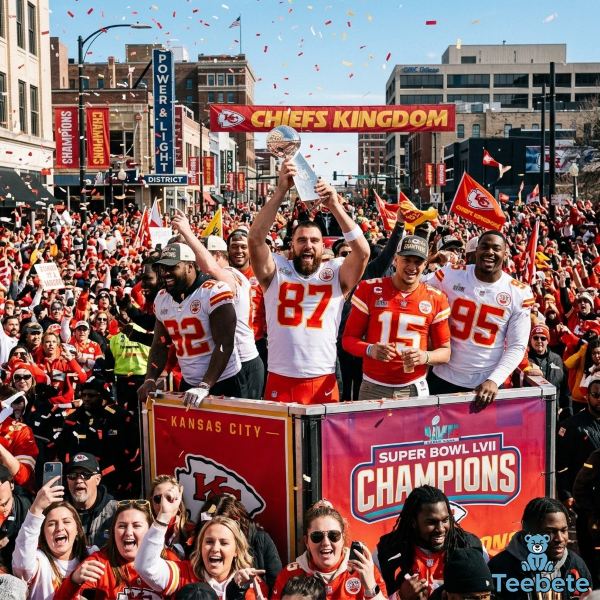
Three parades in five years have already produced a surprising amount of shared folklore.
Patrick Mahomes’ unforgettable championship celebrations
Mahomes became the youngest player in NFL history to win Super Bowl MVP at age 24 during the 2020 title run. His energy at each rally since has set the tone for the day, part hype man, part historian, often calling out the fans who stuck with the team through the lean decades.
Travis Kelce’s iconic parade speeches
If Mahomes plays the statesman at these rallies, Kelce plays the id. After the 2020 parade, he told the crowd, “This is the most beautiful scene I’ve ever witnessed in my life,” a line that’s been replayed constantly ever since. His speeches have gotten louder with each passing year.
Viral fan moments that defined Chiefs Kingdom
Some of the most enduring parade images have nothing to do with the players. In 2023, the Kansas City Police Department’s official account jokingly asked the internet to help identify “the guy that fell out of the tree” and “the guy on the horse” from photos circulating after the celebration, a small moment that captured how much local personality bleeds into these events. In 2020, an impaired driver briefly disrupted the parade route before officers stopped the vehicle; Mayor Lucas publicly confirmed the incident was unrelated to any broader threat.
The resilience shown after the 2024 parade
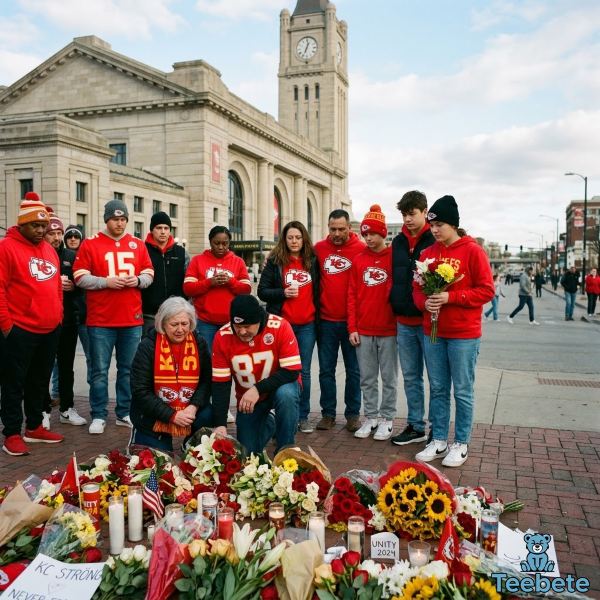
Not every part of this tradition is easy to write about. After the 2024 celebration wrapped up, gunfire broke out near Union Station during the post-parade rally. One person, 43-year-old Lisa Lopez-Galvan, a longtime Kansas City radio DJ known for hosting “Taste of Tejano” on community station KKFI, was killed. More than twenty other people were injured, roughly half of them children. It remains the darkest moment connected to this tradition, and Kansas City has spent the time since honoring Lopez-Galvan’s memory through community tributes and moments of silence at Chiefs games. For a full account of what happened that day, see KCUR’s official post-rally shooting coverage, filed the day after the shooting.
The following year, when the Chiefs returned to the Super Bowl chasing a historic three-peat, city officials scaled back the celebration plan, prioritizing player and family safety over a large public gathering. The Chiefs lost that game, so the revised plan was never fully tested in practice, but the planning itself reflected how seriously Kansas City now treats crowd safety at these events without abandoning the tradition altogether.
Why the Sea of Red Has Become a Symbol of Chiefs Kingdom
Chiefs Kingdom isn’t marketing copy that fans just repeat because the team uses it. It describes something real about how this fan base organizes itself. Unlike a lot of NFL cities where the fan base stays contained within one metro area, Chiefs Kingdom stretches across Missouri, Kansas, Nebraska, and well into the Great Plains.
The color red does a lot of work here. It’s not just team branding; it’s a visual shorthand that turns a crowd of strangers into a recognizable “us” the instant someone steps outside. Families build entire days around it: kids on shoulders in miniature jerseys, grandparents who remember 1970 standing next to grandkids who’ve only ever known a winning team, tailgate-style breakfasts before sunrise just to claim a curb spot along the route. The chants that ripple through the crowd aren’t choreographed. They happen the same way they happen inside Arrowhead Stadium on a Sunday, because for a few hours, downtown Kansas City basically becomes an open-air stadium with no seating chart.
What Fans Wear on Parade Day
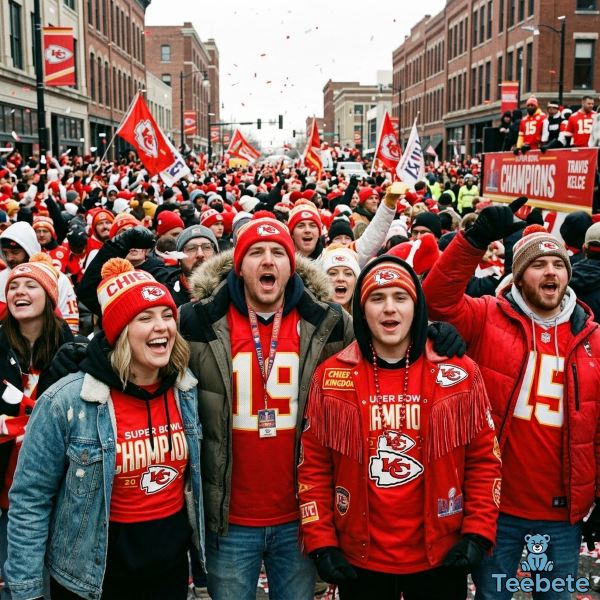
Ask around at any parade and the outfits aren’t random. They’re a kind of shorthand for how long someone has been a fan and what they’ve lived through with this team.
Jerseys remain the classic choice
Current stars dominate, obviously: Mahomes, Kelce, Chris Jones. But it’s just as common to spot decades-old jerseys worn as a badge of loyalty from before the good years started.
Championship graphic shirts tell the story
Every title run generates its own wave of commemorative apparel, usually built around the Super Bowl number, the final score, or a phrase pulled straight from a postgame quote. These shirts tend to resurface at the next parade, layered under a jacket as a nod to the franchise’s growing history.
Cold weather layers for February celebrations
Kansas City in February is unpredictable. The 2020 parade took place in the high twenties with snow showers, while 2023 ran unusually mild. Fans who’ve done this more than once know to dress in layers they can shed as the crowd’s body heat builds up.
Custom fan outfits across Chiefs Kingdom
Face paint, homemade signs, DIY red-and-gold accessories: the parade route doubles as an informal costume contest, with fans traveling in from across the Midwest bringing their own regional flair to the crowd. Walk the route on parade morning and jerseys turn out to be only half the story. The real culture lives in the graphic tees, printed with viral postgame quotes or a specific final score, that fans wear year after year as a kind of wearable timeline of every title the team has won. At Teebete, we’ve watched that culture up close: a parade shirt from 2020 still gets worn to tailgates in 2026, because for a lot of fans it isn’t just merchandise, it’s proof they were there.
Tips for Experiencing a Future Chiefs Parade
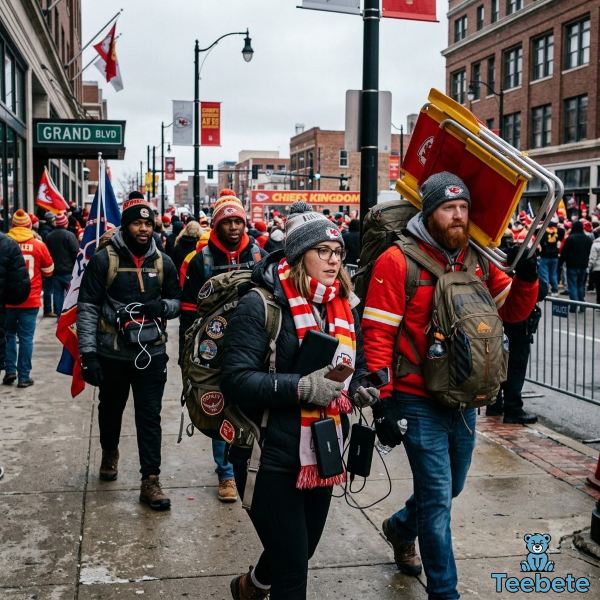
Planning to attend the next Kansas City Chiefs parade in person? A little preparation makes the difference between a miserable morning and a day you’ll talk about for years.
Quick answer: Arrive at least two to three hours before the parade start time, claim a spot near Union Station or along Grand Boulevard, dress in layers regardless of the forecast, and expect road closures to begin the day before the event.
Where to stand for the best views
Grand Boulevard offers the longest stretch of open sightline as buses pass. Union Station gives you the rally and speeches, but with much denser crowds. Past parades have restricted pedestrian crossings to designated points marked with red feather flags, so it pays to scout an entry point in advance rather than showing up and hoping to squeeze through.
When to arrive
Past parades have started between 11 a.m. and noon, but the best viewing spots fill up hours earlier. Some fans in 2023 camped near Union Station overnight.
What to bring
A portable phone charger, hand warmers, cash for street vendors, and a downloaded street-closure map, since cell service tends to bog down once crowd density peaks.
Staying comfortable in winter weather
Waterproof boots matter more than a heavy coat. Standing on cold, sometimes slushy pavement for hours is what actually wears people down, not the air temperature alone.
Traveling with children
School districts across the metro have historically closed or excused absences on parade day, so the crowd skews heavily toward families. A collapsible step stool helps kids see over the adult crowd, and picking a spot near a marked medical or family-assistance point is a smart precaution.
How the Parade Reflects the Chiefs Dynasty
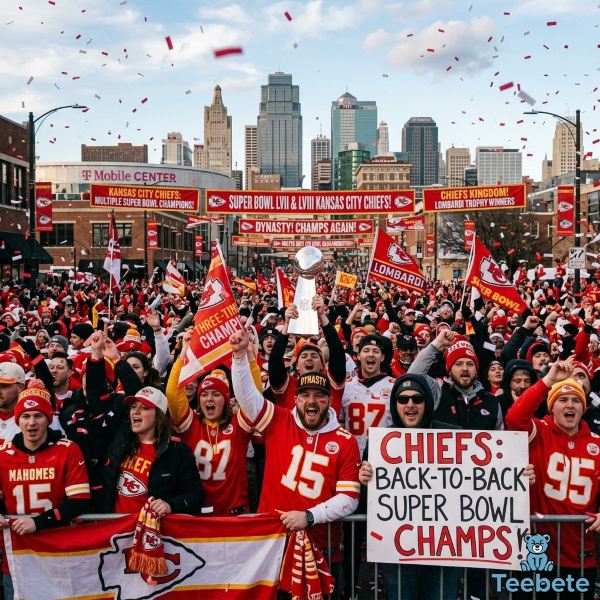
Three Super Bowl titles in a five-season stretch puts Kansas City in rare company, the kind of run usually reserved for the Patriots of the 2000s and 2010s or the Steelers of the 1970s. What makes the Chiefs version distinct is how tightly the parade tradition is woven into the dynasty narrative itself. Each Kansas City Chiefs Super Bowl parade hasn’t just marked a title; it’s marked another data point in an ongoing conversation about where this era of the franchise ranks historically.
That conversation extends well beyond the parade route. The sea of red at Union Station is the direct result of a roster built and rebuilt with intention: coaching continuity under Andy Reid, a quarterback signed to a long-term deal before he’d proven anything, and draft classes that kept restocking the defense. Our full Chiefs modern dynasty story breaks down the front-office decisions that turned a fifty-year drought into a sustained run of contention.
Symbols That Make Every Championship Parade Unique
No two versions of a Kansas City Chiefs parade look identical, even when the route stays the same. Beyond the crowd and the confetti, a handful of physical symbols anchor every Chiefs parade and give each one its own identity. The Lombardi Trophy is the obvious centerpiece, but championship rings, presented separately in a private ceremony months after each Super Bowl, have become their own point of civic pride, often displayed publicly at Union Station’s Chiefs Fan Zone in the run-up to the next season. Confetti color, the specific buses used, the order in which players speak: small details, but longtime attendees notice when something changes from one year to the next.
If you’re curious how those rings evolved across the three most recent titles, we’ve documented the full history of Chiefs championship rings, including the design choices tied to each specific Super Bowl win.
Common Questions About the Kansas City Chiefs Parade
How long does a Chiefs Super Bowl parade usually last?
The parade portion typically runs about ninety minutes, covering roughly two miles from the starting point to Union Station. The rally and player speeches add another hour or more afterward.
Where does the parade normally end?
Every Chiefs parade held so far has ended at Union Station, where a stage is set up for team and city officials, followed by player speeches.
Is the parade free to attend?
Yes. The parade and rally are free, open public events, though the city and team have periodically sold limited commemorative merchandise on-site.
Why is the crowd called the Sea of Red?
The nickname comes from the visual effect of hundreds of thousands of fans wearing the team’s red and gold packed along the route, a look distinctive enough that local media and the team now use the phrase regularly.
Do players always give speeches?
Most star players speak at the Union Station rally, though the exact lineup varies by year. Mahomes, Kelce, Reid, and standout defensive players have been regular speakers across all three celebrations.
Can fans buy official championship merchandise at the event?
Limited official merchandise has been available near the parade route and rally area in past years, though most fans buy commemorative gear from retailers in the days following the win, once championship apparel officially ships.
Looking Ahead
Kansas City’s run of consecutive Super Bowl trips ended with a 40-22 loss to the Philadelphia Eagles in Super Bowl LIX, played February 9, 2025, and the Chiefs did not reach Super Bowl LX the following season either. Streaks like this one don’t last forever, and this era’s may already be winding down.
That’s exactly why the tradition is worth understanding now, not just recapping after the fact. The next Kansas City Chiefs parade isn’t guaranteed, and that scarcity is part of what makes the ones that have happened mean as much as they do. Whenever Kansas City gets its next chance to shut down Grand Boulevard, the Sea of Red will show up the way it always has: early, loud, and dressed for whatever February throws at it.

Hi, I’m Mia Wilson. I’m a journalist and content creator based in New York with over six years of experience covering sports, holidays, fan culture, and community events across the United States. I focus on exploring team histories, traditions, celebrations, and the broader impact of sports and cultural events on local communities. I’m passionate about providing accurate, engaging, and educational content for readers of all ages, helping them understand the stories, experiences, and events that make sports and celebrations so meaningful.


