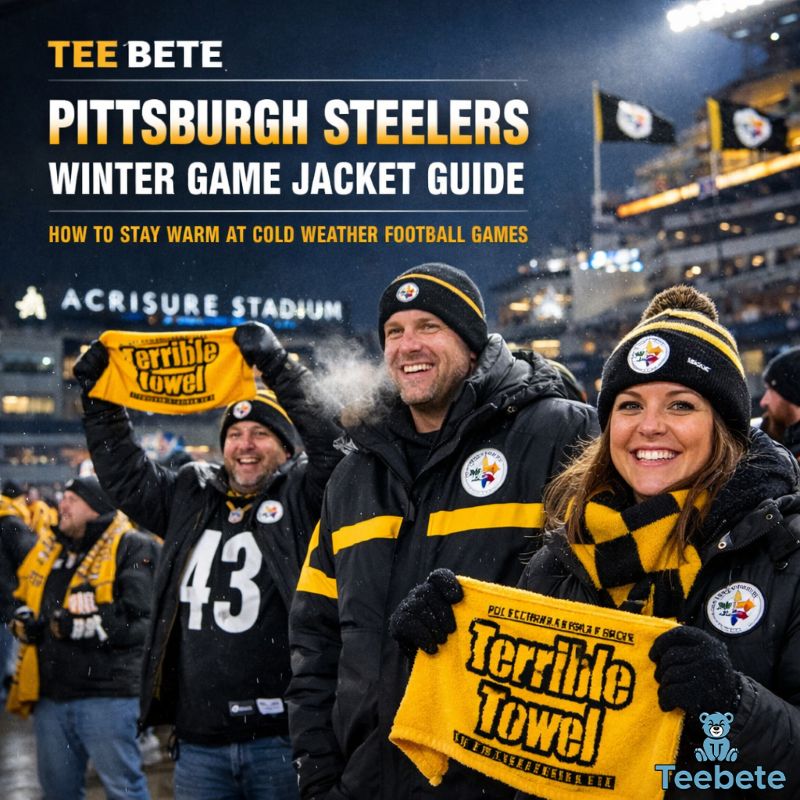
How Steelers Fans Use Scarves, Hats, and Gloves During Cold Games
Picture this: third quarter, 28°F, wind coming off the Allegheny at 18 mph. You wore a heavy jacket and called it a day. By now your ears are burning, your fingers stopped working twenty minutes ago, and the guy next to you in a beanie and scarf is on his feet screaming at every play. That is the real cost of ignoring the small stuff.
Scarves, hats, and gloves are not accessories. At a Pittsburgh winter game, they are survival gear. This guide breaks down exactly how experienced Steelers fans use each one, how to layer everything into a system that actually holds up, and the mistakes that leave first-timers suffering through the second half.
If you need solid fan apparel that works as a layering base, start here: football fan apparel for all seasons.
Why Cold Weather Completely Changes the Game Day Experience
In short: An open stadium in Pittsburgh winter is a different physical environment than anywhere else you wear a coat. Wind chill, river humidity, and three-plus hours of sitting still combine into something your jacket was never designed to handle alone.

At Acrisure Stadium, cold air funnels through seating sections unpredictably. A 30°F reading at kickoff can feel like 18°F in upper-deck exposed rows once wind picks up. Your body loses heat far faster sitting still than it does walking around, which means conditions worsen steadily as the game progresses.
Most fans feel fine at kickoff and miserable by the fourth quarter. The jacket did its job. The neck, head, and hands did not.
What Temperatures Feel Like Inside an Open Stadium
A 35°F day with 15 mph winds registers around 22°F on exposed skin. Add river-side humidity and cloud cover, and the windproof barrier your outer layer provides becomes genuinely critical, not just a nice-to-have.
NFL games run three to four hours. Your body generates heat well in the first half. After two hours of minimal movement and dropping temperatures, that buffer shrinks fast. This is the window where proper thermal insulation at the neck, head, and hands becomes the deciding factor between staying and leaving early.
Why Scarves, Hats, and Gloves Matter More Than Your Jacket

In short: A jacket covers your torso. Cold air gets in everywhere else. Accessories are what seal the system shut.
Roughly 70% of the discomfort fans feel in cold stadium seating comes from exposed zones the jacket never touches. Head uncovered means constant heat loss through one of the body’s most vascular areas. Neck exposed means cold air feeding directly into your collar and chilling your chest from the inside. Bare hands go numb within 30 minutes, and once they do, you cannot clap, hold your phone, or manage your food without pain.
Accessories are load-bearing, not decorative.
The Science of Heat Loss in Cold Weather Games
The head, neck, and hands have blood vessels close to the skin surface. These areas shed body heat rapidly in cold and wind, which is why stadium seating cold exposure hits hardest in exactly those spots. Your core temperature can remain stable while your extremities shut down, creating a false sense of warmth that collapses suddenly by the third quarter.
Covering these three zones allows your body to stop dumping heat and redirect warmth to where you need it most.
How Steelers Fans Actually Use Scarves at Cold Games
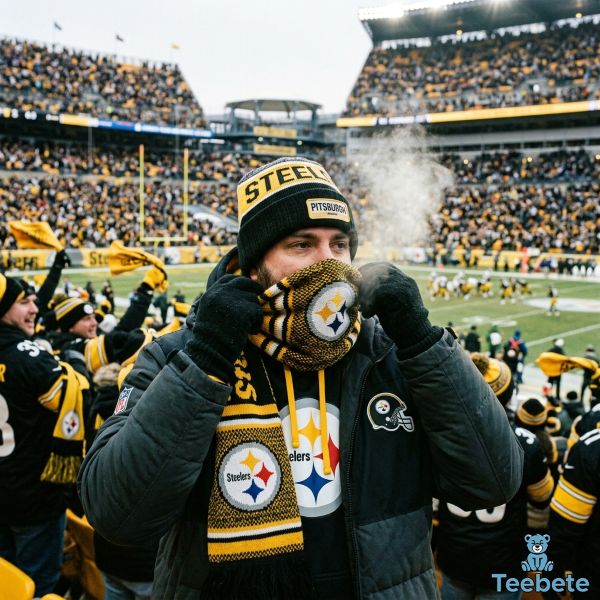
In short: A scarf does three jobs at a Pittsburgh winter game: insulates the neck, protects the face from wind, and seals the gap between hat and jacket collar that everything else misses.
Experienced fans do not wear scarves loosely for style. They wrap multiple loops tight enough to create a genuine thermal collar around the throat and base of the neck. This traps warm air against the skin and blocks cold from channeling down into the chest. When wind picks up, the same scarf gets pulled up over the chin and lower face.
Between uses, a scarf works as an emergency lap cover, a hand warmer, or a buffer between the body and cold metal stadium seats.
3 Practical Ways Fans Use Scarves Beyond Style
- Face protection: On high-wind nights, pulling the scarf up over the nose and mouth cuts direct wind exposure to the face. Night games in December and January drop temperatures fast after sunset, making this more useful than it sounds before kickoff.
- Neck insulation: Wrapped tight, a scarf fills the gap between the bottom of your hat and the top of your jacket collar. This is one of the most common cold entry points fans overlook.
- Emergency wind shield: When unexpected gusts hit, a scarf held up briefly against the face and upper chest buys enough relief to get through the play without losing focus.
How Hats Help Fans Stay Warm Without Sacrificing Comfort
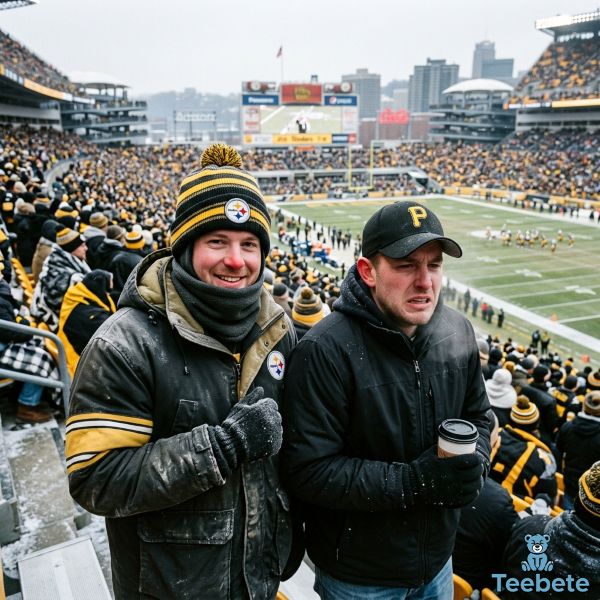
In short: In freezing game conditions, a beanie that covers the ears beats a cap in every practical category. Style is a secondary concern once wind chill drops below 30°F.
A full-cover beanie locks in heat through the top of the head and protects the ears, which are exposed nerve-rich tissue that reacts quickly and painfully to wind chill. The trade-off is a slight forehead pressure that some fans find uncomfortable over multiple hours.
Caps leave the ears and temple area exposed. In the 40s with low wind, a structured cap works fine, especially paired with a scarf that covers the ear and neck. Below 35°F, the ears pay the price.
Beanie vs Cap: Which Works Better in Freezing Games
Choose a beanie when:
- Temperatures are at or below 35°F
- Wind is a consistent factor during the game
- You plan to stay seated for most of the game
A cap still works when:
- Temperatures are in the 40s with minimal wind
- You are moving frequently between tailgate and seating
- You pair it with a scarf covering the ears and neck
Most veteran fans bring both. Cap for the tailgate and parking lot. Beanie the moment you sit down.
Gloves That Keep You Warm and Let You Enjoy the Game
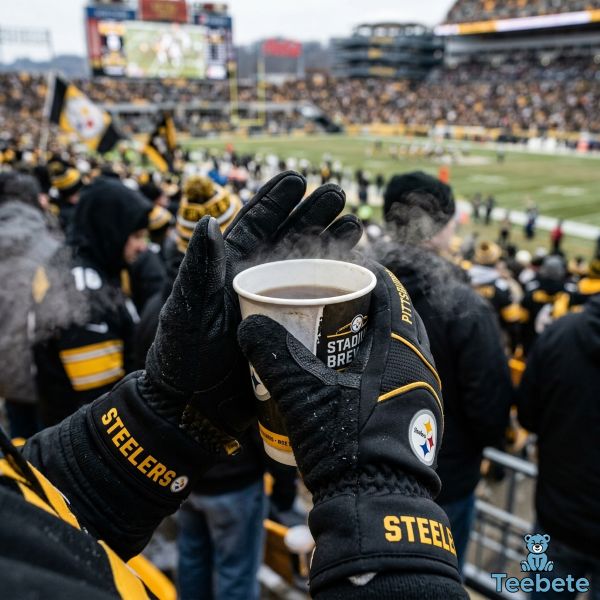
In short: Cold hands end games early. The right gloves keep dexterity intact so you can actually participate instead of just endure.
Hands go numb faster than any other part of the body in cold stadium conditions. Once that happens, clapping hurts, phone use becomes impossible, and holding a cup of coffee feels like a challenge. Functional gloves for game day balance thermal insulation with enough dexterity to stay useful.
Fans who choose pure warmth at the expense of grip end up pulling gloves off and on repeatedly, which defeats the thermal benefit entirely.
What Type of Gloves Do NFL Fans Actually Use
- Touchscreen gloves: Thin knit gloves with conductive fingertips. Best in the low 30s when phone use matters. They provide light insulation and full dexterity. Ideal as a liner inside heavier gloves.
- Insulated gloves: Fleece or synthetic-fill gloves with real windproof thermal insulation. Necessary below 30°F. They reduce fine motor control but hold warmth well for long periods of sitting still.
- Mittens as outer layer: Mittens group fingers together and outperform individual-finger gloves for heat retention. Worn over thin liner gloves, they give you the option to pull back and use your fingers when needed without exposing them fully to the cold.
The Real Layering System Steelers Fans Use

In short: Three clothing layers plus three accessory zones. Every piece has a job. Nothing is optional below 35°F.
The base layer manages moisture. Wool or synthetic thermal fabric pulls sweat away from skin and keeps it dry. Cotton traps moisture and turns cold fast. This is the single most important material upgrade most fans never make.
The mid layer holds heat. Fleece or an insulated vest traps body warmth between the base and the outer shell. The outer layer handles wind and precipitation, blocking the elements from reaching the insulation underneath.
Accessories close the gaps. No matter how good your jacket is, it does not cover the neck, head, or hands. That is where scarves, beanies, and gloves take over.
A Simple Layering Formula for Cold NFL Games
- Base: Wool or synthetic thermal long-sleeve top and bottoms
- Mid: Fleece pullover or insulated vest
- Outer: Windproof jacket or heavy zip hoodie
- Neck: Scarf wrapped to seal collar-to-hat gap
- Head: Full-cover beanie over the ears
- Hands: Touchscreen liner gloves inside insulated gloves or mittens
- Feet: Wool socks inside waterproof boots when rain or snow is possible
What to Wear to a Steelers Game in Cold Weather
In short: The full cold-weather game day kit comes down to three clothing layers, three accessory zones, and a few small extras that most fans skip until they need them badly.
Here is the complete system at a glance:
| Zone | Item | Priority |
|---|---|---|
| Head | Full-cover beanie | Essential below 35°F |
| Neck | Wrapped scarf | Essential below 35°F |
| Hands | Liner gloves + insulated outer | Essential below 40°F |
| Torso | Thermal base + fleece mid + windproof outer | Essential |
| Feet | Wool socks + waterproof boots | High if rain/snow |
| Extras | Hand warmers, seat cushion, lap blanket | Strongly recommended |
This table covers the full outfit system. Every row that reads “Essential” is not negotiable in a Pittsburgh January game.
How to Stay Warm at a Football Game in Winter
Getting through a cold game comfortably is not luck. It is a checklist executed before you leave the house.
Start with the base layer. Most fans skip this step because they are already wearing a hoodie and a jacket and think that is enough. It is not. Thermal base layers change the entire experience. Your body stays dry and warm instead of clamping down into a damp, cold jacket by the second quarter.
Add the mid layer, the outer shell, then the accessories. Hand warmers go into jacket pockets before you enter the stadium so they are already warm at kickoff. The seat cushion goes into the bag, not left in the car. The lap blanket gets pulled out at halftime.
Movement matters too. During breaks, standing up and walking to concessions keeps circulation active and slows heat loss. Fans who sit still for three hours in cold stadium seating lose heat progressively with no recovery. Short walks reset that.
Common Mistakes First-Time Fans Make in Cold Games

In short: Most first-timers dress for standing outside, not sitting still for three hours. The two situations require different gear priorities.
The most common mistake: heavy jacket, no hat, no scarf, no gloves. The jacket is doing 30% of the work. The other 70% is unprotected. It feels fine at kickoff. By halftime, the neck and ears are aching and the hands are useless.
Second mistake: cotton everything. Cotton hoodies, cotton long-sleeves, cotton socks. Cotton holds moisture. Once damp from sweat or light rain, it becomes the coldest layer you are wearing instead of the warmest.
Third mistake: upper-deck seats with no preparation for increased wind exposure. Upper-deck stadium seating cold exposure is significantly more severe than lower-bowl spots with overhead cover. The gear requirements are different, and fans sitting there need to plan for it.
Why You Can Still Feel Cold Even With a Heavy Jacket
A jacket insulates the torso. It does not cover the blood vessels running close to the surface in your neck, ears, and wrists. Those areas shed heat continuously while you sit. Your core temperature stays stable while your extremities suffer, which creates the confusing experience of being “dressed warmly” and still feeling cold. Closing the neck, head, and hand zones is the only fix.
Bad Setup vs Smart Setup: Side-by-Side Comparison
| What Most First-Timers Do | What Veteran Fans Do |
|---|---|
| Heavy jacket, nothing else | Three-layer system with windproof outer |
| No hat or a loose baseball cap | Full-cover beanie over the ears |
| No scarf | Scarf wrapped tight, ready for face coverage |
| No gloves or one pair of thick gloves | Liner gloves inside insulated outer gloves |
| Cotton hoodie as mid layer | Fleece or synthetic insulated mid layer |
| No hand warmers | Activated hand warmers in pockets at kickoff |
| No seat cushion | Insulated seat cushion blocks cold from below |
| Sit still for three hours | Move during breaks to keep circulation active |
This comparison explains why two fans can arrive in similarly sized coats and have completely different experiences by the fourth quarter.
Bonus Cold Weather Tips From Experienced Steelers Fans
Hand warmers are the most underrated item on the list. The disposable air-activated packets cost almost nothing and provide consistent heat for six to eight hours. Slip one into each glove at the parking lot and they are fully active by the time you reach your seat.
Seat cushions are the second most overlooked item. Hard stadium seats, whether plastic or metal, conduct cold directly into the body from below. Prolonged stadium seating cold exposure from underneath is something a jacket never addresses. An insulated foam cushion is a small bag item with a large comfort return.
Eating a warm meal before entering the stadium matters more than most people account for. Your body generates heat through digestion. Arriving cold and hungry accelerates heat loss significantly.
Small Tricks That Make a Big Difference at the Stadium
- Activate hand warmers in the parking lot, not at the seat
- Eat a hot meal within two hours of kickoff
- Bring a compact insulated blanket for the lap and legs in the second half
- Wear wool socks regardless of footwear, even inside normal boots
- Move during commercial breaks and halftime to reset circulation
How to Build a Complete Cold Weather Game Day Outfit
The full system is simpler than it sounds when broken into steps. Thermal base, fleece or insulated mid layer, windproof outer shell. Beanie on. Scarf wrapped and positioned at the neck. Liner gloves on, insulated outer gloves or mittens over them. Hand warmers already activated in outer pockets. Seat cushion in the bag.
Example Outfit for a Freezing Steelers Game
- Wool or synthetic thermal undershirt and thermal bottoms
- Fleece pullover or insulated vest as mid layer
- A warm Steelers hoodie for cold games as outer shell or over a mid layer
- Windproof shell jacket over the hoodie if rain or snow is in the forecast
- Full-cover beanie pulled over the ears
- Scarf wrapped two to three loops around the neck, ready to pull up
- Touchscreen liner gloves inside insulated outer gloves
- Wool socks and waterproof boots
Recommended Fan Gear That Fits Cold Weather Needs
Cold-weather game day apparel needs to perform as a layer, not just look right in the stands.
For the outer shell, an insulated fan hoodie for winter stadium with a front zip and ribbed cuffs seals warmth at the wrists while keeping the fan identity intact. Pair it with a fleece underneath and it handles most Pittsburgh winter conditions.
For the mid or base shirt layer, a comfortable Steelers shirt for layering in moisture-managing fabric adds game-day identity without bulk under the outer shell.
For fans bringing kids or family, a game day shirt for proud Steelers dads worn as a visible base layer or under an open hoodie gives the full fan look without compromising layering logic.
For tailgates and shoulder-season games when the full cold-weather system is not required, a unique Steelers fan shirt for tailgating is the right fit for pre-game energy before the serious gear goes on.
Where to Find Reliable Steelers Fan Apparel
Quality game-day apparel that holds up in cold conditions is not just about the logo. Construction, fabric weight, and fit all affect how well each piece performs as a layer in a real stadium environment.
The complete Steelers fan gear collection covers the full range of themed apparel options that pair naturally with the layering system outlined here, from base shirts to heavy hoodies built for winter games.
At Teebete, we focus on helping fans find apparel that balances comfort, warmth, and authentic game day style. We’ve seen what actually works for fans sitting through Pittsburgh winters, and that experience shapes every pick in the collection.
What Do Steelers Fans Wear to Stay Warm in Winter Games
Quick summary for fans heading to their first cold game:
- Hat: Full-cover beanie over the ears, switched from cap once seated
- Scarf: Wrapped tight at neck, pulled up over face when wind picks up
- Gloves: Touchscreen liner gloves inside insulated outer gloves or mittens
- Layers: Thermal base, fleece or synthetic mid, windproof outer shell
- Wind protection: Scarf and jacket collar sealed, windproof outer confirmed before leaving home
- Extras: Hand warmers activated early, insulated seat cushion, lap blanket for halftime
How Cold Is Too Cold for a Football Game
No temperature is too cold for a prepared fan, but the preparation requirements change significantly at certain thresholds.
Above 40°F: Standard cold-weather gear is enough. Beanie and gloves recommended but light versions work.
25°F to 40°F: Full three-layer system required. All accessory zones must be covered. Hand warmers move from optional to strongly recommended.
Below 25°F: Windproof thermal insulation at every layer becomes non-negotiable. Add toe warmers, a lap blanket, and activated hand warmers before entering.
Below 10°F with wind chill: This is rare but happens. At this range, staying hydrated, eating before the game, limiting exposure time during breaks, and having an exit plan if conditions worsen is part of the strategy. The gear described in this guide handles it, but execution has to be complete, not partial.
Final Thoughts: Dressing Smart Makes the Game Better
The fans still on their feet in the fourth quarter of a 25°F Pittsburgh game are not wearing the heaviest coats. They closed the gaps. Beanie, scarf, gloves, three layers, hand warmers in the pockets. Everything covered. Nothing optional.
Cold weather is part of what makes Steelers game days what they are. The stadium, the noise, the weather all combine into something that does not exist anywhere else. Dress for it correctly and you are part of that experience. Dress carelessly and you spend the second half counting down to the final whistle.
Get the gear right. The game does the rest.
Questions Fans Often Ask About Cold Game Gear
Do I Really Need Gloves at an NFL Game
Below 40°F, yes. Hands lose dexterity and warmth faster than any other part of the body in cold stadium conditions. Even thin touchscreen gloves make the difference between participating in the game and just enduring it.
Are Scarves Necessary for Football Games
In temperatures below 35°F or on windy days, a scarf is necessary because it closes the gap between your collar and hat. Without it, cold air enters the jacket through the neck opening and reduces the effectiveness of every other layer you are wearing.
What Is the Best Hat for Cold Stadium Weather
A full-cover beanie that pulls over the ears. It eliminates heat loss from the top and sides of the head and protects the ears from wind chill. For games in the 40s with low wind, a structured cap with ear coverage is a lighter option.
How Do Fans Stay Warm Sitting for Hours
Layer correctly before entering, seal all exposed zones with accessories, use hand warmers and an insulated seat cushion, eat a hot meal beforehand, and stand or move during breaks to reset circulation. All six of these things together make a larger difference than any single one alone.
Can You Wear Regular Clothes to a Cold Game
You can, but cotton jeans, sweatshirts, and non-thermal socks perform poorly in wet and cold conditions. Once damp, cotton loses its insulating value almost entirely. For games below 40°F, a thermal base layer and proper accessories are the minimum upgrade that changes the experience noticeably.

Hi, I’m Mia Wilson. I’m a journalist and content creator based in New York with over six years of experience covering sports, holidays, fan culture, and community events across the United States. I focus on exploring team histories, traditions, celebrations, and the broader impact of sports and cultural events on local communities. I’m passionate about providing accurate, engaging, and educational content for readers of all ages, helping them understand the stories, experiences, and events that make sports and celebrations so meaningful.
Looking to make the most of what you just learned? Start here.