Dallas Cowboys Hoodie: How to Choose the Right One for Game Day and Everyday Wear
It’s the fourth quarter at AT&T Stadium, and the temperature has dropped enough that the wrong hoodie suddenly feels like a mistake. Anyone who has sat through a late-season Cowboys home game, or huddled in the Blue Lot before an NFC East road trip to Philadelphia or Washington, knows the hoodie you grabbed on your way out the door either saves the night or ruins it.
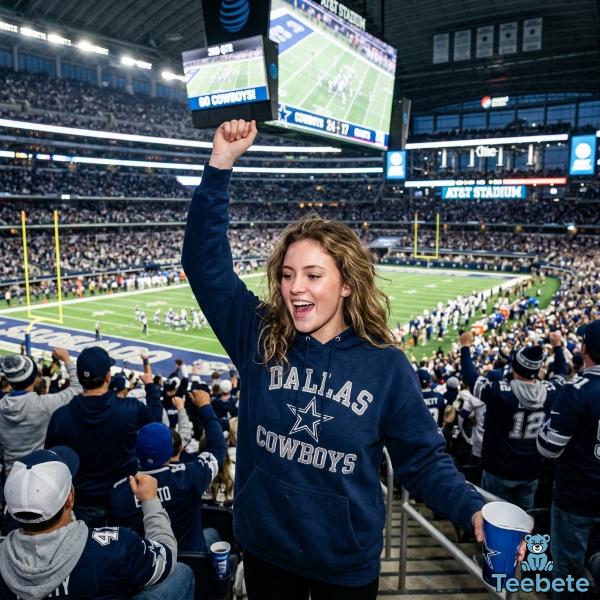
Quick answer: Heavyweight fleece (350 GSM or higher) is the right call for cold night games, a cotton blend covers daily wear, and performance fabric wins for active tailgating. Pullovers trap heat better; zip-ups give you more control when Arlington weather can’t make up its mind.
Your Cowboys hoodie isn’t just something you throw on for the photo before kickoff. It decides whether you’re comfortable through a fourth-quarter cold front, whether the Cowboys star logo still looks sharp after a full season of washes, and whether you’re still reaching for it in July when football feels like a lifetime away. Below is how a Cowboys Nation regular actually evaluates a hoodie: the fabric calls that matter by weather, the fit mistakes that trip up most online buyers, the construction details that separate a five-year hoodie from one that’s pilling by December, and where licensed gear and fan-made designs each earn a spot in the closet.
What Makes a Great Dallas Cowboys Hoodie?
Comfort Comes Before Style
A hoodie built for six hours in a stadium seat and one built for a Tuesday on the couch are not the same garment. Stadium wear has to handle temperature swings, wind, and hours of sitting without losing shape. Everyday wear cares more about how soft it feels and how it moves when you’re just going about your day. Breathability matters in both settings but for different reasons: at the game it keeps you from overheating during a fourth-quarter comeback, at home it keeps the fabric from feeling clammy after an hour indoors. A hoodie that binds your arms when you’re layering over a Dak Prescott jersey, or bunches up under a jacket at the tailgate, isn’t doing its job no matter how good the print looks.
Features That Actually Matter
Skip the marketing copy and look at the build. A well-cut hood should stay put when you look down and cover enough of your ears to matter in real wind. The kangaroo pocket needs to fit actual hands, not just look good in a product photo. Adjustable drawstrings sound minor until you’re at a windy Blue Lot tailgate, grateful you can cinch the hood tight. Ribbed cuffs keep cold air from creeping up your sleeves, and tight, even stitching keeps seams from splitting at the shoulder after a few wears. Fabric weight decides most of the rest, which gets its own breakdown next.
Quick Checklist Before Buying a Cowboys Hoodie
- Fabric: matches your climate and how you’ll actually wear it
- Fit: leaves room to layer without going baggy in the wrong places
- Weight (GSM): built for cold-weather or mild-weather use
- Print or embroidery: clean edges up close, not blurry or off-register
- Hood, pocket, cuffs: reinforced stitching, not single-pass seams
- Care instructions: realistic for how often you’ll actually wash it
Choosing the Right Fabric for Different Weather Conditions
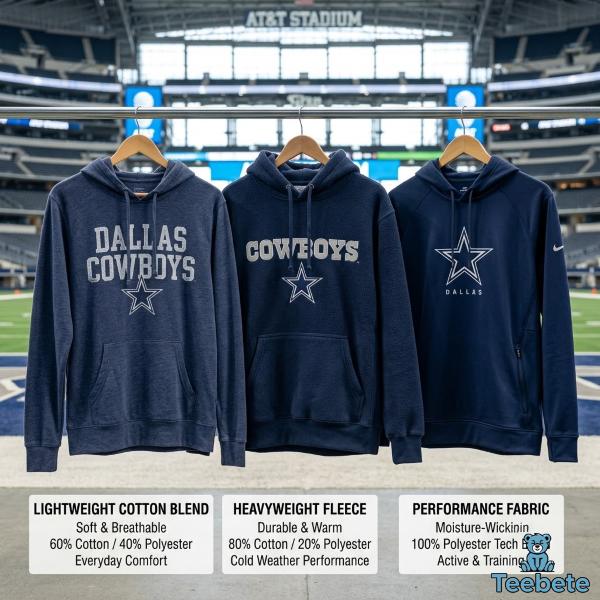
Forget the generic cotton-versus-polyester debate. The real question is simpler: are you shivering in the upper deck, or grilling in the Blue Lot in September heat?
Cotton Blend Hoodies
Cotton-poly blends are the default for good reason. They breathe well, feel soft against skin, and hold up to regular washing without much fuss. Best for daily wear, watching the Sunday slate from the couch, or mild fall afternoons where serious insulation isn’t the point.
Heavyweight Fleece Hoodies
For a January night game or a long winter road trip, heavyweight fleece earns its keep. These typically range from 350 GSM upward (GSM, or grams per square meter, is the standard industry measure of fabric density), with brushed interiors that trap heat far better than a lighter cotton hoodie. The tradeoff is bulk, which is exactly what you want once the wind starts cutting through the upper deck.
In real use, a midweight hoodie often feels perfect at kickoff and starts feeling underpowered by the fourth quarter once the temperature really drops. That’s the pattern fans who stay through the final whistle usually notice, and it’s why the four-quarter crowd tends to land on heavyweight fleece or a proper layered setup instead of gambling on a midweight piece alone.
There’s a travel wrinkle here too that doesn’t get talked about much: a 400 GSM fleece feels amazing at the game, but stuffing one into a carry-on for an early-season road trip eats up half your bag. That’s why a lot of frequent travelers keep a lighter zip-up in rotation for September and October games, then swap to heavyweight fleece once the winter slate hits.
Performance Fabric Hoodies
Moisture-wicking, quick-drying blends are built for tailgating, cornhole, and anyone moving around outdoors for hours before kickoff. They shed sweat and light rain better than cotton and dry faster if the weather turns on you mid-tailgate.
| Fabric Type | Typical Weight (GSM) | Best For | Trade-off |
|---|---|---|---|
| Cotton blend | 200–280 | Daily wear, mild weather, indoor comfort | Less insulating in extreme cold |
| Heavyweight fleece | 350+ | Cold games, winter travel, night games | Bulkier, slower to dry if wet |
| Performance fabric | 220–300 | Tailgating, active outdoor use | Less plush feel than cotton or fleece |
Which fabric should you choose?
| Situation | Best Choice |
|---|---|
| Cold winter games | Heavyweight fleece |
| Mild weather | Cotton blend |
| Tailgating | Performance fabric |
| Daily wear | Cotton blend |
| Travel or road games | Midweight zip-up |
Pullover or Zip-Up: Which Style Fits Your Lifestyle?
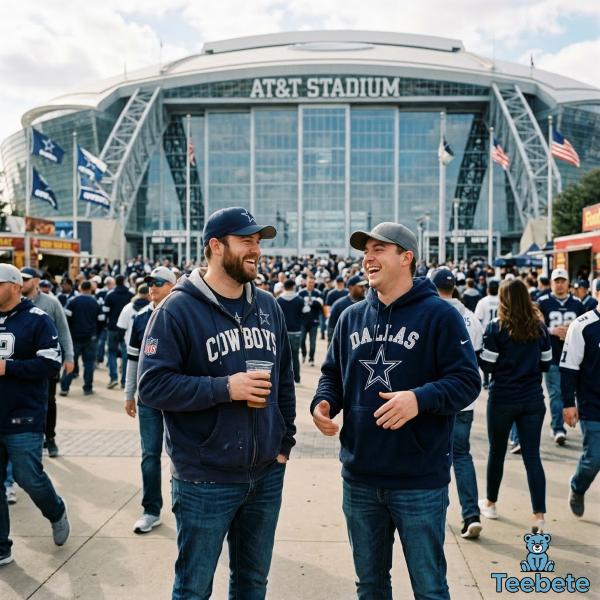
Why Many Fans Prefer Pullovers
Pullovers trap heat more effectively since there’s no zipper seam letting air in, and they carry that classic, casual hoodie look rather than an athletic one. For fans who want one warm layer they don’t have to fuss with, the pullover is the simpler call.
When a Zip-Up Makes More Sense
A full-zip earns its spot when temperature control matters more than raw warmth. Vent it during a sunny first quarter, zip it fully once the sun drops behind the upper deck. That flexibility also makes zip-ups easier to travel with, since they layer over a Micah Parsons jersey or under a team jacket without going over your head.
Which One Works Better for Game Day?
Inside the stadium, where you’re stuck in one seat for hours through swinging temperatures, a zip-up gives you more control. At the tailgate, where you’re moving around constantly, a pullover’s simplicity wins out. For the daily commute or watching from home, it’s mostly personal preference.
How Should a Dallas Cowboys Hoodie Fit?
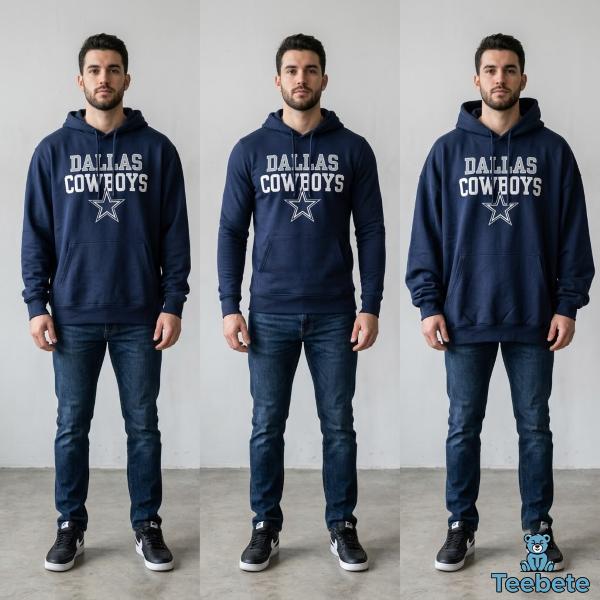
Fit is where most online hoodie purchases go wrong. A hoodie that looks fine on the product page can feel tight in the shoulders, short in the torso, or bulky the moment you add a base layer underneath.
Relaxed Fit vs Athletic Fit
Relaxed fit hoodies give more shoulder room and a looser torso, useful if you’re planning to layer a tee or thermal underneath, including a piece from our Cowboys T-shirt buying guide. Athletic fit hoodies sit closer to the body with a shorter torso, a cleaner silhouette some fans prefer, though it leaves less room for cold-weather layering.
Should You Size Up?
If you’re buying heavyweight fleece specifically for winter layering, sizing up by one is common practice since you’ll likely have a shirt or thermal underneath. Cotton blends can also shrink slightly with repeated washing, so a snug fit out of the box may run tighter by the back half of the season. The oversized look that’s taken over streetwear plays into this too; plenty of fans size up purely for the silhouette, not for function, which is a fine call as long as you know that’s the tradeoff you’re making.
Common Sizing Mistakes to Avoid
The most common mistake is buying a hoodie in your usual t-shirt size without accounting for the extra bulk of the hood and pocket. Ignoring fabric composition is another; a 100% cotton hoodie and a poly-blend in the same listed size can fit noticeably differently. And skipping the layering question until after the hoodie shows up is an easy way to end up with something too snug to wear over anything else.
How to Judge Hoodie Quality Before You Buy
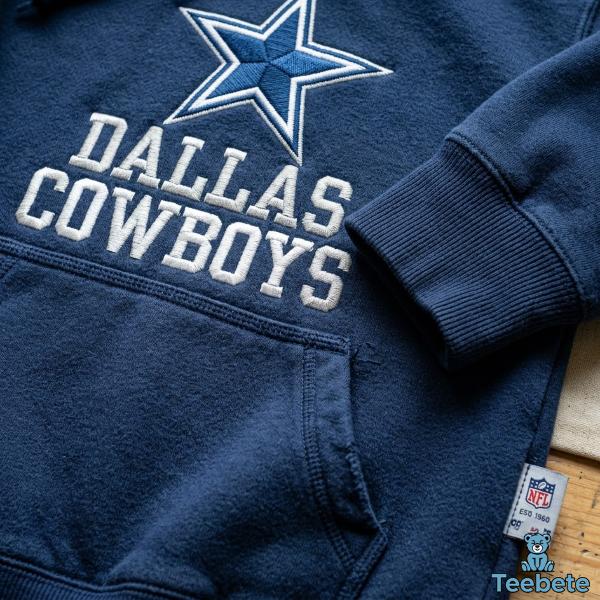
Quality details are easy to skip past on a product listing, but they’re what decide how the hoodie looks after ten washes, not just on day one.
Fabric Weight
Lightweight hoodies generally run 200 to 280 GSM, midweight sits at 280 to 350, and heavyweight starts around 350 and climbs from there. Higher GSM isn’t automatically better; it just means denser, warmer fabric, which only helps if that matches how and where you’re actually wearing the piece.
Print Quality
Screen printing holds up well over dozens of washes and suits bold, simple graphics like a team logo. DTG (direct-to-garment) printing handles detailed, multi-color artwork with a softer hand feel but tends to show wear sooner on heavily used pieces. Embroidery costs more upfront but resists fading, cracking, and peeling longest, since the design is stitched into the fabric instead of sitting on top of it. For a Cowboys star logo you plan to wear for years, embroidery or a well-cured screen print will outlast a cheap DTG job.
Stitching and Construction
Reinforced seams and double stitching at the shoulders and underarms stop the kind of tears that show up after just a few wears. Cuff elasticity matters too; cuffs that lose their snap after a couple of washes usually point to lower-grade ribbing.
Hood and Pocket Construction
These two spots take the most physical abuse of any part of the hoodie, from constant pulling on and off to hands going in and out of the pocket all game long. Check that the hood has a sturdy seam where it meets the neckline and that the pocket corners are bar-tacked, not just single-stitched.
Official Team Gear or Fan Inspired Designs?
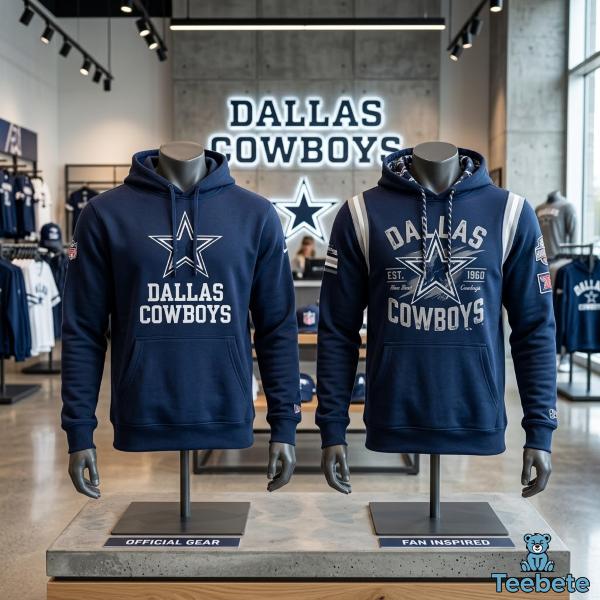
Official NFL Licensed Hoodies
Officially licensed Cowboys gear, the kind you’ll find from Nike or through Fanatics and the Cowboys Pro Shop, guarantees accurate team colors and approved logos, plus the assurance that part of the purchase supports the league and team through licensing. You’ll usually pay more for it, though, and you’ll probably see the same handful of designs everywhere you look.
Creative Fan Designed Hoodies
Independent sellers tend to experiment more. That’s where you’ll find vintage-inspired artwork, inside jokes only Cowboys Nation would get, and designs that don’t exist anywhere in the official lineup, though quality and accuracy can vary quite a bit from seller to seller, so construction and print quality are worth checking closely before buying.
Many fans keep both in rotation, one for official game days and another for casual wear when they want something more personal. On the custom side, print placement can vary quite a bit between sellers, and it’s worth a closer look before you buy. A star logo or name-and-number design that runs too far down the chest will overlap the kangaroo pocket, and the print will crack the first time you shove your hands in to warm up. At Teebete, we’ve found that keeping graphics clear of high-stress spots like the pocket seam, and double-checking typography scaling on any name-and-number back print, helps a custom Silver and Blue hoodie stay looking clean wear after wear.
Easy Outfit Ideas with a Dallas Cowboys Hoodie
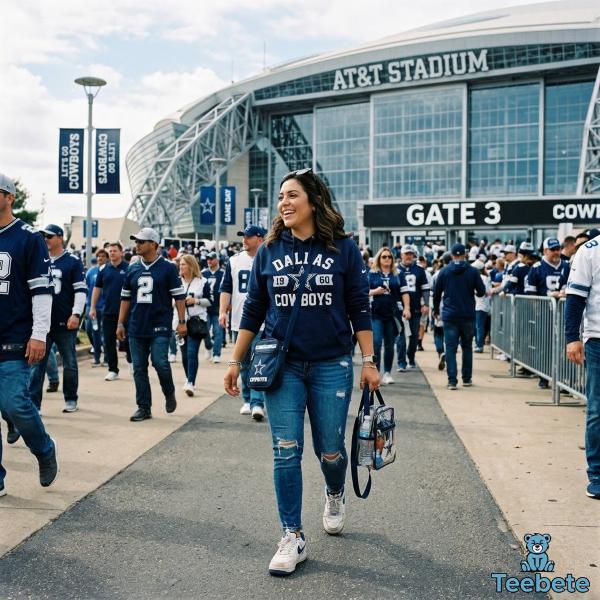
Whether you’re keeping it simple with jeans or looking for full game day outfit inspiration, your hoodie sets the tone for the entire look.
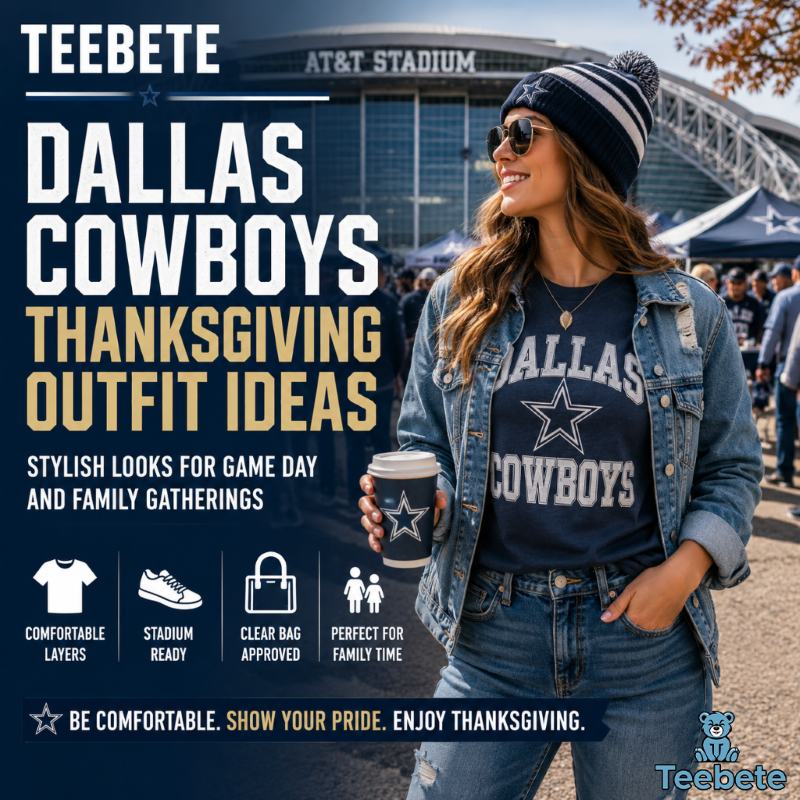
Casual weekend outfit: A midweight cotton-blend hoodie with jeans and sneakers is the low-effort look that still reads as team pride without trying too hard.
Tailgate outfit: A performance fabric hoodie over a moisture-wicking base layer handles hours outside, especially if you’re on grill duty or tossing a football around before kickoff.
Cold weather layering: Start with a thermal or long-sleeve base, add the hoodie, top it with a team jacket if the forecast calls for it. This is where sizing up on the hoodie itself pays off.
Travel outfit: A midweight zip-up works well for flights or long drives to away games, since it comes off easily without messing up whatever’s underneath.
Caring for Your Hoodie So It Lasts Season After Season
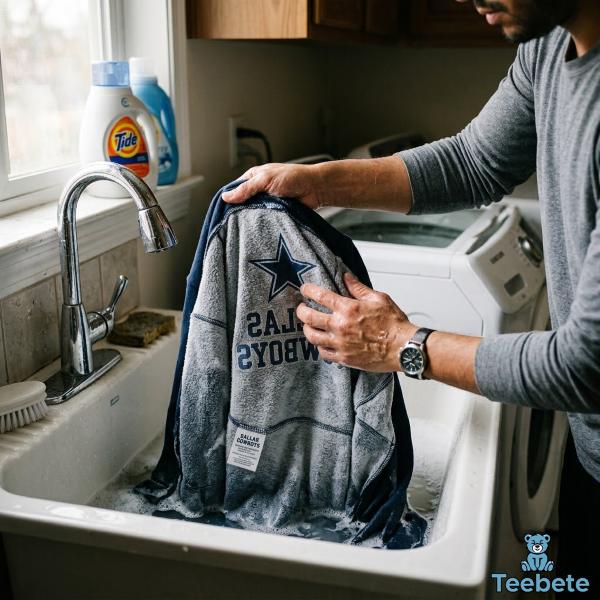
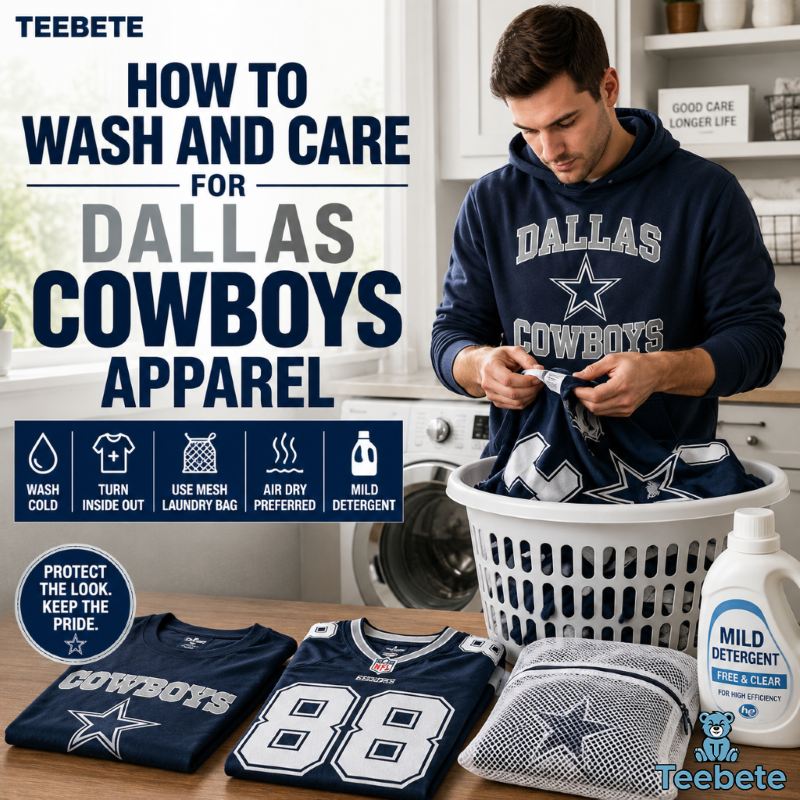
Cold water and turning it inside out are the basics, but preserving that crisp Cowboys star logo season after season means following proper hoodie care best practices.
Washing Tips
Turn the hoodie inside out before washing to keep the print or embroidery from rubbing against other clothes. Cold water is gentler on both fabric and graphics than hot, which accelerates fading and shrinkage.
Drying Tips
Air drying or low-heat tumble drying holds fit and shape far better than high heat, which is one of the fastest ways to warp a hoodie and crack a print.
Preventing Print Cracks
Skip ironing directly over a printed design, and skip dryer sheets on heavily printed pieces, since the added heat and friction speed up cracking.
Proper Storage
Fold rather than hang heavyweight hoodies, since hanging stretches the shoulders and neckline over months in the closet. Keep them out of direct sunlight, which fades both fabric and print.
Related Cowboys Apparel Worth Considering
Graphic T-Shirts
For warmer months or layering under a hoodie, graphic tees are the natural next step, and the same fit and quality questions from above apply there too.
Hoodies vs Sweatshirts
Crewneck sweatshirts trade the hood and pocket for a simpler silhouette, usually at a lighter weight. Solid pick for milder days or for fans who want a cleaner look without giving up team pride.
Building a Complete Fan Wardrobe
Once the hoodie is locked in, it tends to become the anchor everything else gets built around, which is really the whole idea behind a complete Cowboys apparel guide: matching pieces for every part of the season, not just one hoodie in isolation.
Frequently Asked Questions About Choosing a Dallas Cowboys Hoodie
Which hoodie material is warmest for winter games?
Heavyweight fleece, typically 350 GSM or higher, offers the most insulation for cold night games and winter travel.
Should I buy a hoodie one size larger?
Sizing up makes sense mainly for heavyweight fleece you plan to layer over a shirt or thermal. For lightweight or true-to-size cotton blends, your usual size is usually fine.
Are heavyweight hoodies worth the extra cost?
For fans attending late-season or outdoor winter games, yes. The added warmth and durability generally justify the price for anyone wearing it regularly through cold months.
Is a pullover warmer than a zip-up hoodie?
Generally yes, since there’s no zipper seam letting in air, though the gap is often small if both are similar fabric weight.
How can I tell if a hoodie is high quality?
Check the fabric weight, look closely at stitching around the hood and pocket, and inspect the print or embroidery up close for clean edges and consistent color.
What is the best hoodie for tailgating?
A performance fabric hoodie handles hours outdoors, active movement, and unpredictable weather better than a standard cotton blend.
How often should I wash a printed hoodie?
Wash only when needed rather than after every wear. Turning it inside out and sticking to cold water each time extends both the fabric and the print.
Can I wear a Cowboys hoodie casually even outside football season?
Absolutely. A well-made hoodie in a versatile colorway works as everyday streetwear year-round, not just during the season.
The Final Whistle
At the end of the day, your game-day armor needs to work for your exact situation, whether that’s a 350 GSM fleece shielding you in the upper deck or a breathable zip-up for a warm Blue Lot afternoon. Nail the fabric and the fit, and you’ll have a Silver and Blue hoodie that outlasts this season’s roster.
What’s your go-to setup for game day, heavyweight fleece for the cold nights, or something lighter you layer as needed?

Hi, I’m Mia Wilson. I’m a journalist and content creator based in New York with over six years of experience covering sports, holidays, fan culture, and community events across the United States. I focus on exploring team histories, traditions, celebrations, and the broader impact of sports and cultural events on local communities. I’m passionate about providing accurate, engaging, and educational content for readers of all ages, helping them understand the stories, experiences, and events that make sports and celebrations so meaningful.