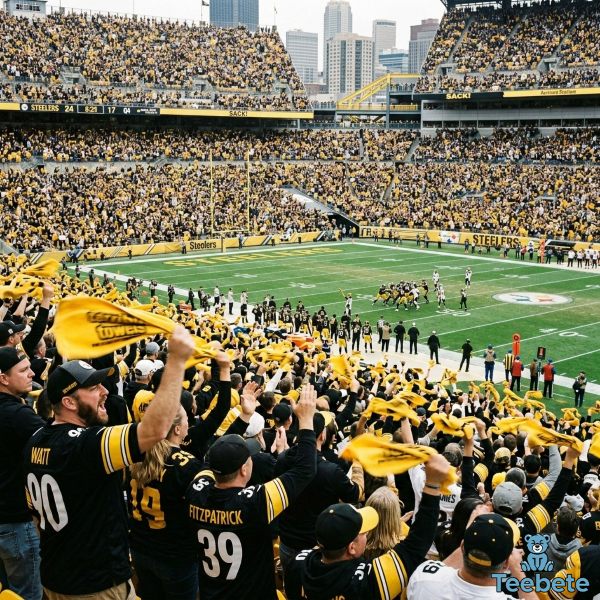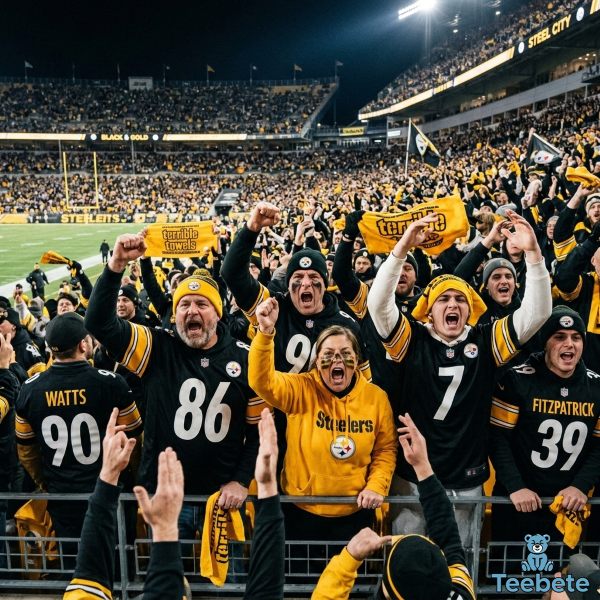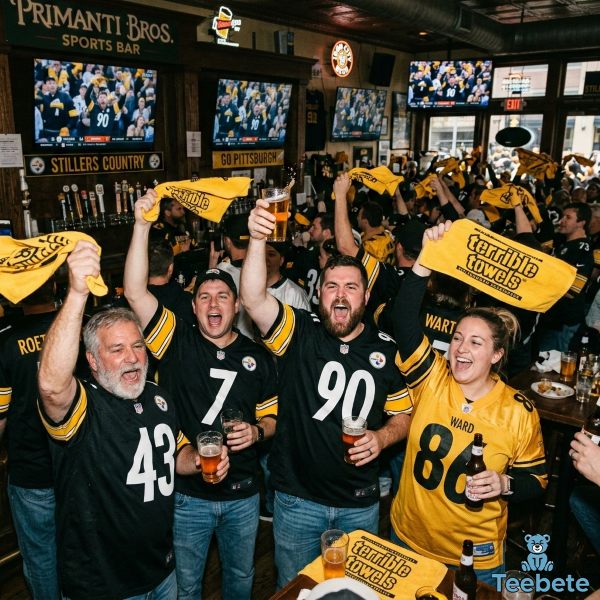
The wind off the Allegheny hits differently once November settles in, and roughly 68,000 people at Acrisure Stadium mostly ignore it. That’s the first thing you notice about a Steelers home game: the cold doesn’t thin the crowd, it just adds another layer of black and gold. By the third quarter, when the jumbotron cuts to black and the opening riff of a 1978 Styx song rolls out over the North Shore, even the fans who’ve seen it a hundred times still reach for their towels. Nobody organizes this. No usher gives a cue. The stadium atmosphere just tips over into something closer to a family reunion with a marching band.

That’s the throughline of Steelers fan rituals: almost none of them were designed. The towel started as a radio stunt. The song came from a staffer’s morning commute. The nickname for the fan base was coined by an NFL Films narrator almost as an aside. What holds Pittsburgh football culture together is a city that has shown up for this team since 1933, through four Super Bowl titles in six seasons, through the mills closing, through a stadium name change fans still grumble about. Crowd behavior here isn’t performance, it’s inherited, the same way a lucky seat or a Sunday breakfast gets handed down. This guide covers where those customs came from, what the Sunday atmosphere feels like now at Acrisure Stadium, and how a fan base scattered from Pittsburgh to Europe keeps its football habits, and its sense of local heritage, alive.
Quick Summary: The Core Steelers Game Day Traditions
- The Terrible Towel: Created in 1975 by broadcaster Myron Cope for a playoff game; waved on big plays, with sales still funding the Allegheny Valley School.
- “Renegade” by Styx: Blasted over the PA in the third or fourth quarter to fire up the defense, a tradition that dates to a 2002 playoff comeback.
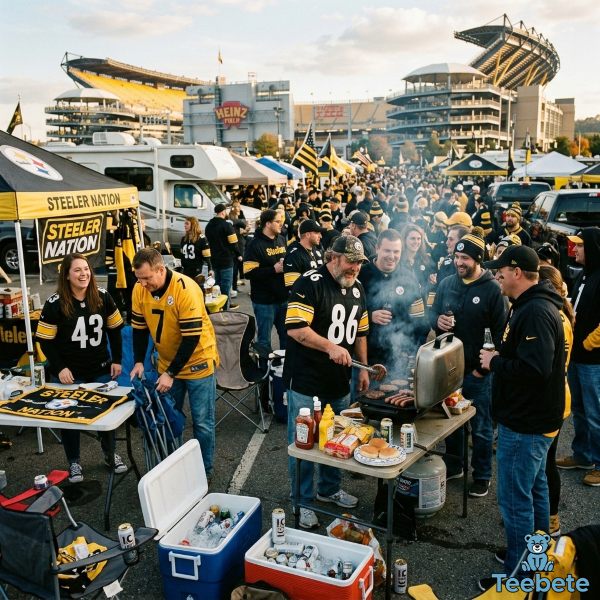
- North Shore tailgating: Fans gather in the Gold Lots hours before kickoff for Primanti Bros sandwiches, pierogies, and Iron City Light.
- Black and gold layering: Jerseys, vintage gear, and heavy layers built for the wind coming off the Allegheny and Ohio rivers.
- A global Steeler Nation: Official fan clubs and marketing rights stretch from Pittsburgh to Dublin and Munich, keeping Sunday rituals alive well outside Western Pennsylvania.
What Makes Steelers Game Day Traditions So Unique?
Steelers game day traditions stand out because fans, not marketers, created most of them and kept them alive across generations. They’re built on three things: a shared ritual, a strong local identity, and a fan base that treats Sundays like family time.
Steelers game day traditions are unusual in the NFL because fans built most of them, not a marketing department. The Terrible Towel, the “Renegade” comeback anthem, and the term “Steeler Nation” itself all trace back to Pittsburgh’s blue-collar roots and a fan base that stayed loyal through decades of losing seasons before the 1970s dynasty turned the team into a national brand. Few franchises can point to core traditions this organic, or this old, and that grassroots origin is exactly what makes them feel authentic instead of manufactured.
A Timeline of Steelers Game Day Culture
Steelers traditions don’t trace back to vague nostalgia. Each one has a specific, documented origin point, and knowing the timeline explains why they’ve held up for half a century.
| Year | Milestone |
|---|---|
| 1933 | Art Rooney founds the franchise as the Pittsburgh Pirates, later renamed the Steelers in 1940 |
| 1970 | The team moves into Three Rivers Stadium, sharing the multipurpose venue with the Pittsburgh Pirates baseball club |
| December 23, 1972 | Franco Harris completes the Immaculate Reception against the Oakland Raiders, the play widely regarded as the greatest in NFL history and the spark for the Steelers’ 1970s dynasty |
| December 27, 1975 | Myron Cope introduces the Terrible Towel ahead of a playoff game against the Baltimore Colts |
| 1978 | NFL Films narrator John Facenda coins the term “Steeler Nation” in the team’s season highlights film |
| 1996 | Cope transfers the Terrible Towel trademark to the Allegheny Valley School |
| 2001 | The Steelers open Heinz Field, moving out of Three Rivers Stadium; the marketing staff begins experimenting with “Renegade” as game content |
| January 5, 2002 | “Renegade” becomes a fixture after sparking a playoff comeback against the Cleveland Browns |
| 2022 | Heinz Field is renamed Acrisure Stadium after a 15-year naming rights deal |
| 2025 | The Steelers play a regular-season game in Dublin, beating the Minnesota Vikings 24-21 |
The Origins of Steelers Game Day Culture
Steel City Heritage Shapes Every Tradition
Pittsburgh built its identity on steel mills, and the Rooney family helped turn that identity into one of the NFL’s most durable football cultures. Art Rooney founded the franchise in 1933 on a modest budget and a lot of local goodwill, and his son Dan Rooney later helped build the team that dominated the 1970s at Three Rivers Stadium, the multipurpose venue the Steelers called home before Heinz Field opened in 2001. That blue-collar backbone still shows up in how fans approach a Sunday. Nothing about Steelers culture is precious. Tailgates start early, gear gets worn until it falls apart, and loyalty passes down the same way a trade or a family recipe would. The team’s own nickname history leans into that grit, from the Steel Curtain defensive line that anchored four championship teams, to the everyday label of “Yinzer” that Pittsburghers wear as a badge of local pride. The coaching lineage tells its own version of the same story: only three head coaches, Chuck Noll, Bill Cowher, and Mike Tomlin, have led the team since 1969, a stability that’s rare in professional sports and that fans point to as proof the organization values continuity as much as they do.
How Steeler Nation Became One of the NFL’s Largest Fan Communities
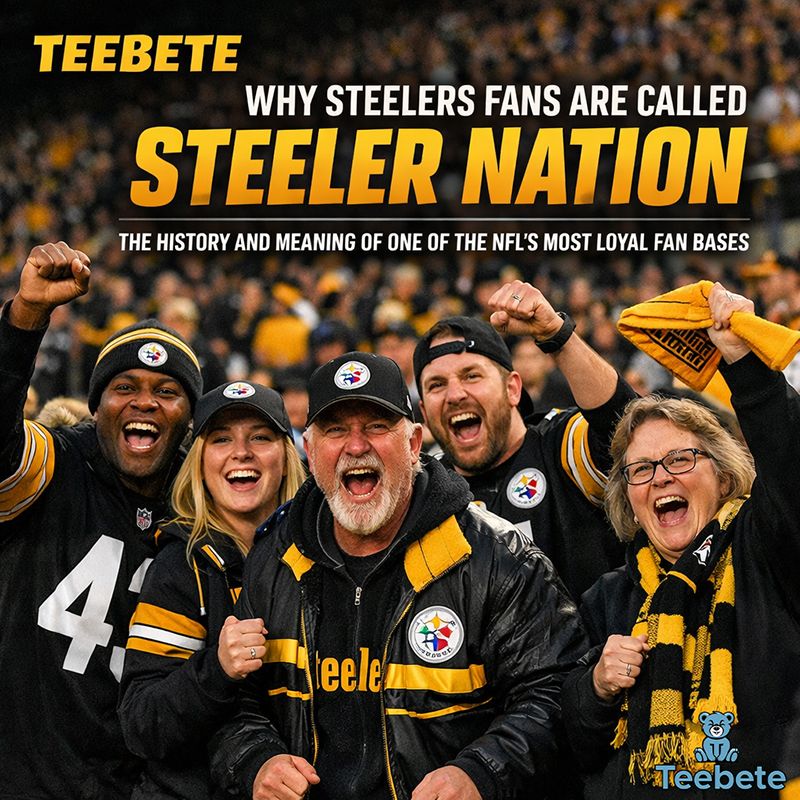
Steeler Nation refers to the Pittsburgh Steelers’ fan base, a name that NFL Films narrator John Facenda coined almost by accident in the team’s 1978 highlights film. The Steelers, under head coach Chuck Noll, were stacking Super Bowl wins behind stars like Franco Harris, Terry Bradshaw, and “Mean” Joe Greene, and the name stuck. When Pittsburgh’s steel industry contracted through the early 1980s and families relocated for work across the country, they carried their allegiance with them. That migration is a big part of why Steelers bars exist in cities that have no geographic connection to Western Pennsylvania at all.
Local football heritage like this doesn’t usually survive a franchise’s worst decades intact, but Pittsburgh’s did. For the deeper story of how that nickname spread and what it means to fans today, our guide on why Steelers fans are called Steeler Nation breaks down the whole arc.
The Most Famous Steelers Game Day Traditions
Waving the Terrible Towel

The Terrible Towel started as a favor to a radio station. In December 1975, WTAE’s sales staff told broadcaster Myron Cope he needed a gimmick ahead of a playoff game against the Baltimore Colts. Cope, who insisted he wasn’t a gimmick guy, landed on something dead simple: tell fans to bring yellow dish towels to the game and wave them. His own description of the pitch was blunt: “we’ll call this the Terrible Towel.” The Steelers won that game 28-10, then carried the momentum to a Super Bowl X win over the Dallas Cowboys, and a Pittsburgh institution was born.
In 1996, Cope handed the trademark rights to the Allegheny Valley School, a Coraopolis nonprofit that supports people with intellectual and developmental disabilities. Towel sales have since generated more than $6 million for the school. Every fan waving one at Acrisure Stadium is also funding that mission, whether they know it or not.
How should fans use the Terrible Towel? Wave it overhead during big defensive stops or a Steelers touchdown, not constantly through the game. Regulars avoid letting it touch the ground, never wash a towel that’s seen a win, and treat a game-worn towel less like merchandise and more like a family keepsake.
Singing “Renegade” During Defensive Moments

“Renegade” is the Steelers’ most modern tradition, and it happened almost by accident. When Heinz Field opened in 2001, the team’s marketing staff wanted new video content for the stadium’s screens. Mike Marchinsky, a Steelers events staffer since 1998, pitched Styx’s 1978 rock track after hearing it on his commute, partly because his mother and wife were both Styx fans. The song played occasionally that first season, but it wasn’t a fixture yet.
That changed on January 5, 2002. Down 24-7 to the Cleveland Browns in a playoff game, with the crowd flat, the video board crew played “Renegade” behind a defensive highlight reel. Pittsburgh outscored Cleveland the rest of the way and won. The song has been a third or fourth quarter staple ever since, timed to whenever the Steelers need their defense to make a stop. A Point Park University study of 54 home games between 2014 and 2021 found the Steelers held the lead in roughly 60 percent of games where “Renegade” played, and lost only seven times in that stretch. Correlation isn’t magic, but Acrisure Stadium doesn’t much care about the distinction once the chorus hits and thousands of towels come up at once. The song survived because it worked at the exact moment the team needed it most, and that association between a 1978 rock anthem and a Pittsburgh defensive stand hasn’t faded since.
Wearing Black and Gold From Head to Toe

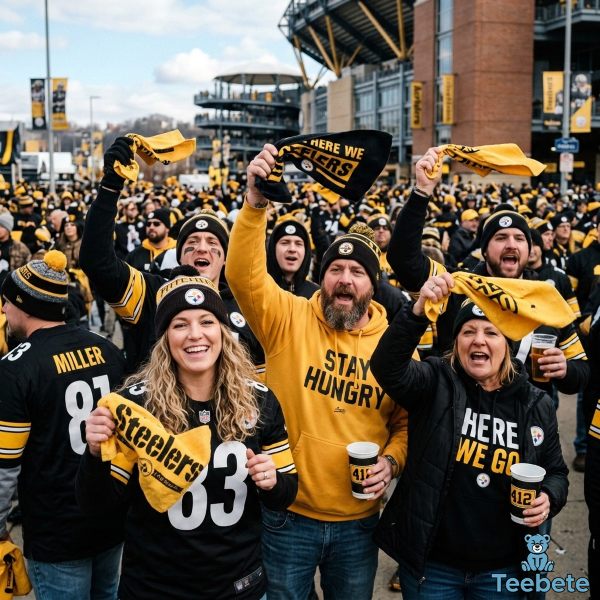
Game day fashion in Pittsburgh isn’t really about following a dress code, it’s about signaling which era of the team you claim as yours. You’ll see current jerseys next to faded 1970s throwbacks, hoodies layered under stadium blankets, and scarves that have clearly survived a decade of tailgates. Acrisure Stadium sits at the point where the Allegheny and Monongahela rivers meet to form the Ohio, and the wind coming off that water cuts through a single layer fast once the calendar hits late November. Fans who’ve sat through a few cold-weather games learn the hard way that thermal base layers matter more than piling on a second jersey, and that a towel needs to stay accessible no matter how many jackets are involved.
Saying “Here We Go Steelers”
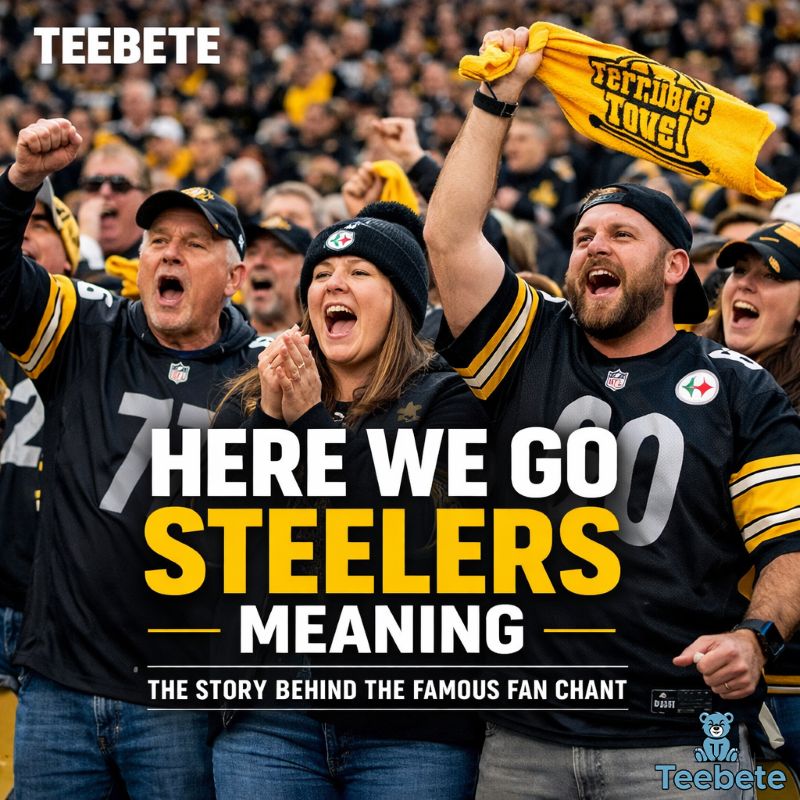
“Here We Go” functions as the team’s unofficial fight song, a chant that predates most of the players on the current roster and gets picked up organically in bars, parking lots, and the stadium concourse well before kickoff. It doesn’t need a cue from the scoreboard. Somebody starts it, and within a few seconds a section of strangers is singing it together, which is about as good a summary of Steeler Nation as any single tradition offers.
Family Rituals Before Kickoff
Ask a longtime Steelers household how their Sunday starts and you’ll get a routine that’s been repeated for years without anyone officially deciding to start it: a specific breakfast, a lucky chair, a grandparent’s old jersey pulled out of storage. These small, unscripted habits rarely make it into official team content, but they’re what keeps the fandom generational. Parents pass down which pierogi recipe gets made before a playoff game, kids inherit a parent’s game-worn towel, and watch parties develop unwritten rules about who’s allowed to talk during a drive without jinxing it.
Tailgating Is More Than Just Food
What Happens Before Kickoff Around Acrisure Stadium

Acrisure Stadium sits in Pittsburgh’s North Shore neighborhood, along the Ohio River, and the surrounding lots turn into a full pregame scene hours before kickoff. Parking areas typically open around five hours before the game, and the Gold Lots closest to the stadium fill with grills, folding tables, and portable speakers well before that. Tailgating is allowed in the surface lots but not in the parking garages, so the real action concentrates in a handful of spots that regulars have staked out for years. Fans walking in from downtown often cross the Roberto Clemente Bridge, one of the “Three Sisters” spans over the Allegheny that gets closed to car traffic on game days and turns into a pedestrian river of black and gold, cold concrete underfoot and wet jackets everywhere once the weather turns.
Classic Steelers Tailgate Foods
No Pittsburgh tailgate spread is complete without a Primanti Bros sandwich, the city’s signature creation that dates back to 1933, when Joe Primanti started serving grilled meat, coleslaw, tomato, and a full portion of french fries stacked inside Italian bread from a cart in the Strip District. It was built almost by design so a trucker or steelworker could eat a full meal one-handed. That same DNA shows up on tailgate tables today, alongside pierogies, pepperoni rolls, and Iron City Light, the local beer that’s practically shorthand for Pittsburgh sports culture. It says something about the ritual that Steelers draft picks still make a pilgrimage to the original Strip District location soon after they sign, a small custom that’s become part of the team’s own institutional culture.
| Tradition | Purpose | Roughly When |
|---|---|---|
| Terrible Towel | Rally symbol waved on big plays | Anytime the Steelers make a defensive stop or score |
| “Renegade” | Hype anthem for the defense | Third or fourth quarter, home games |
| Tailgating | Community and pregame ritual | Up to five hours before kickoff |
| “Here We Go” | Unofficial fight song and crowd chant | Pregame and throughout the game |
| Lucky jersey / seat | Personal superstition | Ongoing through a winning streak |
How Fans Create Steelers Traditions at Home
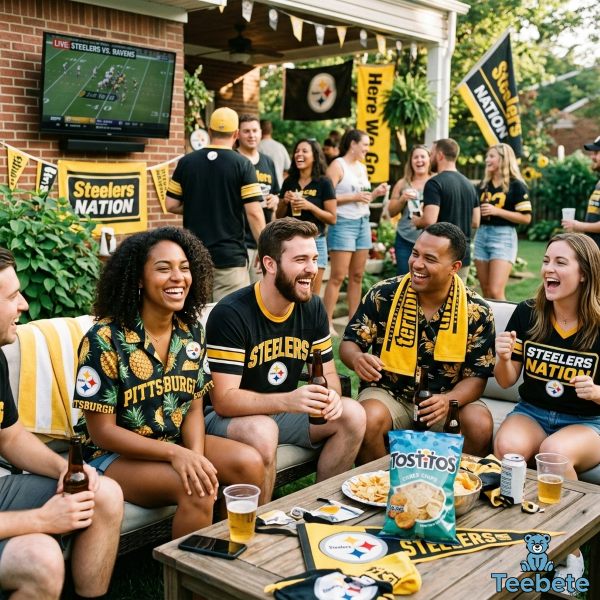
Not everyone can make it to the North Shore every week, and homegating has become its own tradition in Steelers households. Fans decorate a game room in black and gold, run a virtual watch party with relatives scattered across states, or replicate a tailgate menu in the driveway. Only the soundtrack changes, really, trading a parking-lot speaker and grill smoke for a living room TV and a plate of reheated pierogies. Before heading out to the lots for the first time, it helps to know what’s actually worth packing. Our Steelers tailgating gear checklist covers what regulars bring so first-timers aren’t scrambling in the parking lot.
First-time tailgaters tend to make the same handful of mistakes: showing up without cash for lot fees, forgetting that grills are only permitted in surface lots and not garages, packing a cooler so big it becomes its own hike from the car, and underestimating how early the good spots fill up on a division game. Regulars travel lighter than newcomers expect, and they get there earlier than seems necessary until you’ve tried to find parking an hour before kickoff.
First Time Going to a Steelers Game?
| What to Know | Details |
|---|---|
| Parking | Lots typically open about five hours before kickoff; prices run $20 to $60 depending on location; the Champions Parking Garage is the main structure, but tailgating is limited to surface lots |
| Clear bag policy | Bags must be clear plastic, vinyl, or PVC, no larger than 12″ x 6″ x 12″, or a small clutch no bigger than 4.5″ x 6.5″; one-gallon clear freezer bags are also allowed; there’s no bag check at the gates |
| Cold weather | Layer up starting in November; the wind off the rivers cuts through a single jacket fast |
| Transportation | Pittsburgh Regional Transit’s light rail and buses run fans in from downtown, and the Gateway Clipper riverboat offers a scenic ride to the North Shore |
| Stadium entry | Arrive early; lines move fine with a compliant bag but back up fast when fans show up with the wrong one |
| Fan etiquette | Save the towel-waving for big plays, not every snap, and you’ll fit right in |
What Should You Wear on Steelers Game Day?

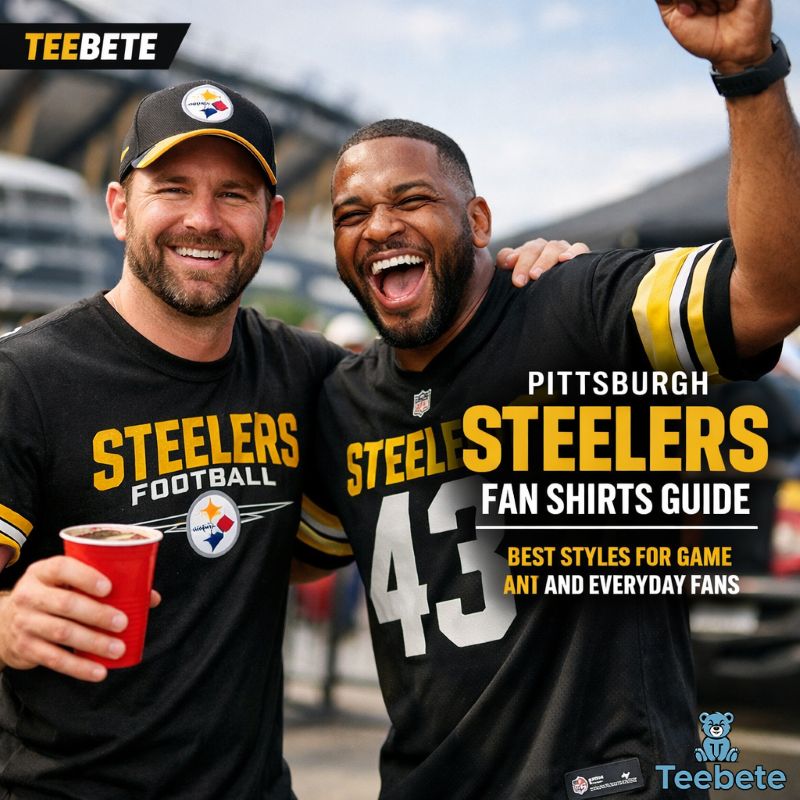
Weather dictates most wardrobe decisions here. Early-season games can still be warm enough for a jersey and shorts, but by December, fans are layering thermal base layers under a hoodie, topped with a black or gold jacket and a scarf. Comfortable, broken-in shoes matter more than newcomers expect, since getting from the parking lots to your section can mean a fair amount of walking on concrete and stairs. Plenty of families coordinate outfits without it feeling forced, matching scarves or throwback jerseys that tie a generation of fans together in photos. Vintage crewnecks and worn-in graphic tees tend to carry more meaning in Pittsburgh than a brand-new jersey straight off the shelf. A piece of gear that’s already survived a few cold Sundays looks like it belongs.
For a broader look at how Pittsburgh fans build identity through what they wear and how they show up on Sundays, our Steelers fan culture guide goes deeper into the style side of the fandom.
Steelers Superstitions That Fans Still Follow
Superstition runs deep in Steeler Nation, and most of it is unwritten but strictly enforced within families.
- A winning jersey doesn’t get washed until the streak ends.
- Certain seats, whether at the stadium or on a living room couch, are treated as lucky and non-negotiable.
- Some fans eat the exact same pregame meal every week during a playoff run.
- Watching a game in the same room, on the same couch, with the same people is treated as essential to the outcome.
- The Terrible Towel gets waved a specific way by some fans, and deviating from it during a big moment draws real complaints from the couch.
None of it is rational, and every Steelers fan will tell you that with a straight face while still refusing to break the routine. Repeating a ritual during a win reinforces the belief that the ritual caused the win, and nobody wants to be the person who broke the streak.
Steelers Traditions Beyond Pittsburgh

Steeler Nation doesn’t stop at the Allegheny County line, and that’s not just a marketing slogan. The team holds NFL global marketing rights in Ireland and Germany, a reflection of how far the fan base has spread. In 2025, the Steelers played a regular-season game in Dublin against the Minnesota Vikings, winning 24-21 in front of a crowd that turned the city’s pubs into temporary Steelers bars for the weekend. In Germany, a fan-led group called Steelers Nation Germany e.V. has grown to more than 500 members since forming in 2018, running watch parties and international meetups in cities like Munich and Dortmund.
Closer to home, the team’s official Fan Clubs program now lists hundreds of registered groups worldwide, each one required to have at least ten members and a designated leader, giving traveling and expat fans a real, findable community instead of a loose online following. Away-game rituals look a little different from home ones: fewer towels waving in unison since visiting sections are smaller, more emphasis on wearing gear that identifies you to other Steelers fans in a sea of the home team’s colors, and a stronger pull toward finding “the” Steelers bar in whatever city you’re in. Whether it’s a pub in Dublin, a fan club in Mexico City, or a driveway watch party in a state with zero geographic connection to Pittsburgh, fandom outside Western Pennsylvania isn’t a diluted version of the real thing. It’s organized enough to have its own clubs, its own bars, and, as of 2025, its own regular-season home games abroad.
How New Generations Keep Steelers Traditions Alive

Younger fans haven’t abandoned the old rituals, they’ve just made them visible in new ways. A towel wave becomes a fifteen-second clip. A family outfit becomes a coordinated photo set posted before kickoff. A Sunday breakfast recipe gets shared in a comment thread instead of scribbled on an index card. Women’s fandom has become far more visible in recent seasons too, from jersey sales to fan club leadership, reshaping what typical Steelers fan content looks like online. Collectible culture, from vintage towels to throwback gear, has become its own hobby within the fandom, with some fans treating decades-old merchandise the way others treat trading cards. A grandfather’s Terrible Towel and a granddaughter’s Instagram story are doing the same job, just sixty years apart.
Bringing Steelers Traditions Into Your Own Game Day

You don’t need season tickets to build a real Steelers tradition, you just need a routine worth repeating. That might mean hosting the same group of friends every Sunday, decorating a corner of the house in black and gold that stays up all season, or finally digging out a parent’s old jersey instead of buying a new one. What matters most is that the same people keep showing up, in the same colors, for the same kickoff every week.
Building that kind of tradition rarely comes down to buying the newest official jersey every season. It’s more often about gear that carries some history: a heavyweight crewneck layered under a winter coat, or a vintage-wash graphic tee that looks like it’s already survived a decade of cold Sundays. Fan apparel works best when it feels like part of the tradition itself, which is the idea behind Teebete, since the pieces fans keep reaching for every Sunday matter more than the ones that sit folded in a drawer after one season.
If you’re just starting to build your own routine, our full Steelers game day traditions guide rounds up more ideas for turning a single game into something your family keeps coming back to.
Common Questions About Steelers Game Day Traditions
Why do Steelers fans wave the Terrible Towel?
The Terrible Towel began in December 1975 when broadcaster Myron Cope asked fans to bring yellow dish towels to a playoff game to boost crowd energy. The Steelers won that game and went on to win the Super Bowl, and the towel has been a good-luck ritual ever since, waved during big plays as a show of collective support.
Why is “Renegade” so important to Steelers fans?
“Renegade” became a fixture after the Steelers used it to spark a comeback in a January 2002 playoff win over the Browns. Since then, the Styx song has played during the third or fourth quarter of home games, timed to defensive stands, and fans treat it as both a rally cry and a genuine home-field weapon.
What food is traditionally eaten before Steelers games?
Primanti Bros sandwiches, pierogies, pepperoni rolls, and Iron City Light are the classic staples of a Pittsburgh tailgate, each one tied to the city’s working-class and Eastern European heritage rather than generic football snacks.
What should first-time visitors bring to a Steelers game?
A clear bag under 12″ x 6″ x 12″, or a small clutch under 4.5″ x 6.5″, is required under the stadium’s bag policy. Layered clothing, comfortable walking shoes, and a Terrible Towel round out what most first-timers need.
Can fans outside Pittsburgh participate in Steelers traditions?
Yes. The Steelers hold official marketing rights in Ireland and Germany, played a regular-season game in Dublin in 2025, and support a global network of official Fan Clubs, including groups like Steelers Nation Germany, that host watch parties and events far outside Western Pennsylvania.
What colors should you wear on game day?
Black and gold are the standard, whether through a current jersey, a vintage throwback, or simple layered clothing in team colors. Many fans mix eras, pairing a modern hoodie with a decades-old scarf or hat passed down in the family.
Final Thoughts
Pittsburgh football wasn’t built by a marketing department. It was built by a broadcaster who needed a gimmick, a staffer who liked a Styx song, and generations of families who kept showing up long after the steel mills that shaped the city’s identity had closed. Years from now, most fans won’t remember every final score. They’ll remember whose driveway they stood in for the comeback win, who handed them their first Terrible Towel, and which family member always started the “Here We Go” chant a beat before everyone else joined in. That’s the actual tradition. The towel and the song are just how it gets passed down.
Sources Referenced for Fact-Checking
- Myron Cope / Terrible Towel origin: Wikipedia, VisitPittsburgh, Heinz History Center, WPXI, CBS News Pittsburgh
- “Renegade” tradition and Point Park University study: Steelers Depot, Yahoo Sports, Bleacher Report, CBS News Pittsburgh, Billboard
- “Steeler Nation” term origin (John Facenda, NFL Films, 1978): Wikipedia
- Immaculate Reception (Franco Harris, December 23, 1972): History.com, CBS News Pittsburgh, Fox 29 Philadelphia
- Acrisure Stadium history, bag policy, and parking, including the 2022 Heinz Field rename: Acrisure Stadium official site, Wikipedia, CBS Sports, VisitPittsburgh, SportsNet Pittsburgh via Yahoo Sports
- Primanti Bros history: Pennsylvania Center for the Book, ESPN, Experience Pennsylvania
- International fan base (Dublin 2025 game, Steelers Nation Germany, Fan Clubs program): NFL.com, Steelers.com/Yahoo Sports, SI.com, SteelerNation.com

Hi, I’m Mia Wilson. I’m a journalist and content creator based in New York with over six years of experience covering sports, holidays, fan culture, and community events across the United States. I focus on exploring team histories, traditions, celebrations, and the broader impact of sports and cultural events on local communities. I’m passionate about providing accurate, engaging, and educational content for readers of all ages, helping them understand the stories, experiences, and events that make sports and celebrations so meaningful.