Dallas Cowboys Throwback Apparel What the Classic Eras Looked Like
Walk through the tailgate lots outside AT&T Stadium on any game day and you will notice something immediately. Fans wearing 1990s championship jackets and throwback Emmitt Smith jerseys often outnumber those in current player gear. That is not a coincidence. Dallas Cowboys throwback apparel carries a weight that new merchandise simply cannot replicate, and every generation of fans seems to understand that instinctively.
This guide explores how fan apparel evolved across three defining decades of Cowboys history, what separates a genuine throwback from a retro-inspired imitation, and how to build a wardrobe around the era that matters most to you.
Key Takeaways
- Dallas Cowboys throwback apparel recreates the visual identity of a specific past era, distinct from vintage originals and retro-inspired reproductions.
- The 1990s dynasty (Super Bowl XXVII, XXVIII, and XXX) remains the most commercially active throwback era.
- Tom Landry’s 1970s teams and Jimmy Johnson’s 1990s dynasty created the two most visually iconic periods in Cowboys fan apparel history.
- Mitchell & Ness and the official NFL Throwback Collection are the most recognized licensed sources for authentic throwback jerseys.
- Identifying licensed throwback apparel requires checking for official NFL hologram tags, woven labels, and era-accurate logo placement.
What Is Dallas Cowboys Throwback Apparel?
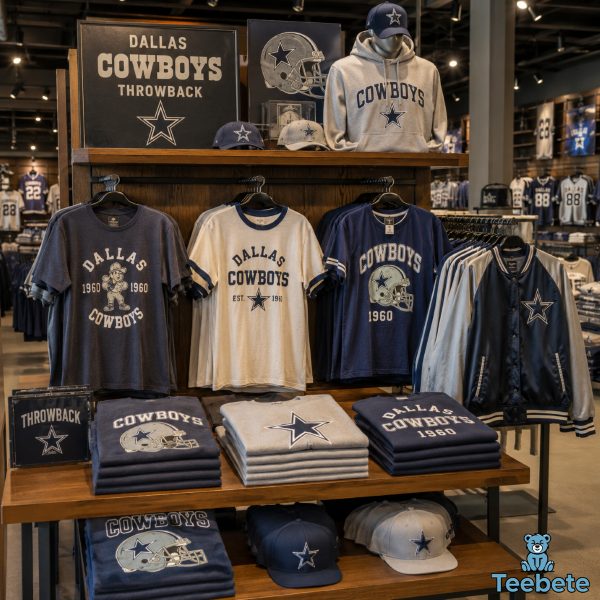
Dallas Cowboys throwback apparel is fan clothing produced today that deliberately recreates the team’s visual identity from a specific past era. This means reproducing the color schemes, logo treatments, typography, and graphic styles that defined a particular period of Cowboys history rather than reflecting the team’s current look.
Four terms come up constantly in this space, and they are not interchangeable:
- Throwback apparel: New clothing designed to look like a specific past season or era. Usually officially licensed by the NFL.
- Vintage apparel: Original garments produced during the era they represent. A Cowboys sweatshirt made in 1982 and still in circulation is vintage, not throwback.
- Retro apparel: A broader category that captures nostalgic aesthetics without pinpointing a precise season or year.
- Reproduction pieces: Modern garments designed to closely replicate vintage originals. Quality and licensing status vary widely.
A cowboys throwback shirt from an officially licensed collection carries era-accurate details and production standards that a generic retro-inspired tee cannot match. That distinction matters to die-hard fans and collectors, and it is increasingly relevant to younger fans discovering Cowboys history through documentaries and social media.
Although jerseys get most of the attention, many fans and collectors also look for throwback hoodies, satin Starter jackets, Mitchell & Ness releases, vintage snapbacks, and anniversary collections that recreate memorable Cowboys seasons in full.
Quick Facts: Cowboys Throwback Apparel by Era
| Era | Signature Look | Defining Apparel | Key Entity |
|---|---|---|---|
| 1970s | White jersey, royal blue sleeve stripes, silver helmet | Graphic tees, basic caps | Tom Landry, Texas Stadium |
| 1980s | Bold star graphics, high-contrast color blocking | Snapbacks, sweatshirts, pullover hoodies | NFL Properties, Pro Line |
| 1990s | Championship satin jacket, replica jersey | Starter jacket, Mitchell & Ness jersey | Jimmy Johnson, Super Bowl XXVII, XXVIII, XXX |
Why Classic Cowboys Eras Continue to Shape Fan Fashion
New merchandise arrives every season, yet fans keep returning to the styles of decades past. The reason goes beyond simple nostalgia.
Memories Connected to Championship Years
Shared wins create shared symbols. When a die-hard fan wears apparel tied to Super Bowl XXVII or the 1971 NFC Championship, they are not just displaying team pride. They are carrying a reference that other longtime supporters recognize and respond to instantly. The Cowboys’ championship runs in both the 1970s and 1990s created associations between specific visual styles and periods of genuine greatness, and those associations do not fade.
The Influence of Legendary Players
Some players outlast their era entirely. Roger Staubach and Tony Dorsett defined the 1970s Cowboys identity on the field. Tom Landry, the head coach from 1960 through 1988, gave that team its sideline presence and its reputation for disciplined, innovative football. In the 1990s, Troy Aikman, Emmitt Smith, and Michael Irvin formed one of the most celebrated offensive trios in NFL history under head coach Jimmy Johnson. Fan apparel tied to these figures continues to sell because the players remain central reference points in any conversation about what the Cowboys have meant to American football.
How Nostalgia Shapes Today’s Apparel Trends
Fan culture moves in generational cycles. A 24-year-old who discovers the 1993 NFC Championship on YouTube and then searches for apparel connected to that season is participating in the same loop that keeps throwback designs alive. Social media has accelerated this process considerably, exposing younger fans to historical visual identities at a pace that was not possible before. Understanding this cycle explains why Cowboys apparel through history remains an active topic rather than an archived one.
The 1970s: The Birth of an Iconic Cowboys Fan Look
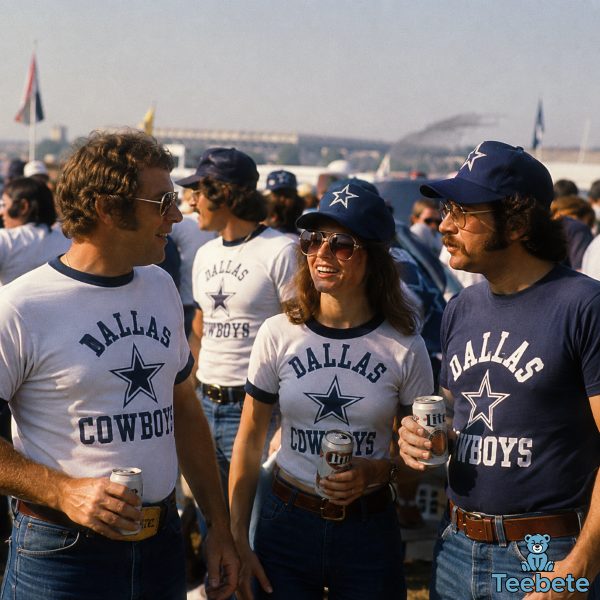
Think about what it meant to attend a Cowboys game at the Cotton Bowl or later at Texas Stadium in Irving, Texas, during the 1970s. The team was ascending from a solid franchise to a nationally recognized symbol of professional football excellence, and the visual identity of that period carried real weight.
The uniform featured a crisp white base with royal blue sleeve stripes and a silver helmet finished with the distinctive blue star. The color palette was partly practical: the blue and silver read cleanly on color television at a time when broadcast technology was still evolving. The star logo remained consistent throughout the decade, providing visual continuity even as the roster changed around players like Staubach and Dorsett.
Here is the detail most throwback discussions miss entirely. Everyday fan clothing of the 1970s had almost nothing in common with on-field uniforms. Licensed merchandise was barely standardized. A fan sitting in the Texas Stadium stands in 1975 was probably wearing a locally printed blue tee with a simplified star graphic and block lettering, not a replica jersey. Official replica gear as fans know it today did not exist in that form yet.
Today’s throwback pieces inspired by the 1970s tend to honor that graphic sensibility rather than reproduce an actual game jersey. That is why 1970s-inspired fan apparel carries a distinctively casual, worn-in quality that feels different from more structured era reproductions. It is also why TV broadcasting played a more direct role in shaping fan apparel colors than most people realize: blue and silver sold because they photographed well on the screens fans watched at home.
The 1980s: Tradition Meets a New Generation of Fans
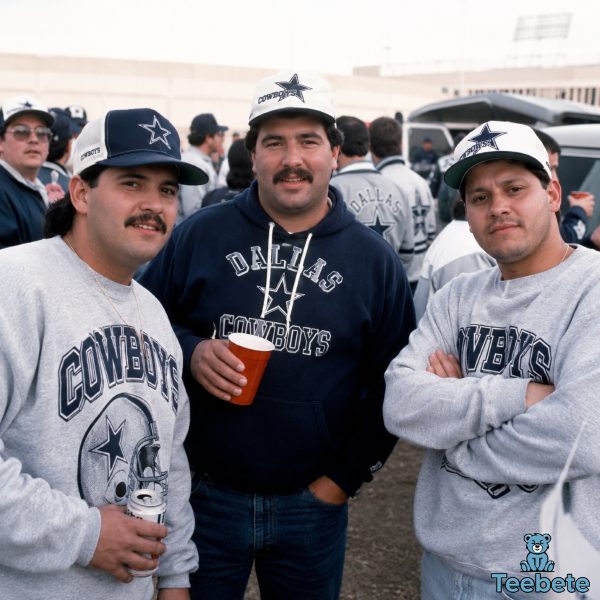
A Cowboys fan from 1981 would not have looked dramatically different from one in 1978 at first glance. The star was still there. The blue and silver held. But the bigger changes in the 1980s happened off the field, where licensed merchandise, national television deals, and the growth of sports retail fundamentally transformed how fans dressed on game day.
Changes in Team Branding
NFL Properties began asserting tighter control over licensed merchandise during this decade, which meant fan apparel started to look more consistent and officially connected to the team’s actual visual standards. A Cowboys hat purchased in Dallas and one purchased in Chicago gradually became the same product. That standardization was significant because it created the template for the licensed throwback market that would follow.
Popular Fan Clothing During the Eighties
Sweatshirts and pullover hoodies became the dominant casual fan apparel of the 1980s, driven partly by broader fashion trends and partly by the expanding appeal of athletic wear as everyday clothing. Graphic designs grew bolder and more detailed. Snapbacks with embroidered star logos became a staple accessory. Toward the end of the decade, satin jackets from brands like Starter began appearing in Cowboys colorways, laying the groundwork for what would become one of the most iconic fan apparel categories of the following decade.
How Retro Designs From This Era Returned Today
The classic era cowboys aesthetic of the 1980s appeals to fans who grew up watching America’s Team on Sunday afternoons and remember when the Cowboys were a nationally dominant brand even without a championship in the decade. Modern reproductions of 1980s fan apparel lean into the era’s characteristic oversized logo placements and high-contrast color blocking. For collectors, this era also represents the first period when standardized licensed apparel makes provenance and authenticity easier to verify.
The 1990s Dynasty That Defined Cowboys Throwback Apparel
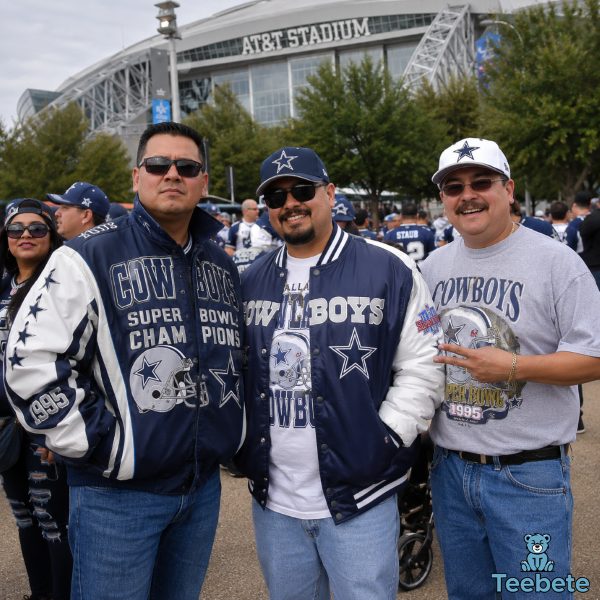
No decade generates more throwback demand than the 1990s, and the reason is straightforward. Under head coach Jimmy Johnson and later Barry Switzer, the Cowboys won Super Bowl XXVII, Super Bowl XXVIII, and Super Bowl XXX, making them one of only a handful of franchises to win three championships in a four-year span. That level of sustained excellence burned the visual identity of those teams into the long-term memory of the sport.
Why the 1990s Became the Most Popular Throwback Era
The 1990s Cowboys were not just a football team. They were a cultural presence. The Thanksgiving Game appearances, the rivalry games that defined multiple seasons, the personalities of Aikman, Irvin, and Smith at the height of their careers, all of it played out on national television at a moment when NFL viewership was expanding dramatically. The visual signatures of that era, the silver and blue palette, the star logo, the championship-year graphics, became associated not just with winning but with a specific American sports moment.
Signature Apparel Fans Still Wear
Walk through any sports bar on a Cowboys game day and you will still see the evidence. Replica jerseys from the 1990s roster remain in regular circulation. Satin Starter jackets in Cowboys colorways show up at tailgates. Mitchell & Ness throwback jerseys representing the championship-era players command consistent demand both online and at licensed retail locations. Championship graphic tees from Super Bowl XXVII and Super Bowl XXVIII still read as current fan wear rather than costume pieces.
Graphics, Logos, and Colors That Never Went Out of Style
One reason 1990s Cowboys throwback gear translates so well into current wardrobes is that the team’s visual identity has remained essentially stable since then. There is no jarring disconnect between the 1993 jersey and the current one in the way there might be with franchises that have undergone major rebranding. The star is the same star. The silver is the same silver. That continuity means throwback pieces feel contemporary rather than dated. The classic Cowboys uniform history page covers the full arc of how these design choices developed and held across multiple decades.
How Dallas Cowboys Retro Fan Gear Changed Through the Decades
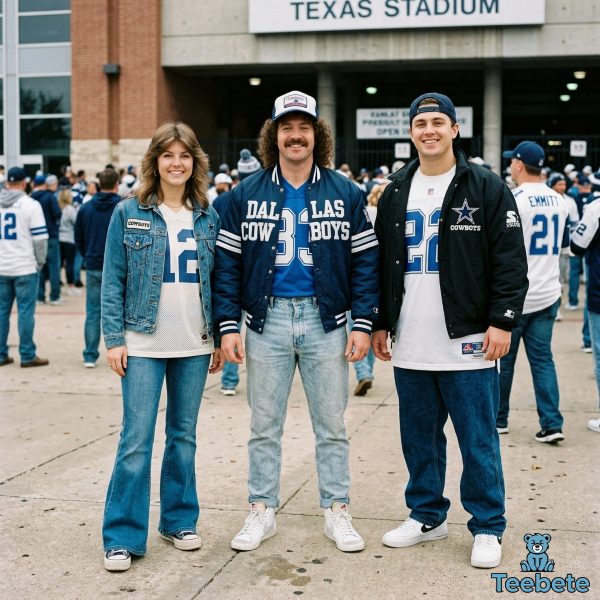
Looking at dallas cowboys retro fan gear through the decades reveals a clear pattern: each era added new garment types, new production standards, and new ways of connecting visual identity to fan culture.
| Era | Popular Apparel | Fan Identity | Lasting Influence |
|---|---|---|---|
| 1970s | Graphic tees, basic screen-printed caps | Local and regional, game-day focused | Bold star graphics, typography-driven designs |
| 1980s | Sweatshirts, pullover hoodies, embroidered snapbacks | National expansion, casual athletic wear | Oversized logos, standardized licensed product |
| 1990s | Replica jerseys, Starter satin jackets, championship tees | Dynasty era, mainstream cultural presence | Mitchell & Ness market, championship graphic collections |
The progression from locally printed tees to nationally standardized licensed gear to the collector-driven Mitchell & Ness market reflects both the growth of the Cowboys brand and the professionalization of the entire NFL merchandise industry. Each phase left behind a distinct visual vocabulary that throwback designers still draw from today.
What Makes Authentic Throwback Apparel Different From Vintage Clothing?
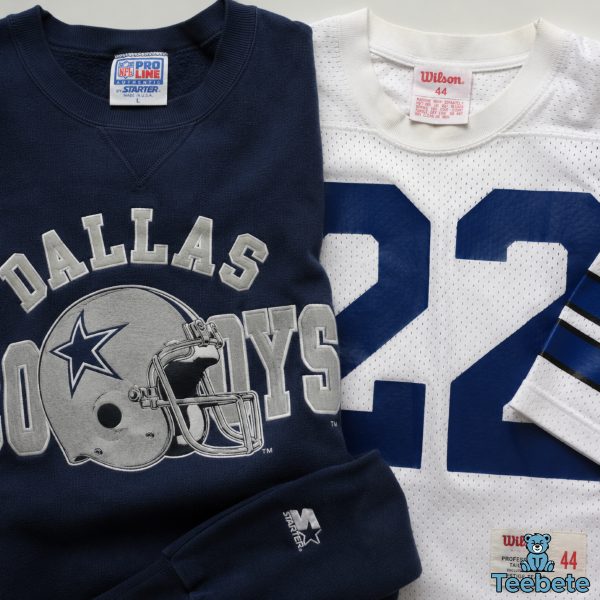
This is one of the most useful distinctions a fan can understand, and it is largely absent from competing articles on this topic.
Licensed throwback apparel is produced today by NFL-licensed manufacturers with historically informed design details. Quality and accuracy vary by brand, but official licensing provides a baseline guarantee of authenticity. Look for NFL hologram tags, woven interior labels identifying the licensing partnership, and era-accurate logo placement as verification markers.
Vintage originals are garments actually manufactured during the era they represent. A true vintage Cowboys starter jacket from 1991 is a categorically different object from a 2024 reproduction of that jacket. Vintage pieces carry physical evidence of their age, including period-specific labels, material compositions, and manufacturing details that modern reproductions cannot fully replicate.
Retro-inspired apparel borrows aesthetic cues from past eras without necessarily reproducing a specific year or product. This is the broadest and most commercially common category, ranging from officially licensed throwback lines to fashion brands that incorporate sports aesthetics into general clothing collections.
Reproduction pieces attempt close replication of vintage originals. Quality ranges from extremely accurate licensed reproductions to poorly researched generic designs. The licensing status of a reproduction is the single most important factor in evaluating its legitimacy.
For a deeper guide to identifying and evaluating pieces from specific eras, the guide to vintage Cowboys apparel covers authentication markers in much more detail.
How to Spot Authentic Throwback Apparel: A Quick Checklist
Before purchasing any throwback Cowboys piece, run through these verification points:
- Official NFL licensing tag: Should appear on the interior label or as a hologram sticker on the hang tag.
- Era-accurate logo: Compare the star logo against reference images from the claimed era. The logo has evolved subtly across decades.
- Woven vs. printed labels: Authentic licensed throwback jerseys use woven interior labels. Printed labels are a sign of unlicensed reproduction.
- Brand verification: Mitchell & Ness, Fanatics Throwback, and Mitchell & Ness Authentic are the most recognized licensed sources for vintage-style jerseys.
- Stitching quality on numbers and names: Authentic throwback jerseys use sewn-on lettering. Heat-transferred numbers indicate a lower-tier product regardless of what the hang tag claims.
Common Mistakes When Buying Retro Cowboys Apparel
Most guides skip this entirely, but it is exactly what fans search for after they have read the history.
Confusing retro-inspired with officially licensed: A shirt styled after the 1970s Cowboys that carries no NFL licensing is a fashion piece, not a throwback. There is nothing wrong with buying it, but knowing the difference prevents paying a premium for something it is not.
Assuming older means authentic: Age does not guarantee authenticity. Bootleg Cowboys merchandise was produced in every decade, and it circulates in vintage markets alongside genuine originals. Era-accurate labels and manufacturing details are more reliable indicators than age alone.
Overlooking fit differences: Throwback jerseys, especially Mitchell & Ness Authentic reproductions, are cut to on-field specifications from their era. Sizing is different from modern fan jerseys. Check the specific sizing guide before ordering.
Paying collector prices for common reproductions: Some 1990s Cowboys pieces were produced in such large quantities that genuine originals are not actually scarce. Research the specific item before paying vintage premiums for something that is easy to find new.
How Fans Build a Classic Cowboys Inspired Wardrobe Today
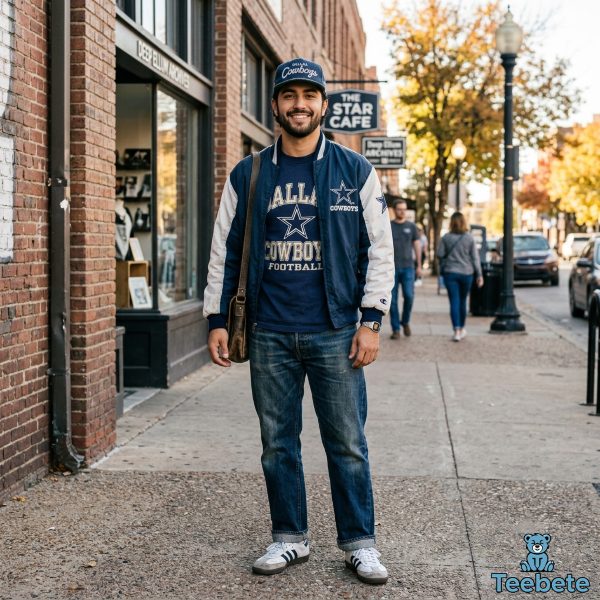
You don’t need a closet full of vintage finds to capture a genuine throwback look. One well-chosen graphic tee, a classic cap, and a single jacket inspired by your favorite era are enough to create a style that feels rooted in Cowboys history without looking like a costume.
Shirts are the most accessible starting point. A cowboys throwback shirt with era-specific graphics or typography forms the foundation of almost any throwback outfit and works across all three decades.
Hoodies and sweatshirts extend the range into cooler weather and suit 1980s-inspired styling particularly well. The scale of a hoodie allows for bolder graphic treatments that read clearly at a distance.
Jackets carry the highest statement value in any throwback wardrobe. Satin Starter-style jackets evoke the 1990s most powerfully and serve as the kind of piece that other fans immediately recognize.
Hats are the easiest accent. Era-specific snapbacks with embroidered stars work across virtually any casual outfit and add throwback credibility without committing fully to a themed look.
Layering is where cowboys retro apparel becomes genuinely interesting to wear. A throwback tee under an open flannel, or a 1990s-style hoodie with contemporary denim, creates outfits that feel connected to Cowboys history without appearing costume-like. The goal is to wear the apparel as clothing, letting the era come through in details rather than in total visual commitment.
Mixing throwback with modern now reads as intentional rather than careless. A 1990s-era Cowboys jacket over a plain modern base creates visual interest that neither piece achieves alone.
Choosing Throwback Apparel Based on Your Favorite Cowboys Era
Rather than organizing this by decade alone, it is more useful to match the apparel direction to your personal connection to the team.
For Fans of the 1970s
If your Cowboys connection runs back to the Tom Landry era and the Cowboys’ first two Super Bowl victories, look for apparel with clean star graphics, royal blue as the dominant accent color, and typography-forward designs that lean on block lettering rather than photographic imagery. The 1970s Cowboys fan look is understated by current standards, which gives it a quiet authority that newer designs cannot replicate.
For Fans of the 1980s
The 1980s Cowboys fan wardrobe is defined by comfortable athletic cuts and bolder graphic treatments. Sweatshirts and pullover hoodies remain the signature pieces, and the era’s characteristic high-contrast color blocking translates well into modern casual wear. Fans of this era often appreciate that the visual identity is distinctly Cowboys without being tied to a specific championship moment.
For Fans of the 1990s Dynasty
The 1990s offer the widest selection of licensed throwback options. Championship-year graphics from Super Bowl XXVII, XXVIII, and XXX, replica jerseys representing Aikman, Smith, and Irvin, and Starter-style satin jackets are all available in current collections. This is also the era most likely to be immediately recognized by fans across every generation.
For New Fans Discovering Cowboys History
If you are coming to Cowboys history fresh, throwback apparel functions as a visual index to the franchise’s past. Each piece carries information about the era it references. Starting with a 1990s-inspired piece gives you the broadest immediate recognition, but exploring the 1970s graphic sensibility or 1980s sweatshirt culture opens up dimensions of Cowboys identity that most newer merchandise does not acknowledge.
Where Fans Discover Dallas Cowboys Throwback Apparel Today
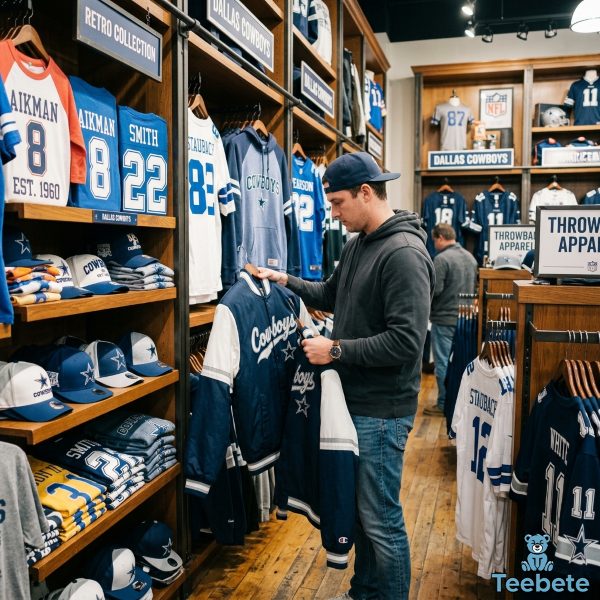
The market for throwback Cowboys gear is more organized and accessible now than at any previous point in the franchise’s history.
Official NFL Throwback Collection releases appear around anniversaries, special game days, and legacy programs. These carry the strongest guarantee of historical accuracy and licensing integrity.
Mitchell & Ness is the most recognized licensed brand for vintage-style Cowboys jerseys, producing both Authentic and Swingman versions that give fans options at different price points.
Retro collections from other licensed apparel brands offer more stylistic variety, often drawing on archival design research to produce pieces that feel era-accurate without being straight reproductions.
Limited edition drops tied to specific championship anniversaries or Thanksgiving Game commemorations generate significant collector interest and often sell out quickly through official channels.
Community recommendations from fan forums, social media groups, and collector communities remain one of the most reliable ways to identify which current releases are earning genuine respect for quality and accuracy among longtime fans.
We believe every throwback piece tells a story beyond its design. At Teebete, that idea shapes how we select apparel inspired by the franchise’s most memorable eras, helping fans appreciate the history behind what they wear. Explore Cowboys fan apparel to see how that belief shapes the collections we carry.
Learn More About the Evolution of Cowboys Throwback Style
For fans who want a deeper historical timeline covering how Cowboys fan apparel evolved across the full history of the franchise, the complete Cowboys apparel guide provides season-by-season and decade-by-decade context that goes well beyond what any single article can cover.
Common Questions About Dallas Cowboys Throwback Apparel
What qualifies as Dallas Cowboys throwback apparel?
Throwback apparel is fan clothing produced today that recreates the visual style of a specific past era in Cowboys history, including era-accurate colors, logos, and graphic treatments. It differs from vintage originals, which were actually manufactured during the era they represent, and from retro-inspired pieces that capture a general nostalgic aesthetic without referencing a precise period or season.
Which Cowboys era inspires today’s retro fan gear the most?
The 1990s dynasty era generates the highest demand for retro NFL fan gear. Dallas won Super Bowl XXVII, XXVIII, and XXX between 1992 and 1995, giving the visual identity of those seasons an association with sustained championship success that no other Cowboys era matches. Licensed manufacturers produce more 1990s-inspired pieces than those from any other period.
Is vintage apparel the same as throwback apparel?
No. Vintage apparel refers to original garments actually produced during the era they represent, typically more than 20 years old. Throwback apparel is newly manufactured clothing designed to evoke a past era. Collectors generally prize vintage originals for their authenticity and period-accurate construction details, while most fans prefer licensed throwback pieces for their modern sizing, consistent quality, and availability.
Why are 1990s Cowboys designs still so popular?
The 1990s Cowboys won three Super Bowls in four seasons under Jimmy Johnson and Barry Switzer, creating one of the most recognizable visual identities in NFL history. Because the franchise’s core color palette and star logo have changed very little since then, 1990s throwback pieces feel contemporary enough to wear regularly without looking dated, which sustains their appeal across multiple generations of fans.
Can modern fans wear throwback apparel for game day?
Absolutely. Throwback and retro-inspired Cowboys apparel is widely worn at AT&T Stadium, in sports bars, and at tailgates by fans of every age. Many die-hard supporters intentionally choose throwback pieces to honor a specific era or player while still representing the current team. The visual language of Cowboys throwback gear communicates team loyalty immediately and clearly in any game-day environment.
Conclusion
Three decades of Dallas Cowboys football produced three distinct visual languages, and fans have never stopped speaking any of them. The 1970s established the foundational identity: Tom Landry’s America’s Team, the star, the silver and blue, the graphic simplicity of an era before licensed merchandise became an industry. The 1980s expanded that identity to a national audience and gave fan apparel the standardized, casual athletic character it still carries today. The 1990s dynasty under Jimmy Johnson created something rarer: a visual era so associated with championship success that its apparel became cultural shorthand for what Cowboys greatness looks like.
Understanding how each chapter developed helps fans appreciate why dallas cowboys throwback apparel is not simply about wearing an old logo. It is about choosing which moment in a long and genuinely remarkable history you want to carry with you on game day. That history is what makes every throwback piece worth understanding before you wear it.

Hi, I’m Mia Wilson. I’m a journalist and content creator based in New York with over six years of experience covering sports, holidays, fan culture, and community events across the United States. I focus on exploring team histories, traditions, celebrations, and the broader impact of sports and cultural events on local communities. I’m passionate about providing accurate, engaging, and educational content for readers of all ages, helping them understand the stories, experiences, and events that make sports and celebrations so meaningful.