Dallas Cowboys Uniform History 1960 to Today
Few NFL teams are as protective of their visual identity as the Dallas Cowboys. The metallic silver helmet, the blue star, and the navy and white color scheme have stayed close to untouchable for more than sixty years, even as the league around them cycled through countless redesigns, alternate jerseys, and short-lived rebrands. This article traces the complete dallas cowboys uniform history, from the franchise’s 1960 expansion debut through Tom Landry’s championship years, Troy Aikman and Emmitt Smith’s 1990s dynasty, and the Nike performance era under Jerry Jones. Along the way, you will find timeline summaries, design analysis, fan debates, comparison tables, and a look at why the Cowboys rarely touch a look that already works.
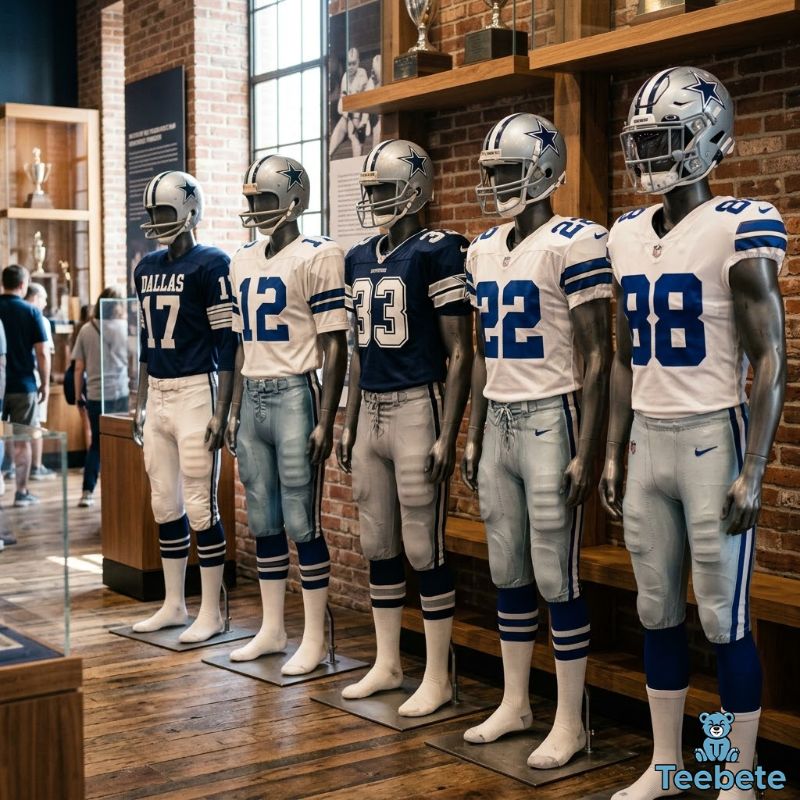
Dallas Cowboys uniform history refers to the evolution of the team’s uniforms from its inaugural 1960 season through the modern Nike era. While materials and construction have changed significantly, the franchise’s core visual identity has stayed remarkably consistent since the landmark 1964 redesign.
Dallas Cowboys Uniform History at a Glance
The table below summarizes the major eras in this Cowboys jersey history, what changed in each one, and why it mattered to the franchise’s overall brand.
| Years | Uniform Era | Biggest Changes | Why It Mattered |
|---|---|---|---|
| 1960 to 1963 | Original Expansion Look | White helmet, early blue star, simple jersey | Established the team’s first identity as a new NFL franchise |
| 1964 to 1969 | The Classic Redesign | Metallic silver helmet, navy and white jerseys, sleeve stripes | Created the template every later uniform would build on |
| 1970s | Refinement Era | TV numbers, sharper stripe detailing | Aligned the Cowboys with the NFL’s color broadcasting boom |
| 1980s | Quiet Consistency | Minor fit and material tweaks | Reinforced brand stability through the Tom Landry era |
| 1990s | Modern Branding | Updated road jersey, refreshed wordmarks | Matched the Aikman, Smith, and Irvin dynasty merchandising surge |
| 2000s | Manufacturing Shift | Mesh fabric, lighter number application | Improved performance without altering the silhouette |
| 2012 to Today | Nike Performance Era | Vapor technology, stretch panels, lighter builds | Preserved tradition while modernizing function |
In short: the Cowboys’ uniform evolution centers on one major redesign in 1964, followed by six decades of refinement rather than reinvention.
Quick Visual Timeline
1960 → 1964 → 1970s → 1990s → 2012 → Today
Quick Facts Box
- First metallic silver helmet: 1964
- Home white jersey tradition: dates back to the 1960s under Tex Schramm
- Major full redesign: only one, in 1964
- Official on-field uniform supplier: Nike, since 2012
- Best-known special uniform: the Thanksgiving Day throwback
- Pants color: silver since the franchise’s earliest seasons
What Made the Original 1960 Dallas Cowboys Uniform Unique?
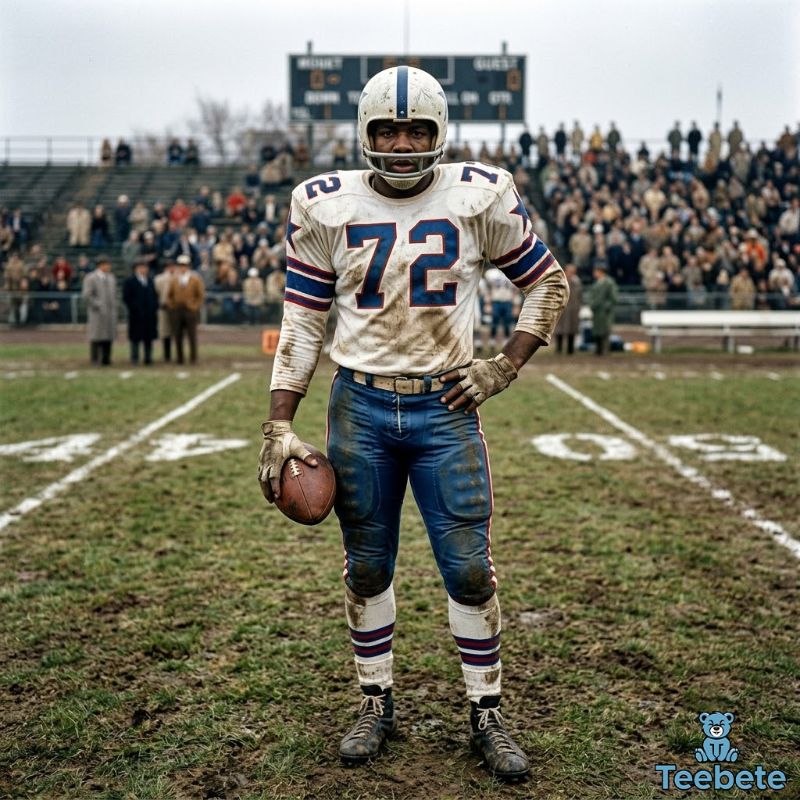
When the Dallas Cowboys joined the NFL as an expansion franchise in 1960, the organization needed a look that could help a brand-new team stand out in a league already crowded with established identities. The original uniform featured a white helmet, an early version of the blue star, and jerseys that were plain by today’s standards, with little of the contrast fans now associate with the team.
Picture a Sunday afternoon in the early 1960s: a struggling expansion team in plain white headgear, trying to build a fan base in a city without an NFL tradition to lean on. The early pants and jersey combinations did the job, but they did not yet carry the weight of an “America’s Team” identity. That identity was still years away.
Why the First Uniform Lasted Only a Few Seasons
Team executives, including general manager Tex Schramm, quickly concluded that the original uniform lacked the boldness needed to compete visually with the league’s more established franchises. Within just a few seasons, the front office began planning a redesign. The short lifespan of this first uniform shows how early the Cowboys started prioritizing brand identity, well before the team had a winning record to match.
The 1964 Redesign That Defined the Classic Cowboys Look
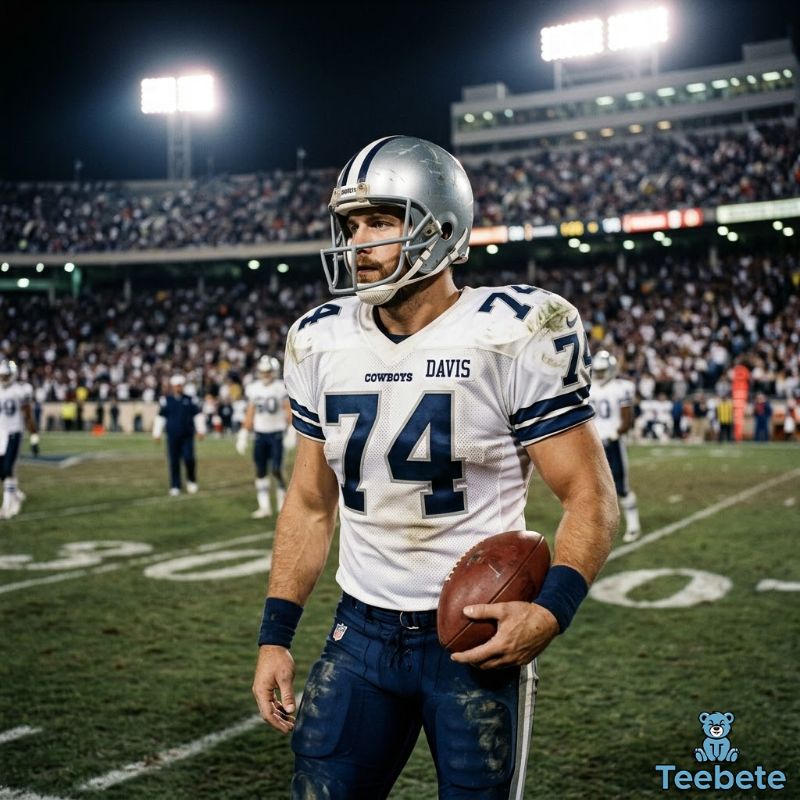
The 1964 update stands out as the single most important moment in this entire history of Cowboys uniforms. Nearly every element fans recognize today, the helmet color, the jersey contrast, the stripe pattern, traces directly back to this one redesign.
The update introduced a metallic silver helmet in place of the original white shell, a clean white home jersey, and a navy road jersey built for sharp contrast on early color television broadcasts. Sleeve stripes were added to both jerseys, and the pants were reworked to complete the new color scheme.
The Design Decisions That Still Shape Today’s Uniform
What makes 1964 so significant is not only what changed, but why those specific choices stuck. Metallic silver gave the helmet a premium, almost futuristic look that separated the Cowboys from teams still wearing flat, single-tone shells. The strong navy-and-white contrast also happened to translate well on the black-and-white and early color television sets that were becoming common in American living rooms.
Compare a 1964 jersey with today’s version side by side, and the family resemblance is obvious. The color blocking, the star placement, and the overall proportions have barely shifted, even though the fabric underneath has changed completely. Those practical advantages, paired with the team’s rise to prominence under head coach Tom Landry, meant there was little reason to start over. The franchise treated 1964 as a foundation worth protecting rather than a phase to outgrow.
Most uniform historians point to 1964 as the franchise’s only complete visual overhaul. Every adjustment since then has refined that look rather than replaced it.
Cowboys Uniform Timeline by Decade
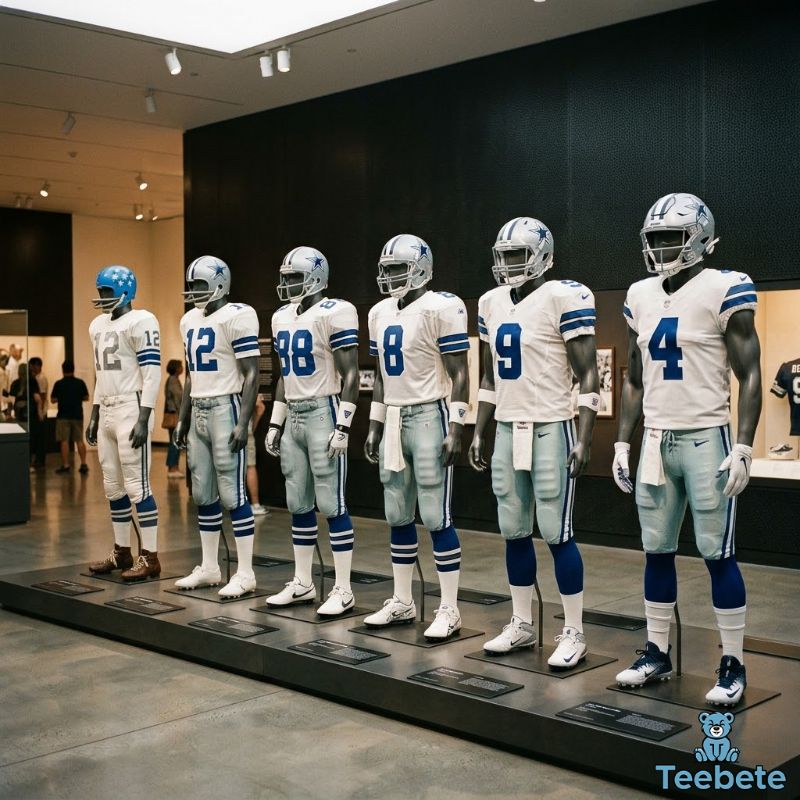
The following decades brought steady refinement, shaped both by league-wide trends and by the Cowboys’ own instinct to leave a winning look alone.
1960s: Building a Lasting Identity
After the 1964 redesign, the rest of the decade was about consolidation. Tom Landry’s Cowboys wore the new uniform through a stretch of improving performance, which helped cement the look in fans’ minds as something tied to winning football, not just expansion-era growing pains.
1970s: Refining an NFL Classic
The 1970s brought the addition of TV numbers, larger digits placed on the shoulders so broadcast viewers could identify players more easily, a league-wide change the Cowboys adopted along with everyone else. Sleeve stripe detailing was also sharpened during this period. Watch footage from an early 1970s broadcast and the effect is obvious: even on lower-resolution television sets, Dallas players stood out because the bright white jerseys and reflective silver helmets created stronger contrast than many competing uniforms of the era. By the time Roger Staubach led the team to victory in Super Bowl VI, the uniform had become inseparable from the franchise’s first true championship run.
1980s: Subtle Updates Without Changing Tradition
During the 1980s, adjustments were limited to fit and detailing. The organization treated the uniform as an established asset, one worth protecting through the final stretch of the Landry era, instead of chasing whatever design trend other teams were experimenting with at the time.
1990s: Modern Branding Meets Classic Design
The 1990s brought updates to the road jersey and refreshed wordmark styling that matched the broader sports merchandising boom of the decade. Under new owner Jerry Jones, and with stars like Troy Aikman, Emmitt Smith, and Michael Irvin driving three Super Bowl titles (Super Bowl XXVII, Super Bowl XXVIII, and Super Bowl XXX), Cowboys apparel became one of the best-selling lines in the entire NFL. Jerseys licensed through NFL Properties turned the uniform into a retail phenomenon as much as an on-field identity.
2000s: Small Changes Fans Often Missed
Ask longtime Cowboys fans about memorable uniform changes, and most will jump straight from 1964 to the Nike era. The 2000s rarely come up, even though meaningful construction changes happened behind the scenes. Mesh paneling replaced heavier fabric, number application became lighter and more flexible, and overall jersey weight dropped without changing the silhouette fans saw on television. It is one of the least visible but most meaningful chapters in this Dallas Cowboys jersey evolution, and it rarely gets the attention the 1964 redesign does.
2012 to Today: The Nike Performance Era
When Nike became the NFL’s official on-field uniform supplier in 2012, the Cowboys’ look stayed remarkably consistent. Instead of reinventing an iconic silhouette, Nike focused on improving how the uniform performed on the field, introducing moisture-wicking fabrics, stretch paneling, and lighter overall construction. That decision let players benefit from modern technology while fans kept the design they had recognized for decades.
Cowboys Helmet Evolution: Every Major Change Explained
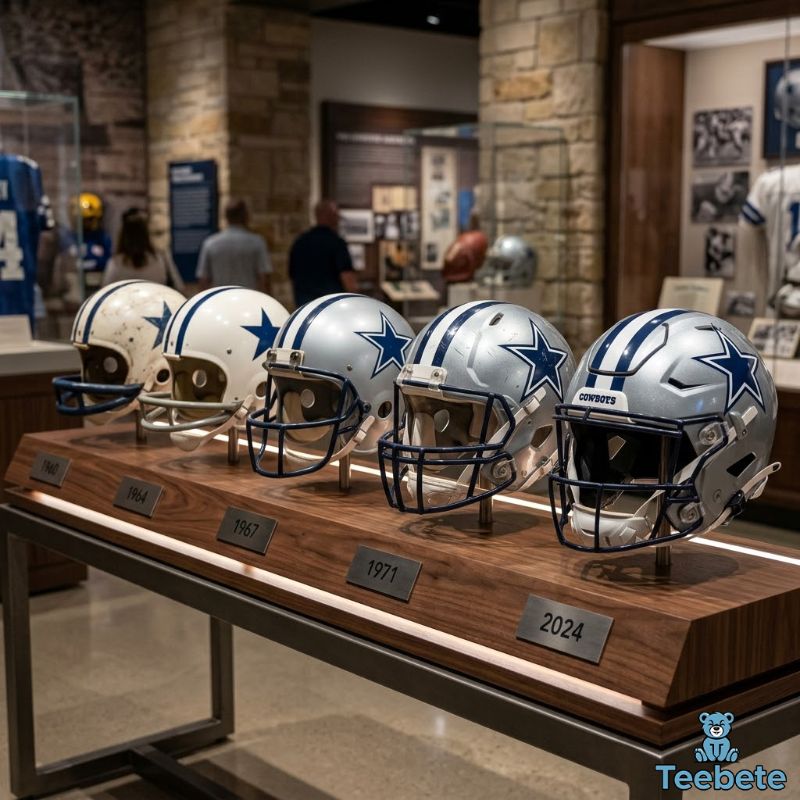
The Dallas Cowboys adopted their signature metallic silver helmet in 1964, replacing the white helmet used during the franchise’s inaugural 1960 season. That single switch remains the most consequential helmet decision in team history.
| Element | 1960 | Today |
|---|---|---|
| Helmet Color | White | Metallic Silver |
| Star Logo | Early blue star | Refined blue and white star |
| Facemask | Plain gray | Silver or navy, depending on era |
| Pants | Silver | Silver |
| Jersey Construction | Basic fabric | Nike performance fabric |
Helmet colors have not changed since 1964, but smaller details have evolved. The star logo has seen minor adjustments in size and placement, facemask color has shifted slightly across eras depending on league equipment trends, and the NFL’s “one helmet” rule, which limits teams to a single primary helmet shell per season for safety certification reasons, has reinforced just how committed the Cowboys are to keeping this element untouched. Decal application and shell finish have also improved as manufacturing technology advanced, giving the modern helmet a sharper shine than its 1960s predecessor.
This cowboys helmet evolution stands out across the league precisely because of how little has changed. Many franchises have redesigned their helmets multiple times in the same span. Love it or hate it, the Cowboys’ silver helmet has become close to untouchable. If you want to dig deeper into how the team’s color choices developed alongside the helmet, the Cowboys team color evolution page covers that ground in more detail.
Why Cowboys Pants Never Match the Helmet
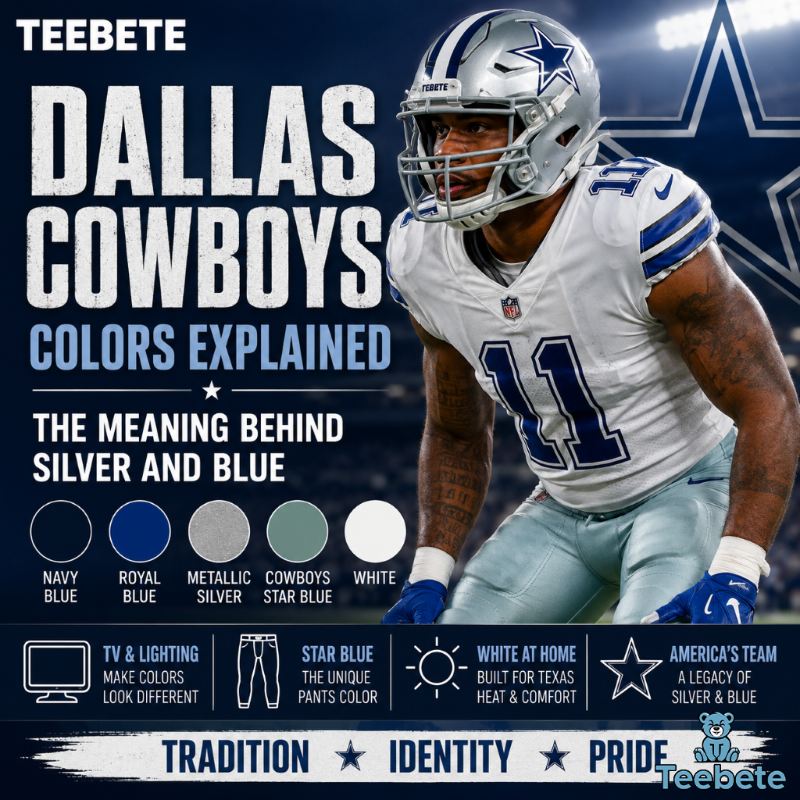
This is a detail casual fans rarely notice but die-hard supporters bring up constantly: the silver of the Cowboys’ pants and the silver of the helmet are not actually the same shade. The helmet uses a metallic, almost reflective silver finish designed to catch light under stadium lighting and television cameras. The pants, by contrast, use a flatter, more matte silver-gray that holds up better against fabric wear, washing, and the physical stress of contact football.
This is not a manufacturing mistake. Helmets and pants are produced by different processes, using different materials, and have different practical requirements. A helmet shell can be painted and clear-coated for shine without affecting performance. A pair of game pants made from the same reflective coating would look impractical and would not move or breathe the way performance fabric needs to. Over decades, small variations in dye lots, fabric suppliers, and lighting conditions have only widened the visible gap between the two shades, which is part of why fans sometimes notice the pants looking slightly more silver or more gray depending on the game, the stadium lights, or even the television broadcast’s color calibration.
For a franchise this focused on visual consistency, the mismatch is a small reminder that uniform design always has to balance appearance against the practical demands of the equipment itself.
Why Do the Dallas Cowboys Usually Wear White at Home?
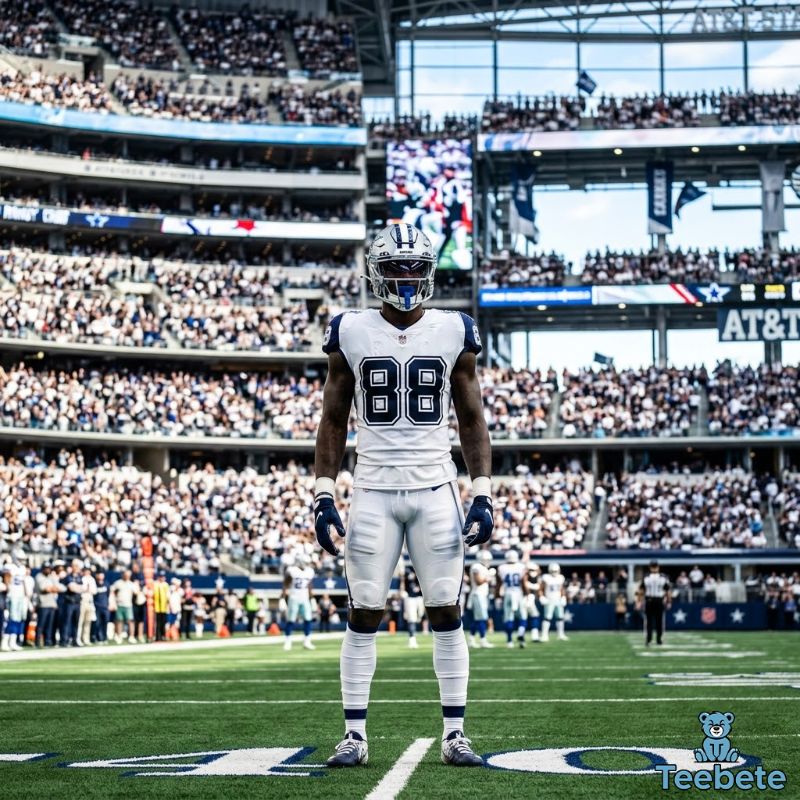
Unlike most NFL teams, which wear their colored jerseys at home, the Cowboys have long favored white jerseys for home games at AT&T Stadium and, before that, Texas Stadium. The reasoning behind it goes back further than most fans realize.
This choice is widely credited to longtime team president Tex Schramm, who believed the white jersey gave the Cowboys a cleaner, more distinctive look on national television, especially during the team’s frequent prime-time and Thanksgiving Day appearances. Over time, the choice became part of game-day tradition, and fans grew to expect, and even prefer, the white home look.
Did You Know? The Cowboys have worn white jerseys at home for decades, largely because Tex Schramm believed fans enjoyed seeing opponents’ colorful road jerseys during home games rather than another navy-on-navy matchup.
Comparing Home, Away, Throwback, and Alternate Uniforms
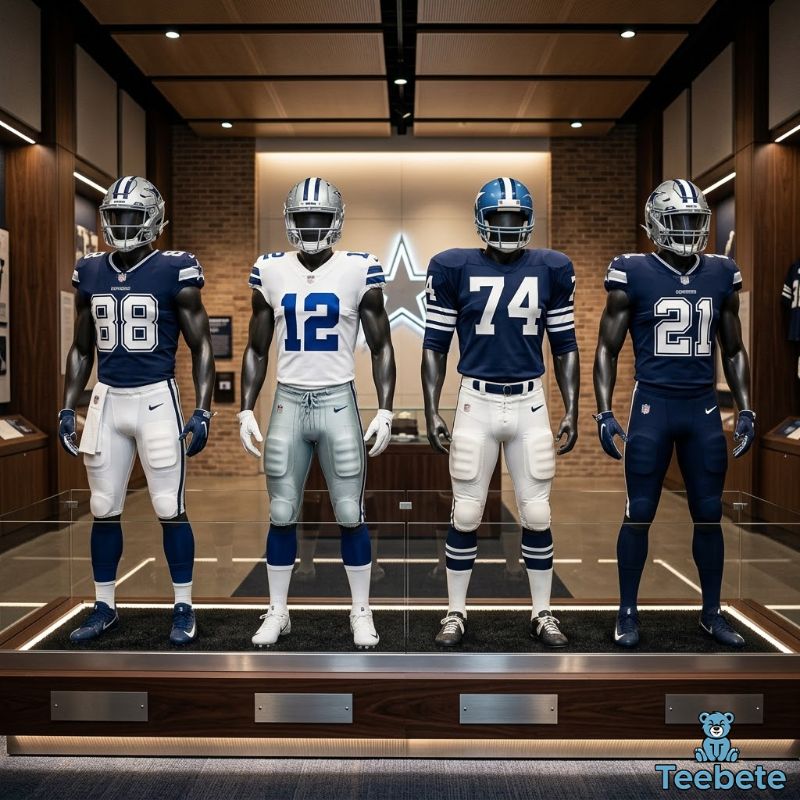
The Cowboys have worn a handful of uniform variations over the decades, each serving a different purpose on the field and in the marketplace.
| Uniform | First Used | Key Features | Still Worn? |
|---|---|---|---|
| Home White | 1964 | White jersey, navy numbers, silver pants | Yes, primary home uniform |
| Road Navy | 1964 | Navy jersey, white numbers, silver pants | Yes, standard road uniform |
| Throwback (1960s style) | Reintroduced periodically | Vintage stripe pattern, classic numbering | Yes, worn on select occasions |
| Color Rush / Alternate | 2010s | Modernized color blocking | Worn occasionally for special broadcasts |
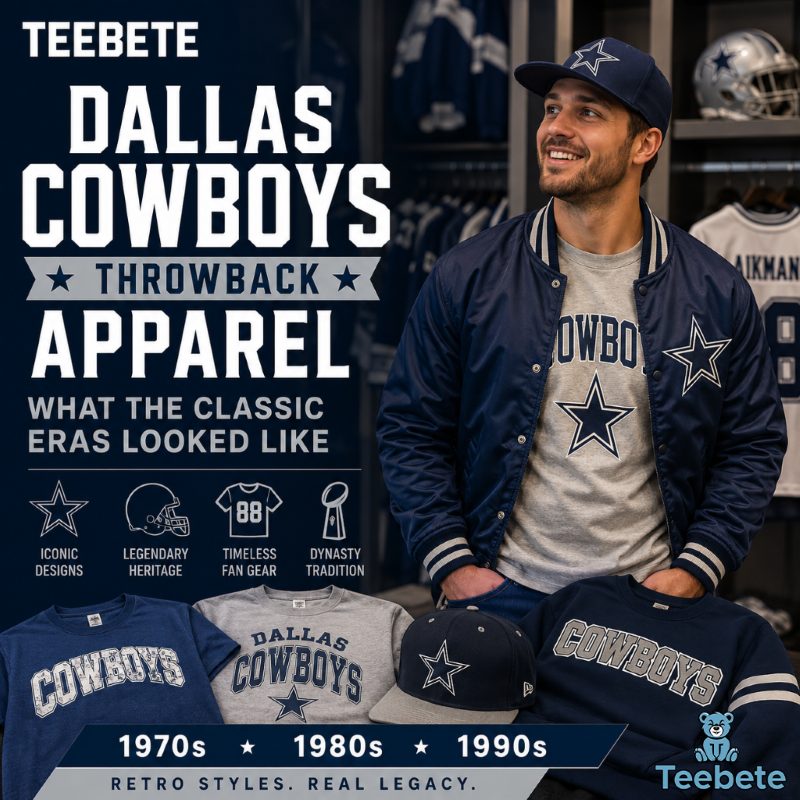
Compared with franchises that rotate through multiple alternate jerseys each season, the Cowboys keep their rotation limited, even within the NFL’s Color Rush program. That restraint says a lot about the team’s overall philosophy: protect a long-established brand instead of chasing short-term merchandising trends. Fans who gravitate toward the vintage end of that rotation often go looking for retro Cowboys fan gear built around that exact throwback feel.
The Biggest Uniform Changes That Fans Still Debate
Even with decades of consistency, certain details keep showing up in fan arguments. Pants shade is one of them, tying directly back to the helmet-versus-pants mismatch covered above, with some eras featuring a slightly different tone of silver depending on lighting and manufacturing batch. Sleeve stripe width and placement have shifted subtly across decades, the kind of difference uniform historians notice but casual fans usually do not. The fit introduced during the Nike era drew mixed reactions, with some longtime fans feeling the jerseys looked slightly different in cut compared to earlier decades of equipment. Alternate helmet concepts, occasionally floated in league discussions, tend to generate strong pushback given how protective fans are of the classic silver shell, especially under the NFL’s strict one-helmet certification rule. And every Thanksgiving, the team’s signature holiday uniform sparks fresh debate over whether it is time for a refresh or whether tradition should win out again.
Sports branding experts often note that timeless uniforms rarely need frequent redesigns, and Cowboys fans, for the most part, seem to agree.
Which Dallas Cowboys Uniform Era Is the Most Iconic?
Ranking uniform eras is subjective, but based on cultural impact, historical weight, and fan sentiment, here is a reasonable breakdown.
- 1964 Classic – The redesign that set the template for everything that followed, worn through the Tom Landry and Roger Staubach championship years.
- Thanksgiving Throwback – Worn during one of the NFL’s most-watched annual games, this look carries serious nostalgic weight.
- Modern Home White – The current iteration, built on Nike technology while staying true to the 1964 vision.
- Original 1960 – Historically significant as the team’s starting point, even if less visually iconic than what came next.
- Nike Era – Notable for performance innovation rather than visual change, but essential for keeping the uniform competitive at the highest level.
How Cowboys Uniform History Influenced Modern Fan Apparel
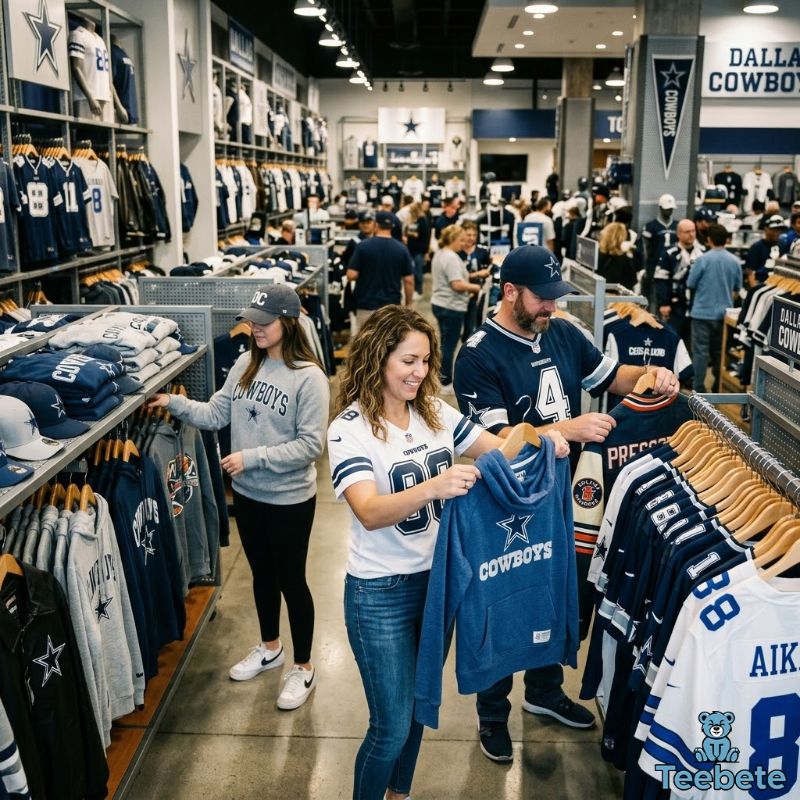
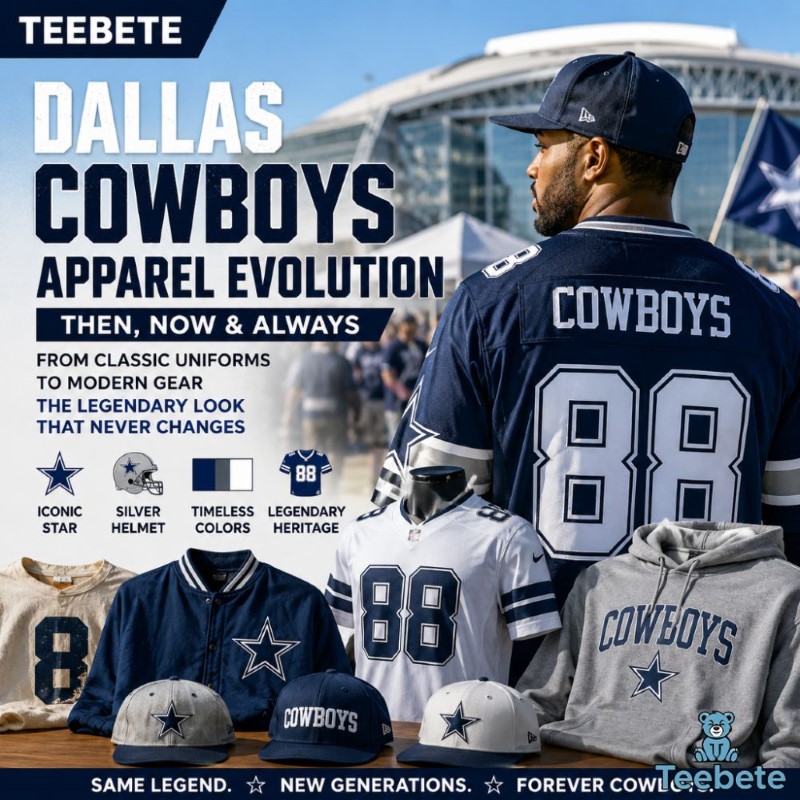
A look that has barely changed in six decades creates an unusual advantage at retail: fans can wear gear from almost any era without it feeling dated. That consistency is part of why Cowboys apparel, from game-day jerseys to vintage-inspired streetwear, has remained one of the strongest-selling lines under the NFL Properties licensing umbrella, alongside perennial favorites from companies like Mitchell & Ness that specialize in throwback styling.
At Teebete, we see many fans drawn to apparel that reflects a specific era of Cowboys football rather than simply the latest release. Knowing the history behind each uniform makes those choices far more meaningful, whether someone is shopping for a piece that echoes the Landry years or one built around the modern Nike silhouette. If you are drawn to that earliest chapter of the franchise, you can explore classic Cowboys apparel history for designs inspired by the team’s foundational look. For a broader overview of how to choose apparel across different styles and eras, the complete Cowboys apparel guide offers useful direction for fans building out a collection, and the history of Cowboys apparel page covers how that merchandise grew into one of the league’s biggest licensing stories.
Browse More Dallas Cowboys Styles
For a wider selection across categories and price points, you can browse the official fan apparel collection.
Popular Picks Inspired by Cowboys Fans
A few specific items have become favorites among fans looking for a fun, expressive way to show team pride outside of a standard jersey. The floral Cowboys aloha shirt offers a relaxed, casual take on the team’s colors for tailgates and warm-weather game days. For the holiday season, the Cowboys Christmas sweater design blends festive fun with die-hard team spirit. Fans looking for something playful and personal often gravitate toward the women’s Cowboys graphic shirt. Rounding out the holiday lineup, the Grinch Cowboys holiday sweater gives fans another ugly-sweater-style option for celebrating the season in team colors.
Why the Cowboys Rarely Redesign Their Uniform
This question explains almost everything else in this article. Most NFL franchises treat uniform redesigns as routine, often refreshing their look every decade or so to stay current with design trends or boost merchandise sales. The Cowboys have taken the opposite approach.
Part of the reason is timing. The Cowboys hit on a winning formula early, in 1964, and then spent the following decades building championship success while wearing it. Tying a strong on-field identity to a specific look discourages change, since any redesign risks breaking an association fans have spent generations building. There is also a clear business case: a uniform that never goes out of style never becomes outdated retail inventory, and “America’s Team” branding only works if the team’s actual look stays recognizable across generations of fans who grew up watching different eras of Cowboys football. Television played a role too. The high-contrast navy and white design happened to translate exceptionally well as color broadcasts became standard in American households during the late 1960s and 1970s, giving the franchise even less incentive to tinker with what was already working on screen.
Quick Answers About Dallas Cowboys Uniform History
When did the Cowboys adopt their current uniform?
The core elements of today’s uniform, the silver helmet, the navy and white color scheme, and the sleeve stripe pattern, were established in 1964 and have stayed largely consistent for more than sixty years.
Why is the Cowboys helmet silver?
The team switched from white to metallic silver in 1964 to create a sharper, more distinctive look that stood out on television and gave the franchise a more modern identity.
Have the Cowboys ever completely redesigned their uniforms?
Most historians point to 1964 as the franchise’s only complete visual overhaul, replacing the original 1960 expansion-era look. Every change since then has been a refinement rather than a full redesign.
What is the oldest Cowboys uniform still honored today?
Elements of the 1960s look are still referenced through throwback uniforms worn during select games, including the team’s annual Thanksgiving matchup.
Which throwback uniform is the most popular?
The Thanksgiving throwback tends to draw the most attention, largely due to its visibility during one of the NFL’s most-watched annual broadcasts.
Did Nike change the Cowboys uniform design?
Nike’s involvement starting in 2012 focused mainly on materials and performance technology rather than visual design, keeping the classic look intact while improving comfort and function on the field.
Why do Cowboys uniforms rarely change?
The organization has consistently favored brand consistency over frequent redesigns, treating the 1964 look as a long-term asset built during the Tom Landry era rather than something to update for short-term trends.
Key Takeaways From More Than Six Decades of Cowboys Uniform History

A few themes stand out across this Dallas Cowboys jersey evolution. The most recognizable elements, the silver helmet, the blue star, and the navy and white color scheme, have remained essentially unchanged since 1964. The uniform has evolved through small refinements in materials, fit, and manufacturing rather than dramatic redesigns, letting the team modernize without losing the identity built by Tom Landry, Roger Staubach, Troy Aikman, and the generations of players who followed. That consistency has helped the Cowboys maintain one of the most recognizable looks in American sports, instantly identifiable on any given Sunday.
Understanding this history of Cowboys uniforms offers real context for longtime fans who watched the look evolve firsthand, and for newer supporters discovering the franchise’s visual legacy for the first time. Whether you are drawn to the original 1960 design, the era-defining 1964 redesign, or the modern Nike uniform, each chapter reflects the same underlying instinct: protect a look that has become inseparable from the team itself.

Hi, I’m Mia Wilson. I’m a journalist and content creator based in New York with over six years of experience covering sports, holidays, fan culture, and community events across the United States. I focus on exploring team histories, traditions, celebrations, and the broader impact of sports and cultural events on local communities. I’m passionate about providing accurate, engaging, and educational content for readers of all ages, helping them understand the stories, experiences, and events that make sports and celebrations so meaningful.