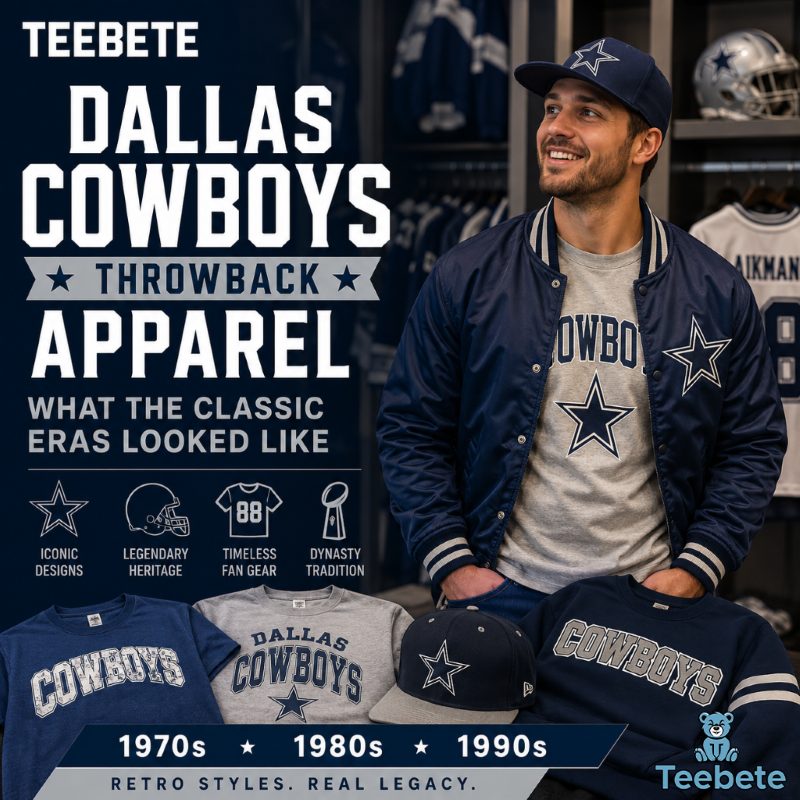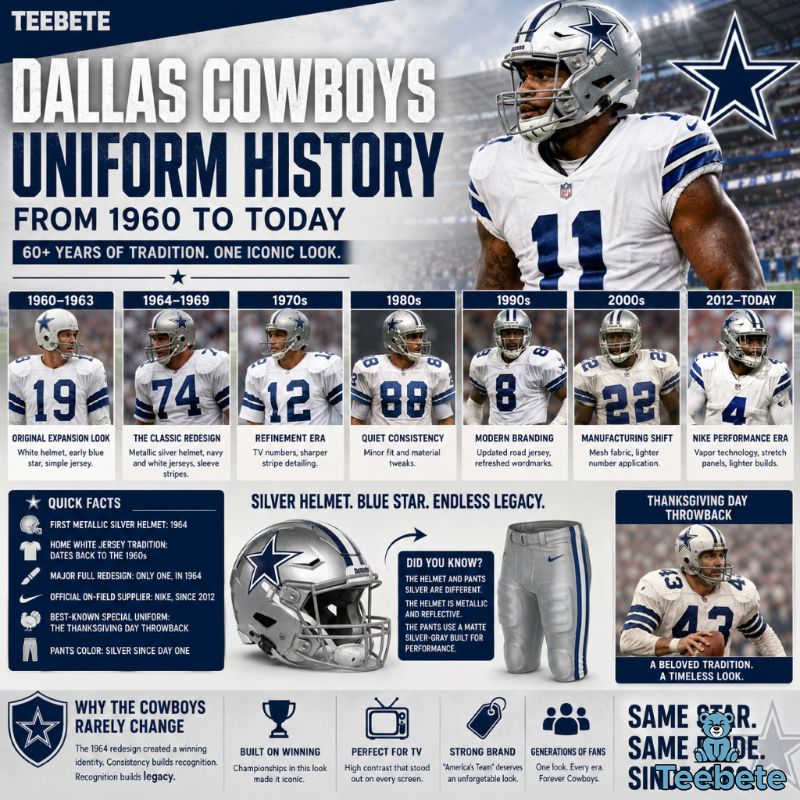
How Dallas Cowboys Apparel Has Changed Over the Decades
Walk into any tailgate lot outside AT&T Stadium on a Sunday and you’ll spot a silver-and-navy jersey within about ten seconds — a 1990s Starter jacket next to a brand-new Nike Vapor, a kid in a throwback right beside someone’s grandfather in the same cut he’s worn since the Cotton Bowl days. That mix isn’t an accident. It’s the result of six decades of design choices that changed almost everything about how the gear is made while leaving the core look almost untouched.
Dallas Cowboys apparel has evolved through construction, fabric, and manufacturer changes across six decades — from heavy wool-blend jerseys in the 1960s to Nike’s performance materials today — while the star logo, silver helmet, and navy-and-white color scheme have stayed almost entirely intact. That stability is really the whole story, and it explains why a franchise willing to spend big on players has been so conservative with its look.
Quick Timeline: Cowboys Apparel at a Glance
| Year | What Changed |
|---|---|
| 1960 | Franchise founded; navy and white jerseys established; Tex Schramm sets white as the home color |
| 1964 | NFL rule change formally allows home teams to choose jersey color |
| 1970 | TV numbers move to the sleeve; player names added to jersey backs |
| 1989 | Champion becomes the NFL’s first true official on-field apparel provider |
| 1994 | NFL’s 75th anniversary; Cowboys debut the white Double Star jersey on Thanksgiving |
| 1996 | Nike begins producing Cowboys uniforms directly, ahead of any league-wide deal |
| 2001 | Reebok takes over as the NFL’s official on-field uniform supplier |
| 2012 | Nike becomes the NFL’s league-wide official uniform provider, replacing Reebok |
| 2020s | Lightweight Nike Vapor fabrics standard; vintage and Mitchell & Ness throwbacks surge in resale demand |
Why Dallas Cowboys Apparel Looks Timeless Despite Constant Changes
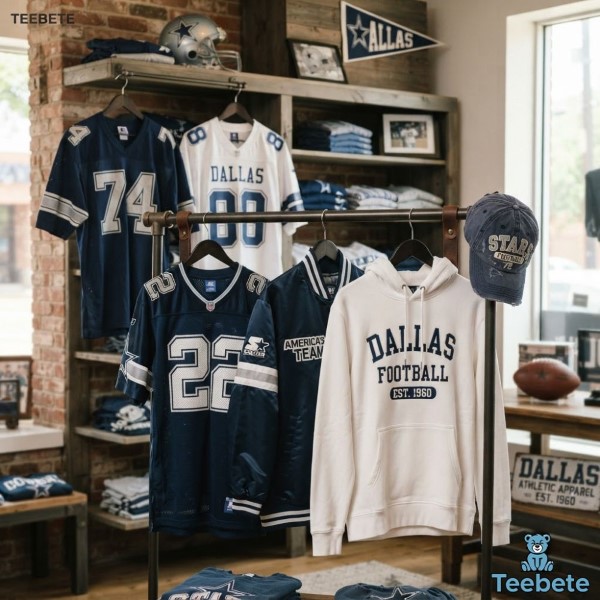
Ask ten Cowboys fans what actually counts as “Cowboys apparel” and you’ll probably get ten different answers. Some mean only the on-field jersey. Others include the Pro Shop hoodie, the throwback cap, the oversized tee they bought at a resale shop with no intention of ever wearing it to a game. That confusion is fair, because apparel has quietly split into two separate categories: uniforms, which are on-field gear governed by NFL licensing rules and whichever manufacturer holds the current contract, and fan apparel, which covers everything from replica jerseys to streetwear that never sees a football field but still carries the star.
Both categories have gone through constant material and manufacturing turnover — Champion, Russell Athletic, Reebok, and Nike have each held the on-field contract at different points. What almost never changes is the design underneath all of it: the five-point star, the metallic silver helmet, navy blue, white, and a refusal to clutter the look with extra graphics. Compare that to franchises that have redesigned their identity two or three times since 1990, and the Cowboys’ restraint starts to look less like inertia and more like a deliberate brand strategy backed by NFL Properties licensing consistency — the kind of strategy that shows up clearly once you compare today’s jerseys, throwbacks, and lifestyle pieces side by side in the complete Cowboys apparel guide.
The 1960s Built the Foundation of the Cowboys Identity
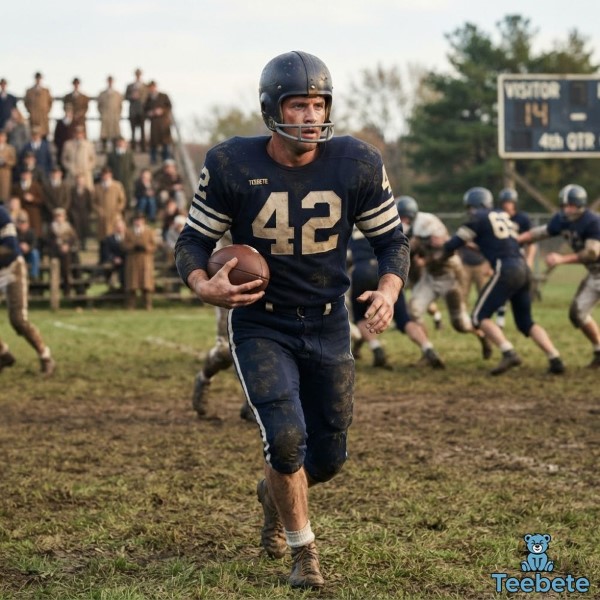
The Cowboys entered the NFL as an expansion franchise in 1960, playing their earliest seasons at the Cotton Bowl before Tom Landry’s teams — and later Roger Staubach’s — turned Dallas into a perennial contender. The uniforms of that first decade were as basic as sportswear got at the time: heavy wool-blend jerseys, minimal padding integration, and a helmet that hadn’t yet settled into the look fans know now. The navy road jersey and white home jersey were both in place from the start, along with shoulder striping that would survive, in modified form, for decades.
Why Dallas began wearing white jerseys at home

This is one of the most Googled Cowboys trivia questions, and the real answer is less romantic than most fans expect. Team president and general manager Tex Schramm pushed for the Cowboys to wear white jerseys at home starting in 1960. Longtime Cowboys scout Gil Brandt later explained that the public reasoning was about letting Dallas fans see the visiting team’s actual colors — Bears in navy and orange, Cardinals in red, Packers in green and gold. But Brandt also said the real motivation was more practical: at the Cotton Bowl, and later at the open-air Texas Stadium, brutal late-summer heat made lighter jerseys a genuine competitive edge. Visiting teams sweated through dark uniforms while Dallas stayed cooler in white. It helped that a 1964 NFL rule change formally let teams choose their jersey color for home games, which is what made the whole arrangement legal in the first place.
Why do the Dallas Cowboys wear white at home? Because founding GM Tex Schramm wanted fans to see opponents’ authentic colors, and because white jerseys ran cooler than navy ones during scorching early-season games at the un-covered Cotton Bowl and Texas Stadium.
How television technology influenced uniform colors
One detail longtime fans notice but few articles ever explain: why the Cowboys’ home pants never quite match the silver helmet. The road pants are a fairly standard silver-gray that matches the helmet. The home pants are a different animal entirely — a turquoise-tinted gray-blue that Cowboys equipment staff still call “Cowboys Star Blue.” According to long-time equipment director Mike McCord, that color traces back to Schramm spotting an interior color he liked in a car and deciding the pants should match it. Because the fabric had to be produced in specific dye lots, the shade shifted noticeably depending on which manufacturer supplied the uniforms — a flatter true gray through the 1970s under a supplier called Red Fox, then the more turquoise cast that stuck once Russell Athletic took over production in the early 1980s.
Old broadcast footage makes the mismatch even more obvious than it looks in person. Before high-definition television, cameras and film stock struggled to render that dye-lotted color accurately, so the pants looked closer to plain gray on TV than they did on the field. Once HD arrived, viewers finally saw the same greenish-turquoise tone in their living rooms that players wore on the sideline — a small technical shift that quietly resolved a decades-old visual inconsistency nobody had actually fixed on purpose.
How Colors Became Part of the Cowboys Brand Identity
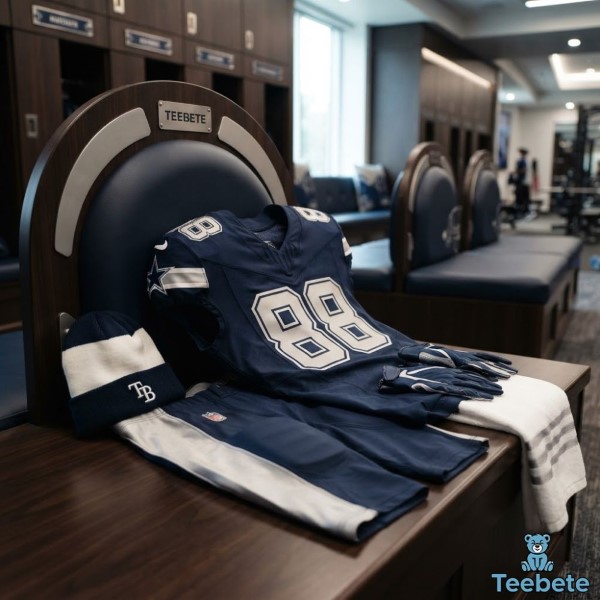
Navy, silver, royal blue accents, and white have carried the franchise since day one, and the consistency is arguably more valuable than any single shade. Silver reads as premium and disciplined. Navy reads as authority. White keeps the whole look clean enough to translate across jerseys, caps, and streetwear without looking dated. Those three colors became one of the most recognizable palettes in American sports largely because Dallas rarely touched them even as manufacturers, fabrics, and league contracts changed underneath — the meaning behind team colors traces how each shade developed and why even small shifts, like the pants’ dye lot, mattered more than they seemed to at the time.
The Evolution of the Star Logo Through the Decades
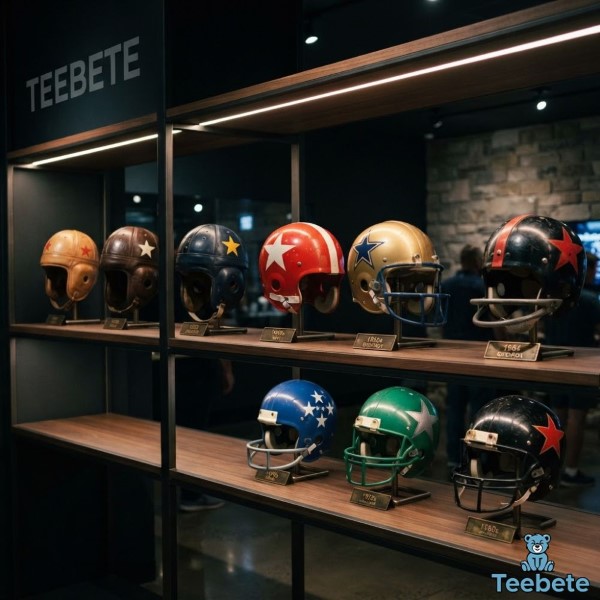
The five-point star has barely changed shape since the franchise’s founding, and that consistency is arguably the single biggest reason Cowboys apparel is instantly recognizable at a distance. The white-outlined navy star on a silver helmet has survived every uniform tweak, every manufacturer switch, and every marketing refresh the team has gone through. Most franchises redesign their primary mark at least once a generation, tying it to a new coach, a new owner, or a rebrand push; the Cowboys have gone the opposite direction, treating the star as close to untouchable. That decision connects directly to the color story above — a mark this simple only works if the palette around it never wavers, which is exactly why Dallas protected both at the same time. The story behind the iconic star digs into how the design came together in 1960 and why the organization has resisted every internal push to modernize it since.
The 1970s and 1980s Refined the Uniform Without Reinventing It
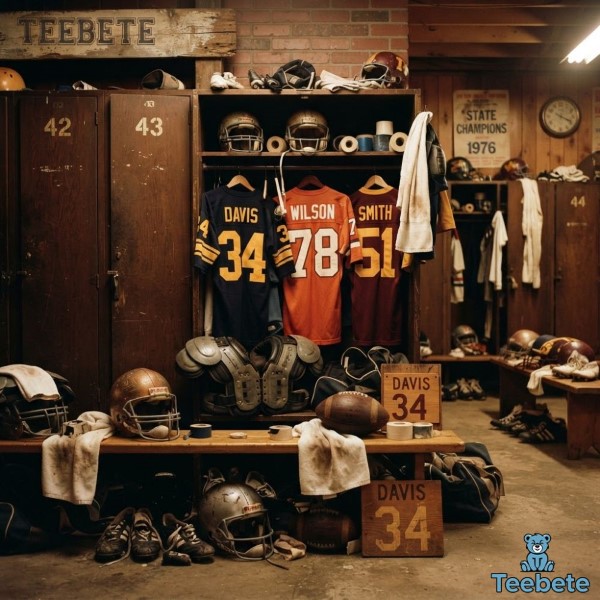
This stretch of Cowboys history is where small, almost invisible tweaks accumulated into a distinct look. TV numbers moved from the shoulder to the sleeve in 1970. Sleeve length got shorter. Player names appeared on jersey backs for the first time. Fabric blends improved as manufacturers moved away from heavy wool toward lighter synthetic weaves that held up better under stadium lights and summer heat.
The story behind the famous navy jersey superstition
Cowboys fans have long treated the blue jersey as cursed, and the numbers give the superstition some real teeth. Dallas has worn the navy jersey in eight playoff games across its history and gone 2-6 in those contests — including a loss in Super Bowl V in 1971, when the Cowboys were assigned home-team blue, and a divisional-round loss at Cleveland in 1968 that ended Don Meredith’s playing career. Schramm himself said publicly that he didn’t believe in the jinx, and the team’s near-total avoidance of the blue jersey outside of forced situations is really more about home-white tradition than superstition. Still, is the Dallas Cowboys blue jersey really unlucky? Statistically, the losing record is real. Causally, it’s almost certainly coincidence dressed up as folklore — but folklore sells jerseys too.
Collector details most fans never notice
Vintage Cowboys jerseys from this stretch carry small manufacturing fingerprints that separate an original from a modern reproduction: serif-style TV numbers rather than the block numerals used today, tighter mesh weaves in the jersey body, and stitching patterns specific to whichever supplier held the contract that season. Collectors who chase 1970s and 1980s game-worn pieces often look at these details before checking anything else, because reproductions rarely bother replicating a font that most fans never consciously register.
The 1990s Turned Cowboys Apparel into American Pop Culture
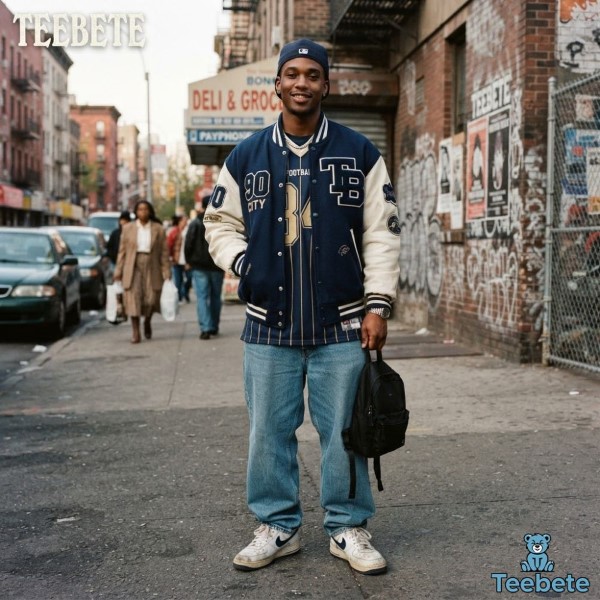
If the 1960s built the identity and the 1970s and 80s refined it, the 1990s exported it. Three Super Bowl titles in four seasons — following the 1992, 1993, and 1995 campaigns — turned Troy Aikman, Emmitt Smith, and Michael Irvin into national faces, and NFL merchandise sales followed the winning.
The rise of the iconic Double Star design
1994 marked the NFL’s 75th anniversary, and the league added a commemorative patch to every team’s jersey that season. The Cowboys, fresh off back-to-back titles, marked the occasion with something bigger: a white “Double-Star” jersey debuted on Thanksgiving Day 1994, featuring a bolder star motif worked into the sleeve design. It became the team’s playoff jersey that postseason, and a navy version followed for select road games in 1995. Collectors still chase these pieces specifically because the run was short — the design only appeared for two seasons before the team’s look shifted again once Nike took over uniform production in 1996.
How Cowboys apparel entered mainstream streetwear
Most competing articles mention this trend in passing and move on, which undersells how big a shift it actually was. Unlike teams whose merchandise stayed tied strictly to game day, Cowboys Starter jackets and oversized jerseys crossed into mainstream fashion because they matched the baggy, oversized silhouette that already dominated early-1990s hip-hop style. Plenty of people wore that gear without following football at all — the jacket worked as a statement piece on its own, independent of whatever Dallas did on Sundays. That made the Cowboys one of the first NFL franchises to function as something closer to a lifestyle label than a purely sports-merchandise brand, years before “athleisure” became an industry term. It’s a big part of why 1990s Cowboys pieces still command premium resale prices today, and why the look has cycled back into style with a generation that never watched Troy Aikman play a single down.
From Performance Uniforms to Everyday Fan Apparel
Modern fabrics changed how apparel feels
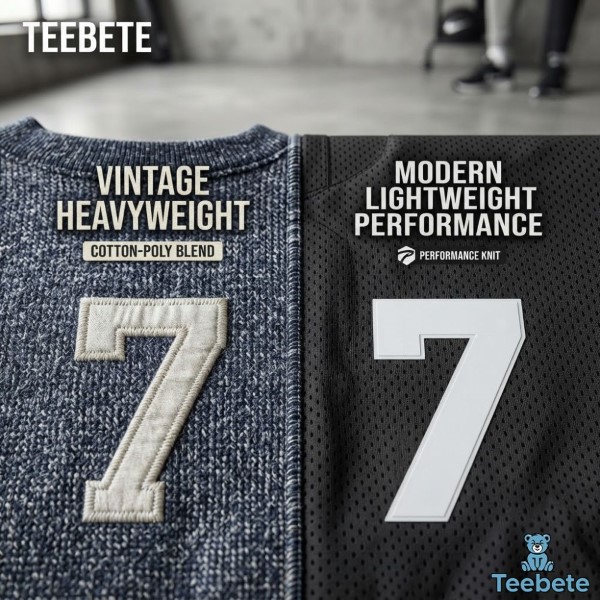
Nike became the NFL’s official on-field uniform provider in 2012, taking over from Reebok as part of a broader league licensing shake-up that also brought in New Era for headwear and other partners for fan gear. Interestingly, Nike wasn’t new to Cowboys jerseys specifically — the team had already used Nike-made uniforms from 1996 through the mid-2000s before the league centralized the deal. Under the current arrangement, moisture-wicking synthetic blends, lighter-weight mesh panels, and athletic-cut tailoring replaced the heavier cotton-poly jerseys of earlier decades. The practical result: game jerseys today weigh a fraction of what a 1970s jersey weighed, and they move with the body instead of against it.
Why vintage styles remain more popular than modern game jerseys
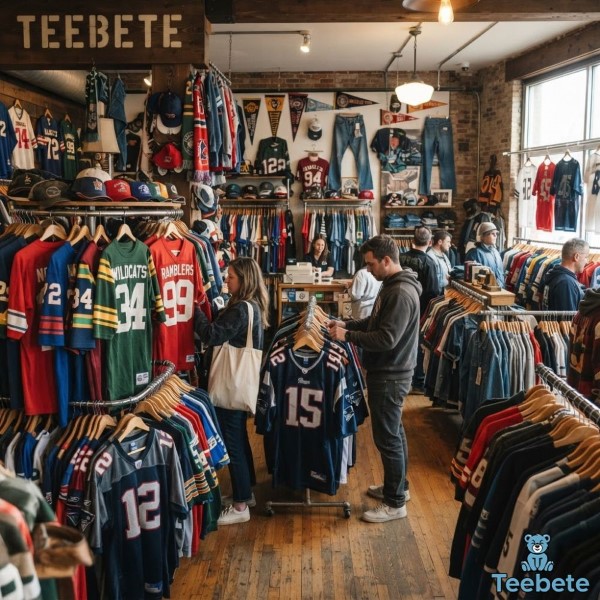
Ask a resale shop which Cowboys jersey moves faster — a current Nike replica or a 1990s Starter throwback — and you’ll usually hear the throwback wins. Nostalgia plays a role, but so does fit. The oversized silhouette that felt casual and cool in 1994 has cycled back into mainstream fashion, and collectors know original pieces hold value in a way mass-produced modern replicas simply don’t.
Then vs. now: what actually changed
| Category | 1960s–1980s | Today |
|---|---|---|
| Fabric | Heavy wool-blend, minimal stretch | Lightweight Nike Vapor synthetics, moisture-wicking |
| Manufacturer | Red Fox, then Russell Athletic, then Champion | Nike (league-wide since 2012) |
| Fit | Boxy, non-athletic cut | Tailored, athletic cut |
| Logo/star | Same five-point design | Unchanged |
| Fan gear | Starter jackets, screen-printed tees | Licensed streetwear, Mitchell & Ness throwbacks, performance replicas |
| Sales model | Retail and mail-order catalogs | Cowboys-run merchandise distribution plus NFL Shop and resale marketplaces |
Choosing apparel inspired by different eras
| Era | Style | Best For |
|---|---|---|
| 1960s | Classic heritage cuts | History-focused fans |
| 1970s–80s | Traditional NFL detailing | Vintage collectors |
| 1990s | Bold Double Star and oversized fits | Streetwear fans |
| Modern (Nike era) | Lightweight athletic performance | Game day wear |
At Teebete, we believe knowing where a design came from makes choosing Cowboys apparel more meaningful than just grabbing whatever’s newest on the rack — and if you’re weighing a heritage cut against a current performance jersey, the complete Cowboys apparel guide walks through how the sideline gear, authentic jerseys, and everyday lifestyle pieces sold today actually differ from each other.
Why Vintage Cowboys Apparel Continues to Grow in Popularity
Most articles on this topic stop at history and never explain why vintage pieces are having a genuine market moment right now. Part of it is straightforward Y2K nostalgia pulling early-2000s and 1990s silhouettes back into style. Part of it is the broader throwback movement across sports fashion generally, where authenticity matters more to buyers than it used to — a trend Mitchell & Ness has ridden since it began reproducing vintage jerseys in the early 1980s and launched a dedicated NFL Throwback Collection in 2000, a shift the classic vintage apparel timeline tracks season by season alongside every other reproduction and licensing change that shaped today’s collecting market. Licensed reproductions have gotten good enough that casual fans often can’t tell them apart from originals at a glance, which has pushed serious collectors to focus even harder on the manufacturing details that separate a real vintage piece from a modern remake.
Collector’s authentication checklist
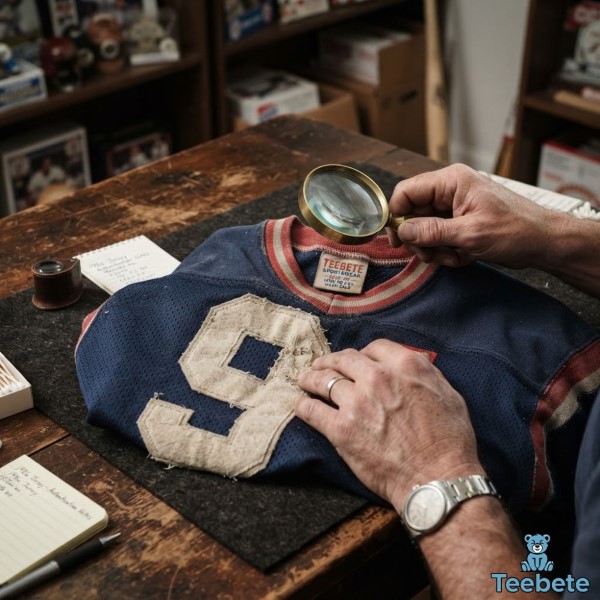
Fans hunting for a genuine vintage piece rather than a modern remake usually check the same handful of details, roughly in this order:
- Tag and manufacturer name. Red Fox and Russell Athletic tags point to the 1970s–80s; Apex tags belong to the mid-1990s; Nike tags mean 1996 or later.
- Number font. Serif-style numerals were standard before the mid-1990s; modern replicas use blocky sans-serif numbers.
- Mesh weave and sleeve length. Tighter, heavier mesh and longer sleeves point to pre-1990s construction; lighter, shorter-sleeve cuts point to the Nike era.
- Star detailing on the sleeve. Only the 1994–95 Double Star jerseys carry the bolder sleeve star motif — a strong indicator of that specific two-season run.
- Dye-lot pant color. Overly bright or perfectly uniform “Cowboys Star Blue” pants on an item claiming to be pre-1980s are a red flag, since that shade wasn’t standardized until Russell Athletic’s production era.
How Uniform History Still Influences Today’s Cowboys Apparel
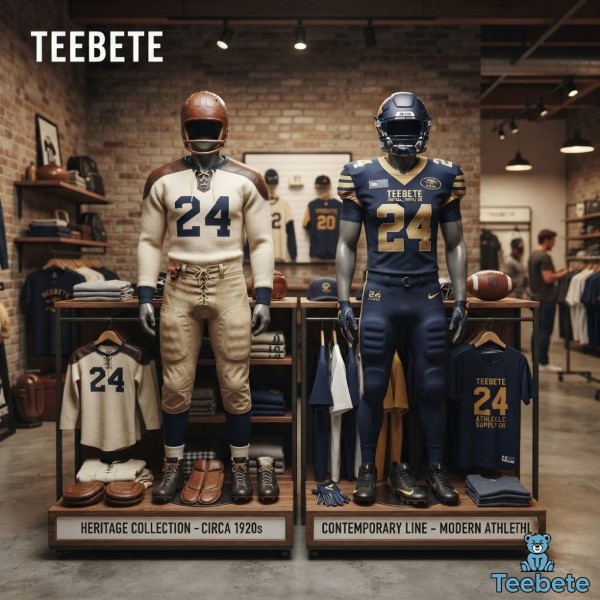
The team’s Thanksgiving Day game — a tradition dating back to 1966 — has become an unofficial showcase for throwback and alternate uniforms almost every year, and modern retail collections regularly pull direct inspiration from 1960s and 1990s designs rather than inventing anything new. That pattern is easiest to see by following the complete uniform evolution timeline season by season, since it shows exactly which decade each current release is quoting and how much the organization leans on its own history as a selling point rather than chasing whatever’s trending elsewhere in the league.
Why Apparel Plays Such a Big Role in America’s Team Identity
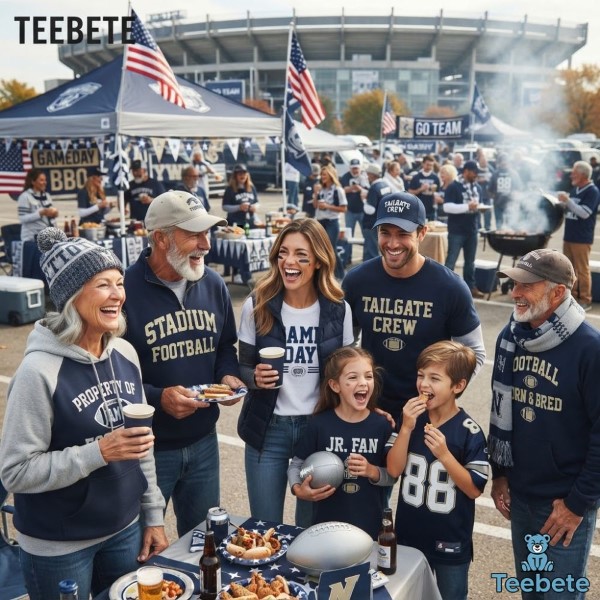
The Cowboys are the only NFL franchise that handles its own merchandise distribution rather than routing everything through the league, a structure owner Jerry Jones has leaned on hard since buying the team in 1989 to keep apparel sales strong even during rebuilding seasons. National TV exposure — the Cowboys have appeared in more nationally televised games than almost any other team for decades — keeps the merchandise visible well outside Texas, reinforcing a multi-generational fan base that shows up for the Sunday ritual and buys gear regardless of the team’s win-loss record that year.
Why are the Dallas Cowboys called America’s Team? The nickname traces to a specific person and a specific moment: NFL Films producer Bob Ryan, writing the Cowboys’ 1978 season highlight film, noticed that the team drew heavy crowds of its own fans even at road games. He worked a line into the film’s narration comparing the Cowboys to Notre Dame football, calling them a team whose faces were as familiar to the public as movie stars. CBS announcer Pat Summerall repeated the phrase on air during Dallas’s 1979 season opener, and it stuck permanently — not because the league branded it that way, but because a highlight-reel writer noticed something real about the fan base, a detail the origin of America’s Team unpacks alongside how Tom Landry initially resisted the nickname before eventually embracing it.
Common Questions Fans Ask About Dallas Cowboys Apparel Evolution
Why do the Cowboys usually wear white jerseys at home? Tex Schramm established the practice in 1960, partly so fans could see visiting teams’ actual colors and partly because white ran cooler than navy during early-season heat at the open-air Cotton Bowl and Texas Stadium.
Why are the Cowboys’ helmet and pants different shades of silver? The helmet uses a standard metallic silver that matches the road pants. The home pants use a separate dye-lotted color, nicknamed “Cowboys Star Blue,” that Tex Schramm chose based on a car interior he liked — a shade that has shifted subtly depending on which manufacturer produced it.
Which decade produced the most collectible Cowboys apparel? The 1990s, largely because of the short-lived Double Star jersey worn during the 1994 NFL 75th-anniversary season and the crossover into mainstream streetwear during the team’s Super Bowl run.
What makes vintage Cowboys apparel different from modern replicas? Original pieces carry manufacturer-specific details — serif number fonts, particular mesh weaves, and era-accurate stitching — that most modern reproductions don’t bother replicating exactly.
Why has the Cowboys logo changed so little over time? The franchise has treated the star as close to untouchable, prioritizing long-term brand recognition over the periodic redesigns other teams have gone through.
Expert Takeaways
- Dallas Cowboys apparel has changed constantly in fabric and manufacturer, but the star, silver helmet, and navy-and-white palette have barely moved since 1960.
- The home-white tradition started with Tex Schramm in 1960 for practical reasons — heat management and letting fans see visiting teams’ true colors — not superstition.
- The 1994 Double Star jersey, tied to the NFL’s 75th anniversary, remains one of the most collectible pieces in team history because it only existed for two seasons.
- The 1990s crossover into hip-hop-influenced streetwear turned Cowboys gear into a lifestyle brand, not just game-day merchandise.
- Nike has supplied Cowboys uniforms twice: from 1996–mid-2000s directly, then again from 2012 onward as the NFL’s league-wide provider.
- Vintage authentication comes down to manufacturer tags, number fonts, mesh weave, and dye-lot pant color — details modern replicas rarely replicate exactly.
Conclusion
Cowboys apparel tells a more layered story than a simple uniform timeline suggests. Every era added something the identity kept: the 1960s set the color rules, the 1970s and 80s refined construction without disturbing the look, the 1990s pushed the brand into pop culture and streetwear, and the Nike era brought performance fabrics without touching the star or the palette. The franchise didn’t get here by chasing every design trend that came through the league — it got here by changing the parts nobody notices and leaving the parts everybody recognizes exactly alone.

Hi, I’m Mia Wilson. I’m a journalist and content creator based in New York with over six years of experience covering sports, holidays, fan culture, and community events across the United States. I focus on exploring team histories, traditions, celebrations, and the broader impact of sports and cultural events on local communities. I’m passionate about providing accurate, engaging, and educational content for readers of all ages, helping them understand the stories, experiences, and events that make sports and celebrations so meaningful.